

Between dense textbooks, random YouTube videos, and conflicting advice, it’s hard to know where to start with music theory—especially as a guitarist.
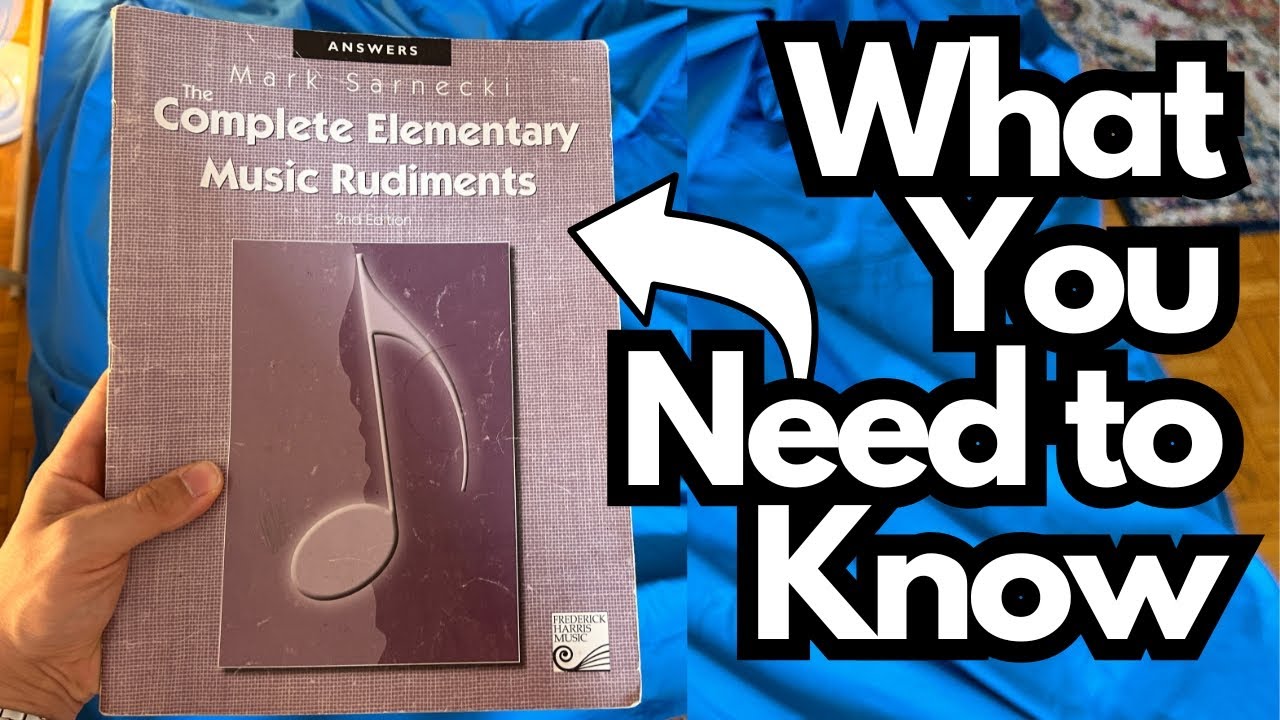
There is, however, one book that has consistently delivered for me: it taught me the foundations of theory well enough to pass my Royal Conservatory of Music (RCM) exam here in Canada, and it’s still the first resource I recommend when someone asks, “What’s the best way to actually learn the basics?” You can grab it here on Amazon.
This post is about that book, why it works, and how it fits into a guitarist’s journey—plus a couple of tools that can help you put the theory onto the fretboard.
Overview / First Impressions
The book in question is a foundational music theory text used in Royal Conservatory of Music training. It focuses on the “rudiments” of music—the core building blocks that everything else is built on.
I used this book (and the earlier edition it’s based on) intensively for about a year. I worked through the material, internalized the basics, and then sat the official exam. That exam covered:
- Notation and reading
- Scales and key signatures
- Intervals
- Chords and basic harmony
- Rhythm and meter
The book prepared me for all of that. More importantly, it didn’t just “get me through a test”—it gave me a solid musical foundation I still lean on when I’m playing, writing, and teaching.
If you’re a guitarist who wants to go beyond shapes and tabs and actually understand why things work, this is a great starting point.
Build Quality & Design
This isn’t a flashy, coffee-table style book. It’s a straightforward, practical course in written music and basic theory.
Typical layout:
- Clear explanations of each concept
- Notation examples on the staff
- Written exercises to test understanding
- Progressive structure (each chapter builds on the last)
From a guitarist’s perspective, the design is very “classical theory” oriented: treble and bass clef, traditional notation, written exercises. That might feel a bit foreign if you’re used to tabs and chord diagrams, but that’s actually a strength—it forces you to learn the language that all musicians share.
Features & Functions
Here’s what this kind of RCM-style rudiments book usually covers, and why it matters for guitarists.
Core Topics
- Staff notation & clefs
Learn to read music on the staff, not just tab. This opens up classical pieces, piano scores, and serious theory resources. - Scales & key signatures
Major and minor scales in all keys, plus how to recognize key signatures. On guitar, this translates to understanding why certain scale shapes work over certain chords. - Intervals
Distances between notes—2nds, 3rds, 5ths, etc. This is crucial for building chords and understanding harmony. - Chords & triads
How chords are built from stacked thirds (triads: major and minor, mostly at this level). This is the theoretical backbone of everything you play on guitar. - Rhythm & meter
Time signatures, note values, rests, and rhythmic patterns. This helps you read and write rhythms more accurately.
Why It Works
- Logical progression – Concepts build in a sensible order; you’re not thrown into advanced harmony before you can even read a staff.
- Exam-ready – If you want a formal credential (like an RCM theory certificate), this book is built for that.
- Practical exercises – You don’t just read about theory; you write it, analyze it, and apply it.
How It Helps You as a Guitarist
Even though the book isn’t “guitar-specific,” it becomes extremely powerful once you connect it to the fretboard.
Here’s how the content translates:
- Scales → Scale shapes
Knowing the notes in a scale lets you understand your scale patterns, not just memorize them. - Intervals → Fretboard navigation
Once you know what a 3rd, 5th, or 7th is, you can find it anywhere on the neck and build chords or melodies more intentionally. - Triads → Chord vocabulary
Triads are the foundation of chords. Understanding them is the key to:- Creating your own chord voicings
- Playing more musical rhythm parts
- Improvising melodically over chord changes
- Rhythm → Better time feel
Being able to read and understand rhythmic notation helps you nail syncopation, odd groupings, and more complex grooves.
To really bring this theory to life on guitar, pairing the book with a fretboard-focused tool is ideal—more on that in the resources section below.
Limitations / Things to Know
No single book does everything. A few things to keep in mind:
- It’s not guitar-specific
You’ll need to do the work of translating theory into guitar shapes and patterns. That’s not a flaw, but it does mean a bit of extra effort on your part. - It’s focused on fundamentals, not advanced harmony
This is about rudiments: notes, scales, basic chords, rhythm. If you’re looking for jazz substitutions, modal interchange, or advanced voicing techniques, you’ll need additional resources later. - You have to actually do the exercises
Skimming explanations without writing and analyzing examples will dramatically reduce how much you get out of it.
If you’re okay with those caveats and you’re willing to sit down and work through the material, this kind of book can completely change how you understand music.
Final Thoughts
This is, without exaggeration, the most useful theory book I’ve ever used. It gave me:
- A clear, structured path through the basics
- Enough knowledge to pass a formal RCM exam
- A theoretical foundation I still rely on every day as a guitarist
If you’re serious about understanding music—not just memorizing shapes—this type of rudiments book is absolutely worth your time. Treat it like a course, not a casual read, and you’ll come out with a far deeper command of your instrument.
Resources & Further Study
Fretboard Memorization Cheat Sheet
- A fretboard cheat sheet that lays out:
- All the major and minor triads in every key
- Organized using octave mapping and other visualization techniques
- Helps you:
- Memorize the notes on the fretboard
- Understand and use triads all over the neck
- Start improvising in multiple keys by seeing how harmony is built
Since triads are the foundation of chords and harmony, combining this cheat sheet with the theory from the book is a powerful way to lock in both the why and the where on guitar.
Community & Discussion
You can also join the forum at:
There you can:
- Talk guitar and music theory with other players
- Ask questions as you work through theory material
- Share progress, ideas, and practice strategies
Using a solid theory book together with fretboard tools and a community to bounce ideas off is one of the fastest, most reliable ways to actually internalize music theory as a guitarist.