

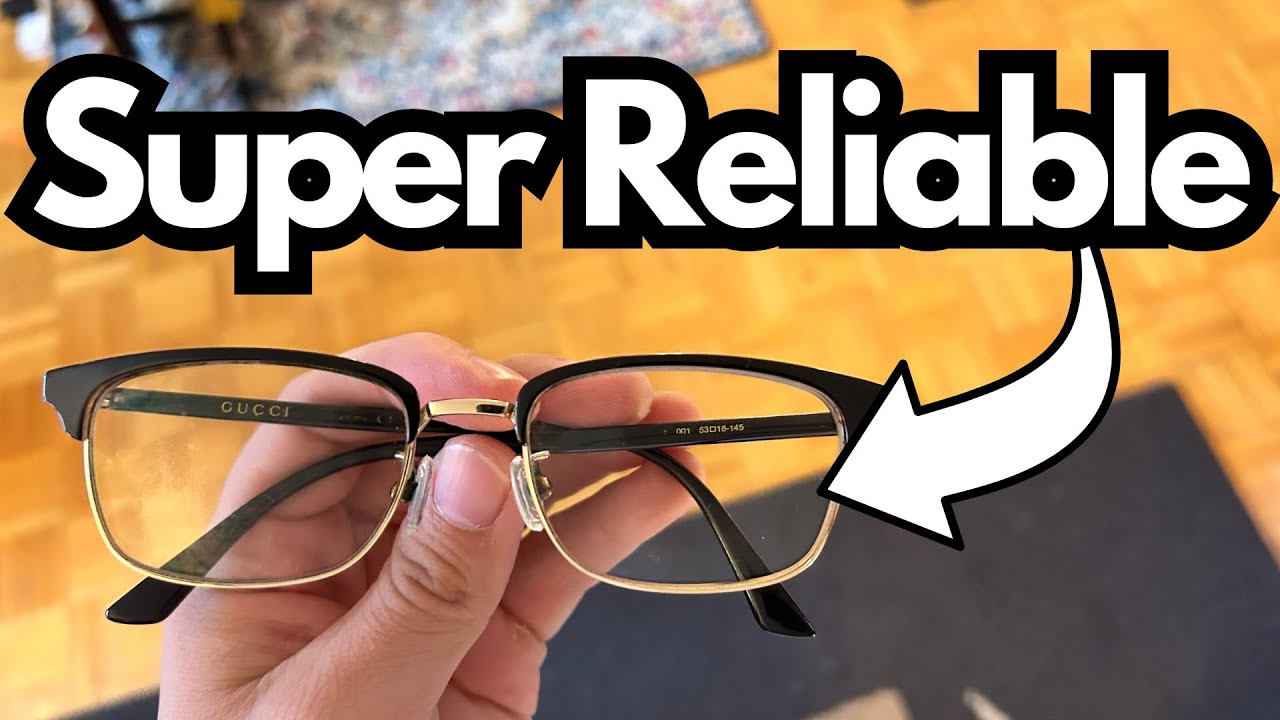
If you wear glasses every day, you know they’re more than just an accessory—they’re a tool you rely on constantly. That makes durability and comfort just as important as style. High-end brands like Gucci can feel like a big splurge, so the real question is: do they actually hold up over time?
After eight years of daily use, abuse, and zero babying, these Gucci frames have a pretty clear story to tell.
Overview / First Impressions
These Gucci glasses have been in constant rotation for about eight years. They weren’t bought as a collector’s item or treated like something precious—they were worn hard, tossed around, and generally lived a rough life.
Despite that, they still:
- Fit well
- Function perfectly
- Have structurally intact frames
In other words, they’ve done exactly what you’d hope an expensive pair of glasses would do: last.
Build Quality & Design
The standout feature here is durability.
Over the years, these frames have:
- Been stepped on
- Been left on the floor or beside the bed
- Had lenses scratched and banged around
- Been bent and manually adjusted
And yet:
- The frames never snapped
- No hinges broke
- No arms fell off
- No structural failure at all
The frame material has held its shape and integrity impressively well. The overall feeling is that these are solid, well-made frames designed to handle real-life use, not just sit in a case looking pretty.
Features & Everyday Function
While we’re not talking about high-tech features here, a few practical points stand out:
- Manual adjustability – If you need to tweak the fit, you can gently bend the frames by hand to get them sitting right again. That’s a big plus if you’re not constantly visiting an optician for adjustments.
- Comfort over time – Even after years of use and the occasional bending, they still wear comfortably.
- Style longevity – Gucci tends to lean into classic-with-a-twist designs. These haven’t aged out or started to look dated, which helps justify the long-term investment.
How They Hold Up in Real Life
From a practical, everyday perspective, these frames have been:
- Reliable – No sudden breakages, no surprise failures.
- Low-maintenance – Aside from normal lens wear and tear, they’ve required very little attention.
- Consistent – The fit and feel have stayed essentially the same since day one.
If you’re the kind of person who’s rough on gear—dropping things, tossing glasses on the nightstand, occasionally stepping on them—these frames seem to handle that lifestyle better than most.
Limitations / Things to Know
A few realities to keep in mind:
- Lenses still scratch – The durability praise here is mainly about the frames. Lenses will still pick up scratches over time, especially if you’re not careful or skip proper cleaning.
- Price – Gucci frames aren’t cheap. The upfront cost is high compared to budget options.
- Not indestructible – While they’ve survived a lot, they’re not marketed as “impact-proof” or industrial-grade. You still need some basic care.
If you’re someone who constantly loses glasses, the investment might not make sense. But if you keep track of your gear and just tend to be rough with it, the long-term value is there.
Final Thoughts
Looking back after eight years of heavy use, these Gucci glasses have absolutely justified their cost. The frames are:
- Exceptionally durable
- Comfortable over the long haul
- Still fully functional with no structural issues
If you’re on the fence about investing in designer frames because you’re worried they won’t last, this experience points the other way. For someone who wears glasses every day and wants something that can survive real life—not just careful, occasional use—Gucci frames are easy to recommend.