

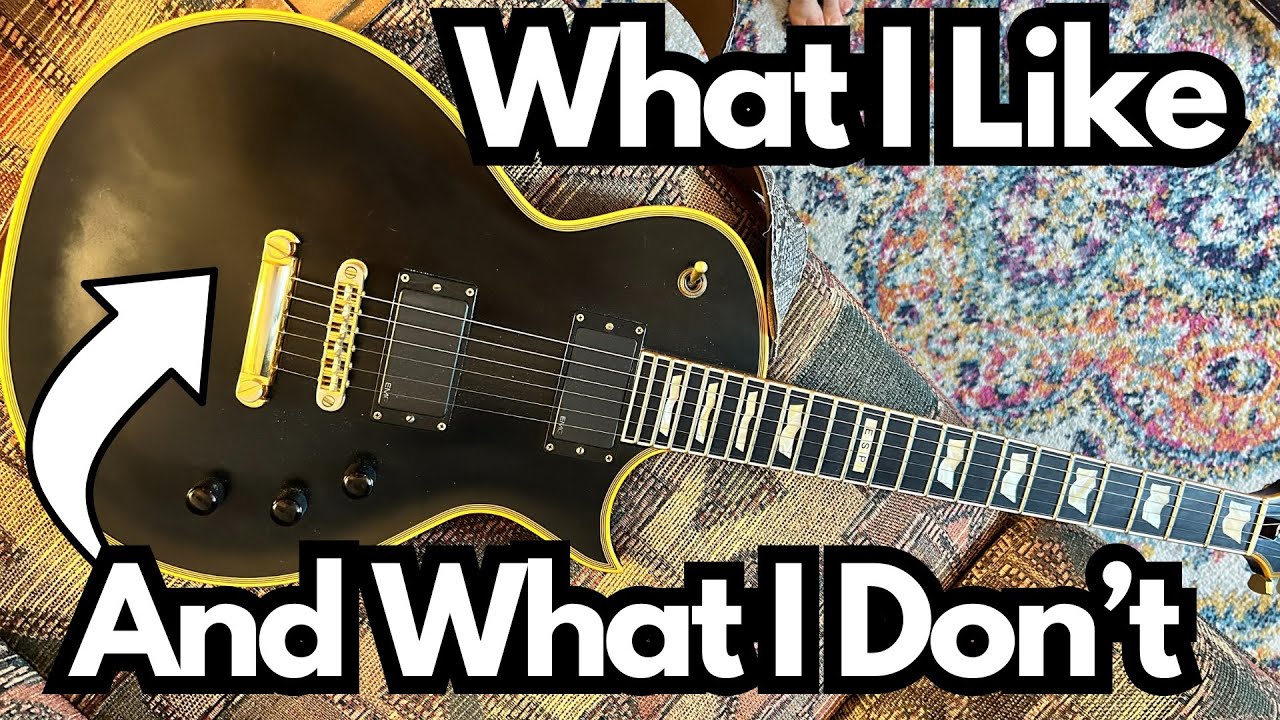
If you’re a guitarist chasing tight, aggressive tones and effortless playability, the ESP Eclipse (which you can get here on Thomann) is one of those guitars that keeps showing up for a reason.
It’s a modern single-cut built with metal and hard rock in mind, but still refined enough to feel like a serious, professional instrument.
I’ve had my Eclipse for years, and outside of my Epiphone Les Paul Custom, it’s the guitar I’ve played the most. Here’s how it holds up in real-world use.
Overview / First Impressions
The ESP Eclipse is, at its core, a modernized, high-performance take on the classic single-cut design. Think Les Paul silhouette, but with ESP’s slick, metal-focused edge.
What stands out immediately:
- It’s extremely easy to play, especially if you’re used to standard or vintage-style frets.
- It’s voiced and built for heavier styles—metal, hard rock, and anything gain-heavy.
- It feels solid and professional, not like a budget “metal” guitar trying too hard.
If you’re into jazz or more traditional clean styles, this probably isn’t your first choice. But if you want a guitar that just rips for metal, the Eclipse is very much in its lane.
Build Quality & Design
ESP is known for tight build quality, and this Eclipse lives up to that reputation.
Key build impressions:
- Fretwork: The jumbo frets are installed cleanly, with nicely finished fret ends. No sharp spots, no rough edges. The sides of the fretboard feel smooth and well-dressed, which makes a big difference for comfort, especially when you’re sliding around the neck.
- Finish: The overall finish is well done—visually clean, no messy binding, no obvious flaws. It looks and feels like a proper high-end instrument, not something rushed off the line.
- Neck feel: Combined with the jumbo frets, the neck feels fast and forgiving. You don’t have to fight it to get clean notes, bends, or vibrato.
The only slight complaint on the setup side is the action—it could be a bit lower out of the box for my taste. That said, because of the jumbo frets, it still plays very well even if the string height isn’t absolutely slammed.
Features & Functions
While specific hardware can vary by model year, the general character of the Eclipse line is consistent: it’s built for performance.
Typical Eclipse highlights from a player’s perspective:
- Jumbo frets – These are a big part of the experience. They make it easier to:
- Single-cut body shape – Familiar and comfortable, especially if you’re coming from Les Paul-style guitars, but often a bit slimmer and more ergonomic depending on the exact model.
- High-output pickups (often active or hot passives) – Voiced for metal and high-gain tones, with tight low end and strong output that hits your amp or modeler hard.
- Sturdy hardware – ESP typically outfits the Eclipse with solid tuners and a dependable bridge, which helps keep tuning stable under heavy playing and big bends.
Overall, it’s a purpose-built instrument: everything is geared toward delivering a reliable, aggressive, and playable metal platform.
How It Sounds / Use Cases
The ESP Eclipse absolutely shines in metal and heavier rock contexts.
Where it excels:
- High-gain rhythm: Tight, punchy palm mutes, clear power chords, and enough articulation that fast riffs don’t turn into mush.
- Lead playing: The jumbo frets make soloing feel almost effortless. Bends, legato, and fast runs feel very natural, especially if you’re used to smaller frets—this guitar will feel like it’s helping you out.
- Modern rock / metalcore / djent / hardcore: Anywhere you need clarity, aggression, and sustain, the Eclipse fits right in.
Where it’s not ideal:
- Jazz & traditional clean tones: You can play clean on it, of course, but if your main thing is jazz standards, warm hollowbody tones, or super-dynamic clean comping, this isn’t the most natural fit. The pickups and overall voice lean heavily toward gain and saturation.
If your primary style is metal, this guitar just makes sense. It’s voiced and built to live in that world.
Limitations / Things to Know
No guitar is perfect, and there are a few things worth noting before you jump in:
- Action could be lower (stock): On my Eclipse, the factory or previous setup left the action a bit higher than I’d like. It’s still very playable, especially with the jumbo frets, but if you want ultra-low shredder action, you’ll probably want a pro setup.
- Not a “do-it-all” guitar: While you can cover a lot of ground, this is very much a metal-focused instrument. If you want one guitar to handle jazz gigs, funk sessions, and classic country, you might look for something more versatile in terms of pickups and voicing.
- Jumbo frets feel different: If you’re coming from vintage-style or medium-jumbo frets, there’s an adjustment period. Many players end up preferring the feel, but it’s something to be aware of.
Also, a practical note from my own experience: I’m not using my Eclipse at the moment because I broke the nut. That’s not a design flaw—just a reminder that even great guitars need occasional maintenance. Budget for setups and repairs like nut replacements over the life of the instrument.
Final Thoughts
The ESP Eclipse is a fantastic choice if you’re a metal or hard rock guitarist who wants:
- A comfortable, fast-playing neck with jumbo frets
- A solid, well-built single-cut body
- Aggressive, high-gain tones that stay tight and clear
It’s not trying to be a jack-of-all-trades. It’s a focused, metal-leaning workhorse that rewards players who live in that world. If that’s you, the Eclipse deserves a serious look.
Resources & Further Study
If you’re working on your playing and want to get more out of the fretboard, especially for soloing and improvisation, there are a couple of helpful resources:
- Fretboard Memorization Cheat Sheet – TravelingGuitarist.com
A “fretboard cheat sheet” that lays out major and minor triads in every key. It’s designed to help you: - Traveling Guitarist Forum – forum.travelingguitarist.com
A place to talk about guitar, music, and related topics with other players—gear, theory, practice approaches, and more.
Pairing a solid metal guitar like the ESP Eclipse with a deeper understanding of triads and fretboard mapping is a great combo for leveling up both your tone and your musicality.