

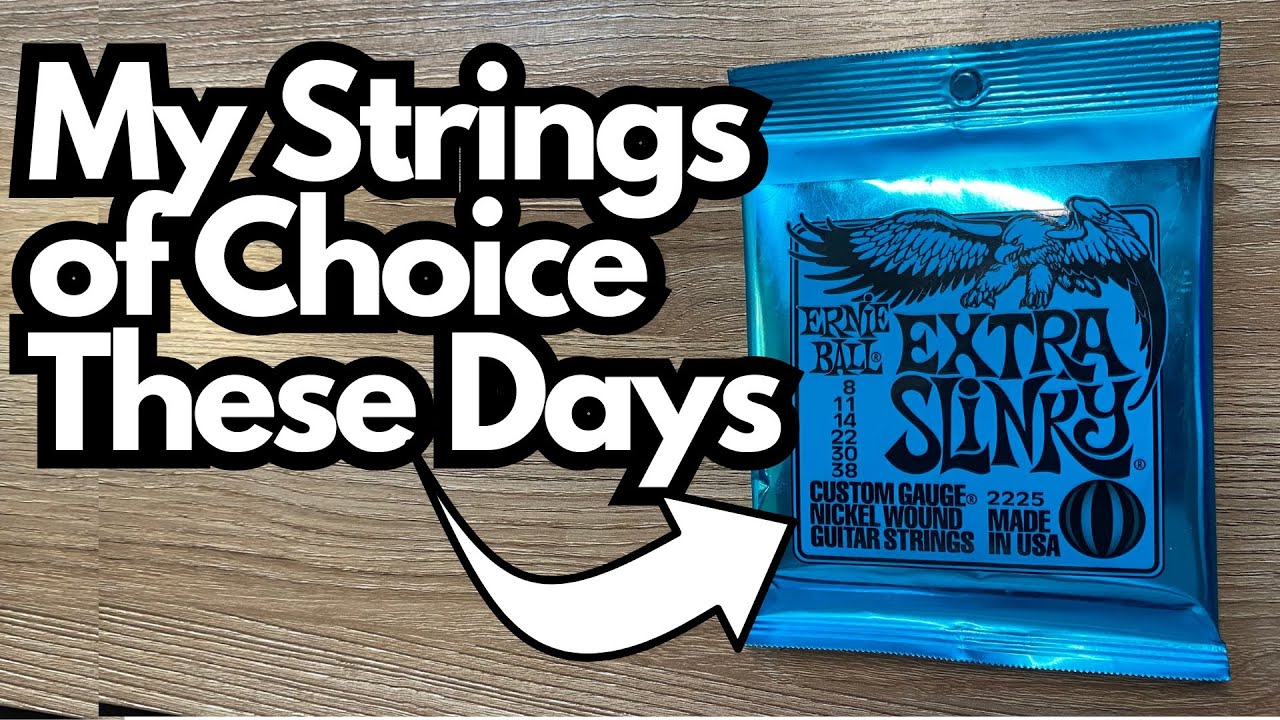
If you’ve ever wondered how light you can realistically go with electric guitar strings and still have a great playing experience, Ernie Ball’s 8–38 gauge set is a serious contender. These are ultra-light strings aimed at players who value easy bends, low action, and a slick, effortless feel under the fingers.
If you’re into fast lead playing, expressive vibrato, or you just want your guitar to feel less like a workout and more like butter, this gauge is worth a look.
Overview / First Impressions
The Ernie Ball 8–38 set is exactly what it sounds like: an ultra-light gauge string set that runs from .008 on the high E to .038 on the low E. They’re a step down from the more common 9s and 10s and are designed to:
- Make bending and vibrato easier
- Allow for a lower action with less effort
- Reduce overall tension on the neck and your hands
On an ESP Eclipse (or any similar single-cut, humbucker-equipped guitar), these strings feel incredibly slinky and responsive. If you’re used to heavier gauges, you’ll immediately notice how easy everything becomes—bends, slides, legato, and general fretting all take less effort.
Build Quality & Design
Ernie Ball has built a reputation on consistency, and this set is no exception. While there’s often debate about how much difference string brands really make, Ernie Ball nails the fundamentals:
- Consistent quality control – no weird dead strings out of the pack
- Reliable tone and feel – you know what you’re getting every time
- Thoughtful packaging – easy-to-identify gauges, moisture-resistant, and clearly labeled
From a guitarist’s perspective, the main “build quality” concerns with ultra-lights are tuning stability and durability. These 8–38s hold up well under normal playing conditions, especially if your guitar is properly set up and you’re not beating on them with super-aggressive picking.
Features & Functions (What You’re Really Getting)
While strings don’t have “features” in the same way pedals or amps do, this gauge comes with some very practical functional benefits for players:
- Gauge: 8–38 (ultra-light)
- Feel: extremely slinky and forgiving
- Playability:
- Easier bends, even whole-step and step-and-a-half
- Easier vibrato control
- Less hand fatigue in long practice or gig sessions
Because of the lower tension, you can often:
- Run lower action without as much buzzing (assuming a good setup)
- Get away with lighter touch playing and more legato phrasing
If you like to live in lead territory, especially on the upper frets, this gauge feels tailored for that.
How It Sounds / Use Cases
Tone-wise, ultra-light strings like 8–38s tend to have:
- A brighter, snappier top end
- A slightly leaner low end compared to heavier gauges
- Fast attack and easy response under the pick
Best Use Cases
- Lead guitar / soloing – ideal if you’re bending a lot, doing fast runs, or working on advanced phrasing
- Shredding & modern rock/metal leads – especially on a guitar like an ESP Eclipse; the humbuckers help fill out the thinner gauge with more body
- Players with hand or finger fatigue issues – lower tension can be easier on your hands and joints
- Beginners struggling with bends – if 10s feel like a fight, 8s can make the instrument feel far more approachable
If your rig already has a thick, saturated tone (high-gain amp, humbuckers, maybe a boost in front), these strings won’t leave you sounding thin—they’ll just make the guitar more responsive.
Limitations / Things to Know
Ultra-light strings aren’t for everyone. A few things to keep in mind:
- Less resistance – if you’re used to “digging in” with heavy picking, you might overshoot bends or push notes sharp until you adjust your touch
- Rhythm tone – for heavy rhythm playing in lower tunings, 8–38s can feel a bit too loose and may not deliver the tight low end some players want
- Tuning stability – with very light tension, tuning can be more sensitive to your picking attack and left-hand pressure; a proper setup helps a lot
- Setup adjustments – switching from heavier gauges to 8s may require:
- Truss rod adjustment (less tension on the neck)
- Action tweaks
- Possibly intonation adjustment
If you mostly play hard-hitting rhythm in standard or lower tunings, you might prefer something heavier. But if your priority is ease of play and expressive lead work, these trade-offs are often worth it.
Final Thoughts
Ernie Ball’s 8–38 set is a fantastic option if you want your guitar to feel ultra-slinky and effortless. On an ESP Eclipse or any solid-body electric, they deliver:
- Very easy bends and vibrato
- Comfortable, low-tension feel
- Consistent performance with no drama
They’re not a “one-size-fits-all” solution—heavy-handed rhythm players and low-tuning addicts will likely want something thicker. But for lead players, expressive soloists, and anyone who wants to reduce hand fatigue while keeping a bright, responsive tone, these strings absolutely do what they’re supposed to do.
They’re simple, reliable, and get out of your way so you can focus on playing.
Resources & Further Study
If you want to get more out of your practice time with these (or any) strings on your guitar, these resources are worth checking out:
- Fretboard Memorization Cheat Sheet – available at travelingguitarist.com (search for the fretboard cheat sheet). It covers major and minor triads in every key, using an “octave mapping” approach to help you:
- Memorize the fretboard
- Understand triads as the foundation of harmony and chords
- Start improvising more confidently in multiple keys
- Guitar & Music Forum – you can also join the community at forum.travelingguitarist.com to talk guitar, music, and related topics with other players.
Pairing an easy-playing set of strings like these with solid fretboard knowledge is a powerful combo for leveling up your playing.