

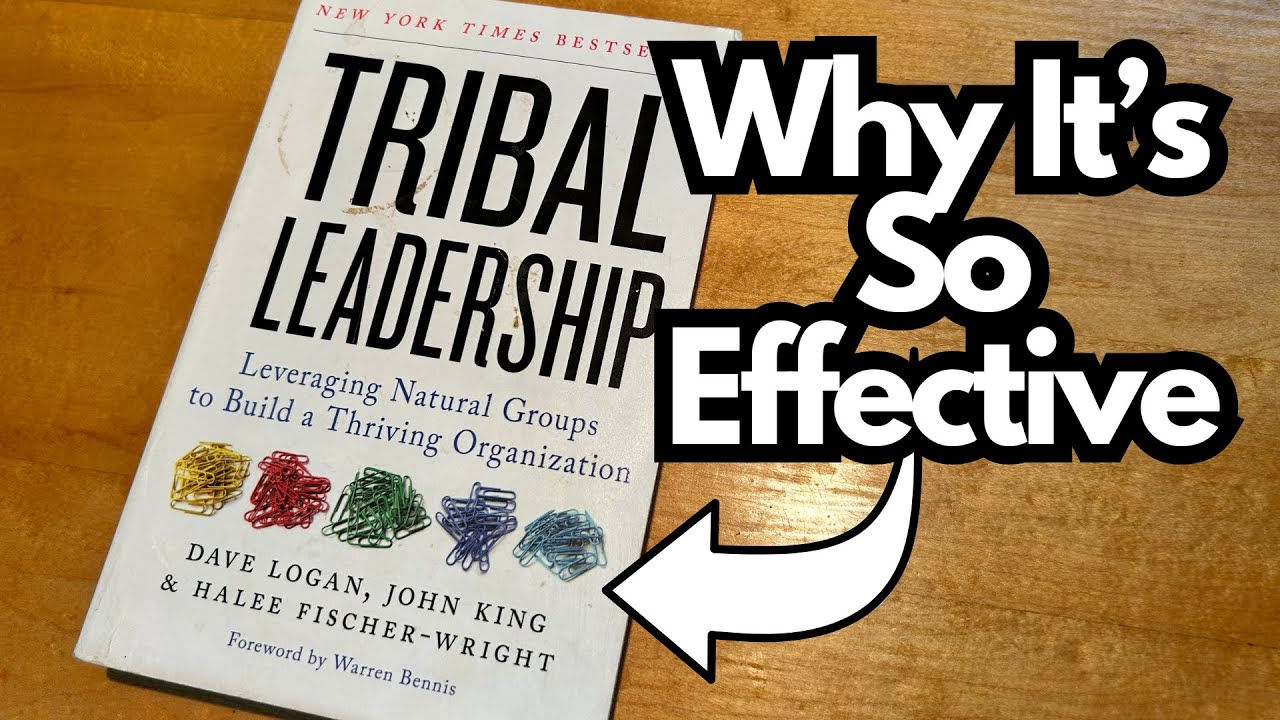
If you’ve ever wondered why some groups feel unified, motivated, and effective while others feel chaotic or toxic, Tribal Leadership is worth your time. It’s a business book, but its ideas apply just as much to bands, creative teams, friend groups, and even families as they do to companies.
This book (on Amazon) lays out a clear framework for understanding how people organize themselves and how different mindsets shape the success of a group. It’s especially useful if you’re in any kind of leadership role—or hoping to be.
Overview / First Impressions
Tribal Leadership breaks down how people operate in groups into a handful of distinct stages or “tribal” mindsets—roughly four or five core types.
Each mindset reflects how people see themselves in relation to others, for example:
- “Me against everybody”
- “Us against the world”
- “I don’t care about anything outside my own success”
- A more collaborative, purpose-driven outlook
What makes the book stand out is how clearly it connects these mindsets to real-world outcomes. You start to see why some organizations thrive while others constantly struggle, even when they have similar resources or talent.
The tone is refreshingly straightforward: it’s concise, practical, and avoids the usual business-book pretentiousness.
The Vibe of the Book
This isn’t a dense academic text or a fluffy motivational read. Structurally, it’s designed to be:
- Easy to digest – Concepts are broken into clear stages and frameworks.
- Practical – The focus is on how people actually behave in groups, not just theory.
- Memorable – The “tribe” metaphor makes it easier to recall and apply the ideas later.
Even if it’s been a while since you’ve read it, the core concepts tend to stick because they’re based on patterns you can see everywhere once you know what to look for.
Features & Core Concepts
The “features” of this book are its conceptual frameworks—different ways people and groups relate to each other. While the exact stage names and count may blur over time, the key ideas are:
- Mindset shapes culture
Each group operates from a shared story about “how things are.” That story influences motivation, collaboration, and results. - Common tribal patterns
Examples include:- Me vs. everyone: isolating, competitive, and often destructive.
- Us vs. them: strong internal loyalty, but defined by opposition to others.
- My group only: caring about your own team’s success and ignoring the bigger picture.
- Collaborative, purpose-driven: focusing on shared goals larger than any one person or sub-group.
- You can move between stages
The book doesn’t just label groups—it offers insight into how to move a team or organization from a lower-functioning mindset to a healthier, more effective one. - Applies beyond business
The frameworks aren’t limited to corporate life. They map onto:- Friend groups
- Families
- Creative collaborations
- Bands and music projects
How It Helps in Real Life (and in Creative Work)
Where this book really shines is in how it changes the way you see group dynamics.
You start to notice:
- Why some teams constantly fight or fragment.
- Why some groups feel like “us against the world”—and when that’s useful or limiting.
- How focusing only on your own small group’s success can hurt the larger organization.
- What a healthy, high-performing culture looks and feels like.
If you’re in a band, a project team, or any collaborative environment, these ideas are especially valuable. You can:
- Recognize unproductive patterns (like one member stuck in a “me vs. everyone” mindset).
- Shift conversations toward shared goals and a bigger purpose.
- Build a culture where people feel aligned rather than just coexisting.
Limitations / Things to Know
A few points to keep in mind:
- It’s a framework, not a law of nature
Real life is messier than any model. The stages are guides, not rigid boxes. - You may want to revisit it
Because it’s been around a while and is fairly concise, a re-read can be helpful to refresh the details and examples. - Best for people who care about culture
If you’re only interested in individual tactics or quick hacks, this might feel too “big picture.” It’s most powerful if you’re actually interested in how groups function over time.
Final Thoughts
Tribal Leadership is one of the more useful business books out there if you care about how people work together. It gives you a language for understanding group behavior and a roadmap for building stronger, more effective organizations—whether that’s a company, a band, a creative team, or your inner circle of friends and family.