

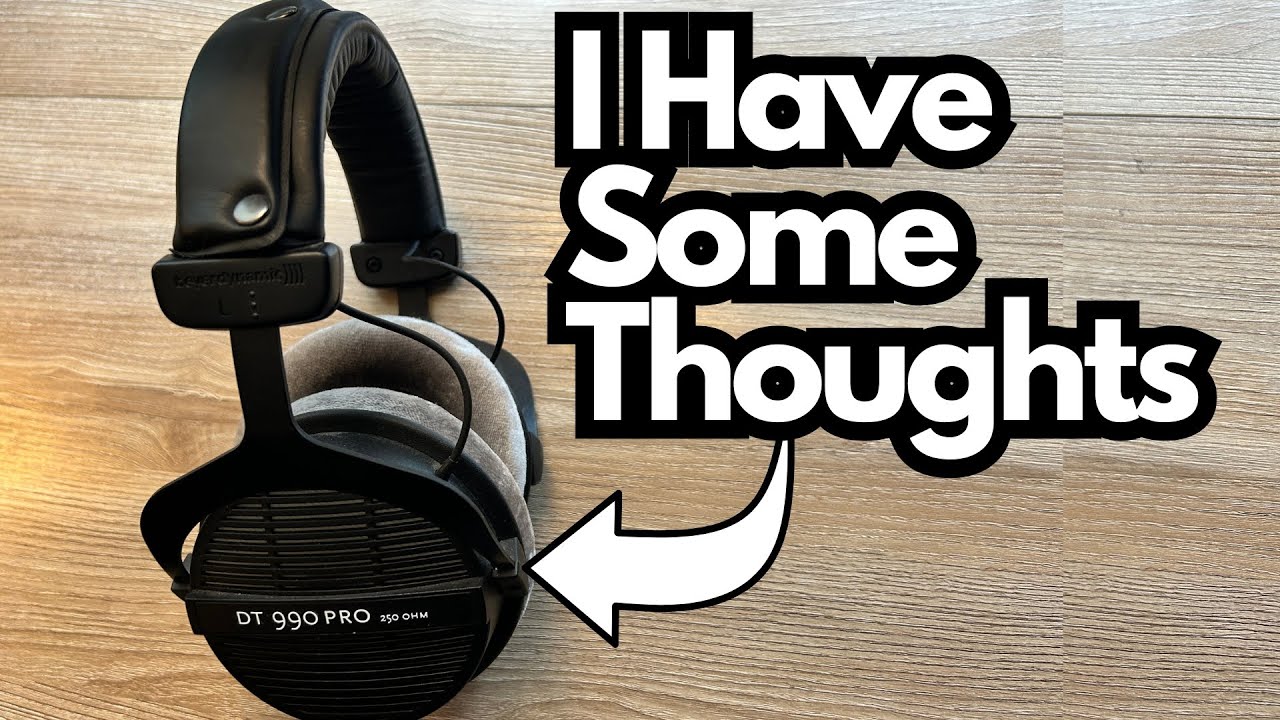
If you’re looking for a solid pair of studio headphones for mixing, the Beyerdynamic DT 990 Pro will show up on just about every “best of” list. They’re popular for a reason: they sound good, they’re comfortable, and they’re built for studio work (on Amazon).
But they’re not perfect—and depending on how you plan to use them, some of their drawbacks might be deal-breakers.
This review focuses on the 250-ohm, open-back DT 990 Pro and what they’re actually like to live with from a producer/guitarist’s perspective.
Overview / First Impressions
The DT 990 Pro (250 ohm) are open-back studio monitoring headphones designed primarily for mixing and critical listening. They’re not meant to be your everyday “take on the bus” headphones. They’re meant to sit in a studio, plugged into an interface or headphone amp, and help you make better mix decisions.
Out of the box, a few things stand out:
- Very comfortable fit with plush ear pads
- Clear, crisp top end that helps reveal detail in your mixes
- An old-school studio aesthetic with a coiled cable attached permanently to one earcup
They absolutely can sound fantastic—but only if you can properly drive them.
Build Quality & Design
The construction is classic Beyerdynamic: solid, functional, and clearly aimed at studio use rather than lifestyle fashion.
Highlights:
- Sturdy headband and yokes – Built to survive regular studio use.
- Velour ear pads – Soft and comfortable for long sessions.
- Adjustable fit – You can easily size them to your head, though once you find your setting, you’ll probably leave it there.
- Open-back design – The cups are vented, which lets sound leak in and out.
From a guitarist/producer’s perspective, the open-back design is a double-edged sword. It gives you a more spacious, natural soundstage for mixing, but you lose isolation. If you’re in a noisy room, or you’re tracking loud amps or vocals in the same space, that can be a real problem.
Features & Functions
Here’s what you’re working with on the 250-ohm DT 990 Pro:
- Impedance: 250 ohms
- Designed for use with audio interfaces, headphone amps, or dedicated studio gear.
- Not ideal for phones, laptops, or weak headphone outputs.
- Coiled cable
- Classic studio-style curly cable.
- Ends in a fixed cable on the headphone side and a standard jack on the other (with an adapter if you need 1/4″).
- Non-detachable cable
- The cable is hardwired into the left earcup.
- If the cable fails, gets damaged, or the connection gets loose, you can’t just swap it out—you’re dealing with a repair or a replacement of the whole unit.
Functionally, they do exactly what they’re supposed to: give you a detailed, revealing sound for monitoring and mixing. But some of the design choices are more old-school than modern, especially when it comes to connectivity.
How It Sounds / Use Cases
When properly driven—through an audio interface or headphone amp—these headphones really come alive.
Sound Character
- High-end: The top end is crisp and a bit forward. You’ll hear detail in cymbals, acoustic guitar, vocal air, and reverb tails very clearly. For mixing, that’s helpful; it lets you catch harshness or sibilance before it becomes a problem.
- Overall balance: They’re tuned for monitoring rather than hyped listening. They’re not bass-heavy “fun” headphones; they’re more about clarity and detail.
For guitarists and producers, this makes them good for:
- Dialing in amp sims and effects with more precision
- Hearing how your guitar sits in a dense mix
- Spotting problematic frequencies in your tones and arrangements
Best Use Cases
These headphones are ideal if:
- You’re mixing or editing in a home or project studio.
- You’re plugged into an audio interface or dedicated headphone amp.
- You want a detailed, open sound rather than isolation.
They are not ideal for:
- Casual listening from a phone or tablet
- Commuting or noisy environments
- Tracking in the same room as loud instruments or vocalists (because of bleed and lack of isolation)
Limitations / Things to Know
There are a few key drawbacks you should be aware of before buying, especially if you’re a guitarist or home producer.
1. High Impedance (250 Ohms)
This is the biggest practical issue.
- At 250 ohms, these need power.
- Plugging them straight into a phone, tablet, or weak laptop output will leave them sounding quiet and underpowered.
- To get the best out of them, you really want:
- An audio interface with a decent headphone amp, or
- A dedicated headphone amplifier
If you don’t already own one of those, that’s an extra cost and extra gear on your desk.
If the reviewer were buying again, they’d go for the 80-ohm version instead. That lower-impedance model is easier to drive and more flexible with different devices while still being suitable for studio work.
2. Non-Detachable Cable
The permanently attached cable is another pain point:
- You can’t swap the cable if it gets damaged or the connector gets loose.
- You’re stuck with the curly cable whether you like it or not.
- If the cable fails, you’re either repairing the headphones or replacing them entirely.
From a modern studio perspective, a detachable cable would make much more sense and extend the life of the headphones.
3. Curly (Coiled) Cable
Some people love coiled cables; others can’t stand them.
In this case:
- The cable tends to tangle and twist, which can be annoying during long sessions.
- It’s less convenient if you like a clean, minimalist setup or need extra reach without the cable pulling back.
4. Open-Back Design
The open-back design shapes both the sound and the practicality:
- Pros:
- More natural, airy soundstage for mixing.
- Cons:
- No isolation from room noise.
- Sound leaks out, which can bleed into microphones if you’re tracking in the same room.
If you work in an imperfect room—noisy environment, big windows, lots of reflections—and you value isolation, a closed-back model might suit you better.
The reviewer specifically says that if they were buying again, they would:
- Get the black version
- Choose the 80-ohm model
- Opt for a closed-back version for better isolation
Final Thoughts
The Beyerdynamic DT 990 Pro (250 ohm) are very good mixing headphones—as long as you use them the way they’re intended:
- In a studio setting
- Plugged into an audio interface or headphone amp
- Used primarily for monitoring and mixing, not casual on-the-go listening
They offer:
- Clear, crisp high-end that helps with critical listening
- Excellent comfort for long sessions
- A sound that works well for mixing guitars, vocals, and full arrangements
But they also come with some notable downsides:
- 250-ohm impedance demands proper amplification
- Non-detachable, curly cable that can tangle and can’t be easily replaced
- Open-back design with no isolation, which isn’t ideal for noisy rooms or tracking
If you already have an interface or headphone amp and you want a comfortable, detailed pair of open-back cans for mixing, these are a strong option.
If you want more flexibility, easier drive from various devices, and better isolation, then the 80-ohm, closed-back, black version of this line would probably be the smarter buy.
Resources & Further Study
If you’re getting into mixing and want to make the most of headphones like these, there’s a free resource worth checking out:
- Free Mixing Cheat Sheet – Available at
producersociety.com/freeingcheatsheet(URL as mentioned). It includes mixing tips and additional material that isn’t shared elsewhere.
You can also join the community forum at:
- Producer Society Forum –
forum.producersociety.com
A place to discuss mixing, gear, and production with other musicians and producers.