

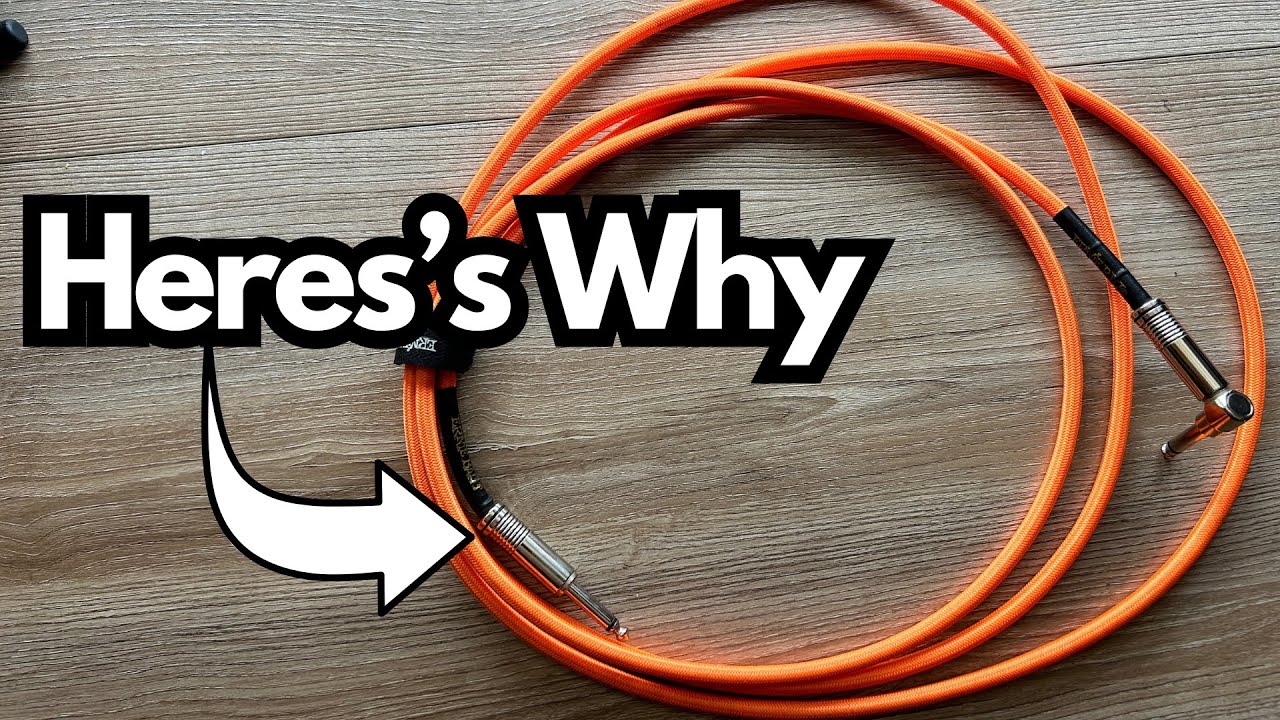
The humble instrument cable can make a bigger difference than you think. Noise, durability, and even the angle of the jack can affect how comfortable and reliable your setup feels.
The Ernie Ball right-angle instrument cable (on Amazon) has quietly become one of my go-to choices. It’s not flashy in a “new pedal day” kind of way, but it solves real problems for everyday guitar playing.
Overview / First Impressions
The Ernie Ball right-angle cable is a braided instrument cable available in multiple colors, with one end featuring a right-angle jack. It’s designed for guitar, bass, and other instruments that use a standard 1/4″ TS connection.
What stands out immediately:
- Braided outer jacket that feels tough and flexible
- Right-angle plug that’s perfect for playing while seated
- Multiple color options that make it easy to distinguish from other cables
I’ve used mine for a couple of years, and it’s become one of those “set it and forget it” pieces of gear: it just works.
Build Quality & Design
From a guitarist’s perspective, build quality is where this cable really earns its keep.
Braided Outer Jacket
The cable uses a braided fabric-style outer jacket rather than a smooth rubber one. In practical terms, that means:
- It feels more durable and less flimsy
- It’s less likely to kink in weird ways
- It holds up well to being coiled, uncoiled, and tossed in a gig bag
After a couple of years of use, I haven’t had any issues with:
- Shorting out
- Intermittent crackling
- Random cut-outs
In other words, it’s been electrically solid, which is exactly what you want from a cable you depend on regularly.
Right-Angle Jack
The star of the show for guitarists is the right-angle plug. This is especially useful when:
- You’re sitting on a couch or chair
- You plug into a front-mounted jack (like on a Strat or Tele)
- You want to avoid the plug sticking straight out and getting bumped
With a straight jack, when you sit down, the plug can push into the chair or couch, putting stress on both the cable and the guitar’s jack. The right-angle design keeps everything closer to the body of the guitar, safer and more comfortable.
Features & Functions
Here’s a quick rundown of what this cable offers in practical terms:
- Right-angle 1/4″ TS plug on one end (ideal for guitar input jacks)
- Straight 1/4″ TS plug on the other end (for amps, interfaces, pedals, etc.)
- Braided exterior for durability and flexibility
- Multiple color options so you can:
- Color-code your rig
- Quickly spot your instrument cable among a tangle of XLRs, power cables, and patch leads
Built-In Cable Tie
One underrated feature is the attached cable tie/strap. You wrap it around your coiled cable, and it:
- Keeps the cable neat and organized
- Helps prevent tangling in your bag or studio
- Makes setup and teardown faster and cleaner
It’s a small detail, but if you’re tired of fighting cable spaghetti every time you play, this makes a difference.
How It Sounds / Use Cases
Sonically, this is a transparent, reliable instrument cable. It’s not trying to color your tone; it’s just there to carry your signal cleanly.
Where It Shines for Guitarists
- Home practice: Perfect for couch sessions or desk setups where a straight plug would jab into furniture.
- Studio work: Easy to distinguish from XLRs and other cables thanks to the color options, which speeds up your workflow.
- Live rigs: The right-angle end is great on pedalboards or guitars with front jacks, keeping things tidy and less prone to accidental unplugging.
If you’re running into an amp, audio interface, or pedalboard, this cable will slot in easily and do its job without drama.
Limitations / Things to Know
No piece of gear is perfect for every scenario. A few points to keep in mind:
- Right-angle isn’t ideal for every guitar: While great for front-mounted jacks, some side-mounted jacks or certain pedal setups might still work better with a straight plug, depending on your layout.
- It’s still a standard instrument cable: It doesn’t have built-in muting, wireless functionality, or special noise-reduction circuitry. If you’re in extreme environments (long runs on big stages, tons of interference), you may still want to consider higher-end or specialized cables.
That said, for most guitarists in typical home, rehearsal, and gigging scenarios, it’s more than up to the task.
Final Thoughts
The Ernie Ball right-angle instrument cable has become one of my default choices when I need a new cable. The combination of:
- Durable braided construction
- Practical right-angle plug
- Helpful built-in cable tie
- Easy-to-spot color options
makes it a very guitarist-friendly option.
If you’re tired of straight plugs digging into your chair, or if you want a cable that stays organized and has held up well over years of use, this one is absolutely worth a look.
Resources & Further Study
If you’re looking to level up your playing while you’re plugged in, two useful resources mentioned alongside this gear:
Fretboard Memorization Cheat Sheet – TravelingGuitarist.com
A printable guide that lays out major and minor triads in every key, using octave mapping and other techniques. It’s great for:
- Memorizing the notes on the fretboard
- Understanding triads (the foundation of chords and harmony)
- Improving your improvisation across multiple keys
Traveling Guitarist Forum – forum.travelingguitarist.com
An online community where you can discuss guitar, music, gear, and related topics with other players.
Pair a reliable cable with a solid practice routine, and your rig—and your playing—will both feel better.