

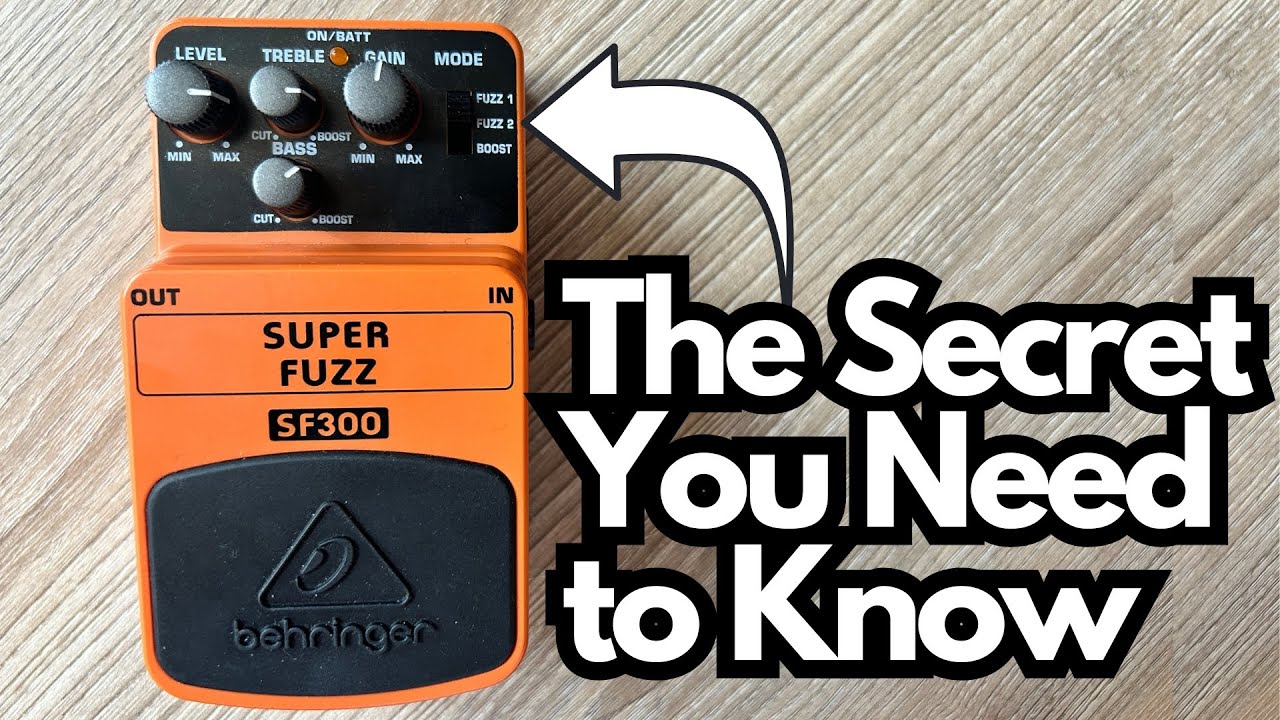
If you’re chasing classic, nasty fuzz tones but don’t want to drop boutique money, the Behringer Super Fuzz (on Amazon) is one of the most talked‑about options out there. It’s cheap, it’s loud, and it can sound surprisingly good—especially if you know how to play to its strengths.
This post walks through what it does well, where it falls short, and how to get the most out of it from a guitarist’s perspective.
Overview / First Impressions
The Behringer Super Fuzz is a budget-friendly fuzz pedal clearly inspired by classic Japanese fuzz circuits. It’s one of the most popular low-cost fuzzes on the market, and for good reason:
- It delivers aggressive, synthy, octave‑flavored fuzz.
- It offers multiple fuzz modes for different flavors of gain.
- It’s extremely affordable compared to most fuzz pedals.
Tonally, this thing can sound fantastic—thick, cutting, and wild. But it’s very much a “sounds better than it feels” kind of pedal. The tones punch way above its price; the build quality does not.
Build Quality & Design
This is where the Super Fuzz really shows its price point.
Pros:
- Compact footprint.
- Simple, intuitive layout.
- Light and easy to throw in a bag.
Cons:
- Plastic enclosure feels flimsy.
- Knobs and jacks don’t inspire confidence.
- Battery access is awkward—you have to press into a release slot (often with a pen) on the side to get the battery compartment open.
If you’re planning to stomp on this thing night after night on tour, it’s not ideal. For home use, studio work, or occasional gigging with a bit of care, it’s fine—but you do need to treat it gently.
Features & Functions
Despite the low price, the Super Fuzz gives you a decent amount of control:
- Fuzz Modes:
- Fuzz 1 – The more usable and generally preferred mode: thick, aggressive, and musical.
- Fuzz 2 – A more extreme, scooped, or harsher flavor of fuzz.
- “Secret” Mode:
There’s a sweet spot between Fuzz 1 and Fuzz 2 on the mode selector. If you set the switch in that in‑between position, you can get a hybrid tone that some players really like—slightly different texture and response compared to either mode alone. - Gain Control:
Controls the amount of fuzz/saturation. There’s plenty of gain on tap. - Tone Controls:
- Treble – Lets you dial in bite and clarity.
- Bass – Lets you thicken things up or tame the low‑end boom.
The controls are straightforward, and you can get to a good sound quickly, especially in Fuzz 1 mode.
How It Sounds / Use Cases
From a guitarist’s perspective, this pedal is all about bold, dirty, almost synth-like fuzz. It’s not a subtle overdrive; it’s in your face.
Best Use: Two-String Riffs & Octaves
One of the key tricks with this pedal:
- It sounds best with one or two strings at a time.
- Single-note lines and double-stops come through thick and defined.
- Two-string riffs have a focused, aggressive character that works great for stoner rock, grunge, or heavy riff-based playing.
- It also shines with octaves:
- Classic rock and alternative-style octave riffs really pop.
- You get that snarling, harmonically rich fuzz that cuts through a mix.
When It Struggles: Full Chords
Where it falls down is when you start stacking up notes.
- With three or more strings, especially full chords with lots of low end, the sound quickly turns muddy.
- Complex chord voicings tend to blur together and lose note definition.
So while it’s fun for big walls of noise, it’s not the best choice when you want clarity in extended chords or intricate rhythm work.
Ideal Contexts
- Heavy riffs and power chords (kept tight and not too many strings).
- Lead lines that need to scream and stand out.
- Octave riffs and simple double-stops.
- Garage rock, doom, grunge, and experimental noise textures.
Limitations / Things to Know
Before you pick one up, keep these points in mind:
- 1. Build Quality Is the Weak Link
- Plastic enclosure, plastic-feeling knobs, and less-than-robust jacks.
- Not designed to be abused on the road.
- 2. Battery Access Is Awkward
- You need to push into a side slot (often with a pen or similar object) to open the battery compartment.
- Using a power supply is usually a better idea.
- 3. Not a “Do-It-All” Fuzz
- Excels at aggressive, focused fuzz tones.
- Struggles with clarity on big chords and more than two strings at a time.
- If you’re after a smooth, vintage, always-on fuzz, this might not be your first choice.
- 4. Best Mode Is Fuzz 1
- Most players will gravitate toward Fuzz 1 as the main sound.
- Fuzz 2 and the in‑between “secret” mode are fun for experimentation but less universally useful.
Final Thoughts
The Behringer Super Fuzz is a classic example of “tone per dollar” done right:
- Sonically: it can sound amazing—huge, aggressive, and inspiring—especially in Fuzz 1 mode with two-string riffs and octave lines.
- Physically: it feels cheap, and you have to be careful with it.
If you want a great-sounding fuzz on a tight budget, or you’re just getting into fuzz and don’t want to invest in an expensive boutique box yet, this pedal is a very solid option—just don’t expect tank-like construction.
Treat it gently, learn to work with its strengths (two-string parts, octaves, focused riffs), and it can absolutely earn a spot on your board or in your studio toolbox.
Resources & Further Study
If you want to get more musical mileage out of a fuzz pedal like this, especially with double-stops and octaves, it helps to really know your fretboard and triads.
Fretboard Memorization Cheat Sheet – TravelingGuitarist.com
A resource that lays out major and minor triads in every key using octave mapping and other techniques. It’s designed to help you:
- Memorize the fretboard.
- Understand triads as the foundation of chords and harmony.
- Improvise more confidently across multiple keys.
Traveling Guitarist Forum
At forum.traveling.guitarist.com you can connect with other players, talk guitar, music, gear, and share ideas on how to use pedals like the Super Fuzz more creatively.
Combining a pedal like this with a solid grasp of triads and the fretboard opens up way more than just “turn it on and make noise”—you can start crafting riffs and lines that really stand out.