

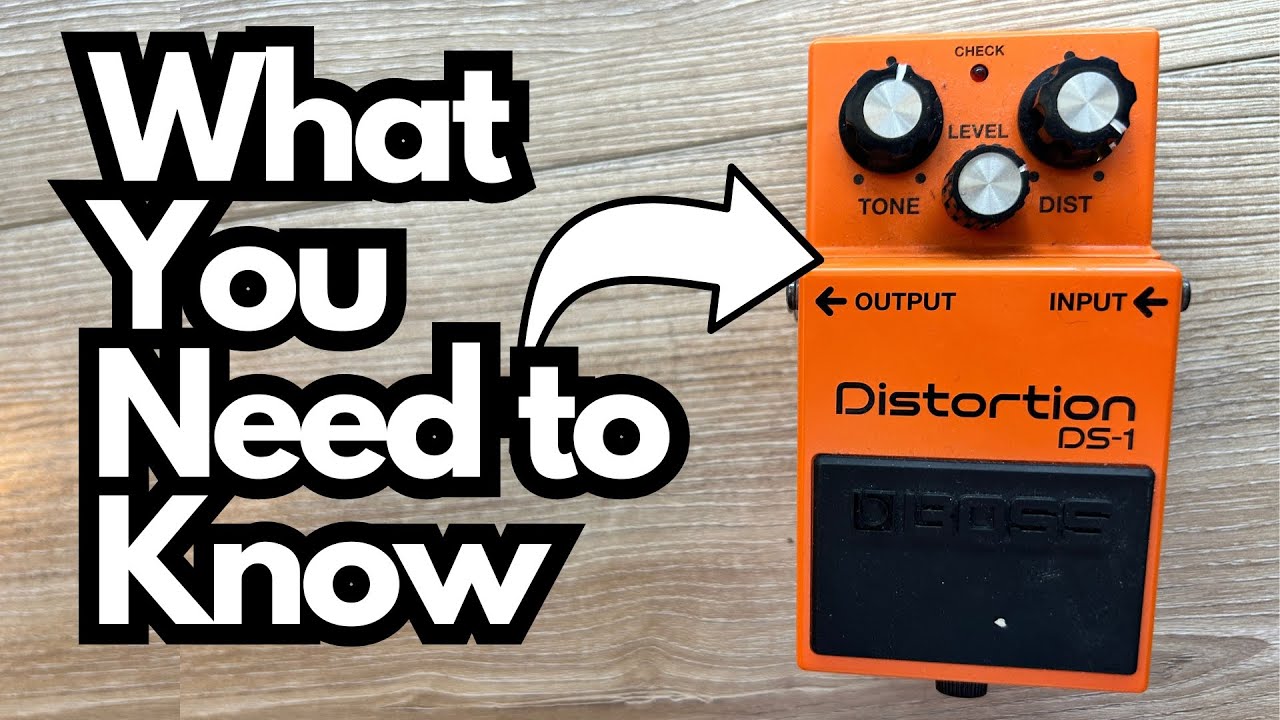
The Boss DS-1 is one of those pedals almost every guitarist bumps into sooner or later. It’s cheap, it’s bright orange, and it’s been on more pedalboards (and records) than most of us will ever know.
If you’re just getting into distortion pedals, or you want a no-nonsense, affordable way to add some crunch and sustain to your sound, the DS-1 (on Amazon) is a serious contender. It’s not perfect, but for the price, it delivers a lot of usable tone.
Overview / First Impressions
The Boss DS-1 is a straightforward, three-knob distortion pedal:
- Level – overall output volume
- Tone – EQ tilt, from darker to very bright
- Distortion – amount of gain/saturation
In use, it’s simple and immediate. Plug in, twist a few knobs, and you’re in classic rock/metal territory. In the example setup here, it was run into GarageBand using an amp sim, which is a pretty realistic way many home players will actually use it these days.
Sonically, it leans toward a bright, cutting distortion that works well for leads and tight rhythm parts, especially if you like your guitar to stand out in a mix.
Build Quality & Design
Boss pedals are known for being tanks, and the DS-1 is no exception:
- Sturdy metal enclosure
- Standard Boss footprint and layout
- Top-mounted Level, Tone, and Distortion knobs
- Famous Boss footswitch and status LED
From a purely aesthetic point of view, the DS-1 is divisive. The bright orange color is iconic, but not everyone loves how it looks. If you care about visuals, you might find it a bit ugly, even if the sound is solid.
Functionally, though, it’s rock solid. This is the kind of pedal you can throw in a gig bag for years without worrying about it falling apart.
Features & Functions
The DS-1 is as minimal as it gets, but each control has a big impact on your tone.
Level
The Level knob controls the output volume of the pedal. This is useful for:
- Matching volume with your clean tone
- Boosting your signal slightly for solos
- Pushing your amp or amp sim a bit harder
Tone
The Tone knob is where you’ll spend a lot of time. The EQ response on the DS-1 is very pronounced:
- Turn it clockwise: more treble, more bite, more edge
- Turn it counterclockwise: darker, smoother, less harsh
Cranking the Tone all the way up can get very bright—often too bright for most players, especially with single-coils or bright amp sims. A more moderate setting (around 10–1 o’clock) is usually a better starting point.
Distortion
This is the gain/saturation control:
- Lower settings: mild crunch, almost like a dirty overdrive
- Higher settings: classic DS-1 distortion—compressed, saturated, and aggressive
It doesn’t do super modern, high-gain metal by itself, but it’ll cover classic rock, punk, and 80s-style lead tones without much trouble.
How It Sounds / Use Cases
Through an amp sim (like in GarageBand) or a clean amp, the DS-1 delivers:
- Tight, cutting distortion that works well for:
- Rock rhythm parts
- Melodic lead lines
- Simple power-chord riffing
- Plenty of sustain, especially with the Distortion knob turned up
- A tone that can slice through a mix, thanks to that strong upper-mid/treble presence
For many guitarists, the DS-1 makes the most sense in these situations:
- Beginner pedalboard: first distortion pedal that’s affordable and reliable
- Backup distortion: a cheap, dependable backup if your main drive fails
- Home recording: plug into an interface, use an amp sim, and get usable tones fast
You’ll likely want to tame the Tone control a bit to avoid harshness, especially on bright guitars or amp models.
Limitations / Things to Know
1. Harshness at High Tone Settings
The Tone control is very sensitive. With the knob cranked, the pedal can get:
- Extremely bright
- A bit thin
- Fatiguing on the ears, especially for lead playing
Most players will find the sweet spot somewhere in the lower-to-middle range of the Tone knob.
2. “Weird” Saturation on Higher Notes
One noticeable quirk is the character of the saturation on higher notes. On the upper strings and higher frets, the distortion can:
- Sound a bit odd or synthetic
- Emphasize certain frequencies in a way that doesn’t feel totally smooth
This isn’t a dealbreaker, but if you’re very picky about lead tone and high-register clarity, you’ll notice it.
3. Aesthetics
This is subjective, but worth mentioning:
- The bright orange look is iconic but not universally loved
- If appearance matters to you, you might find the design a bit unattractive
Of course, looks don’t affect the sound—but for some players, they matter.
Final Thoughts
The Boss DS-1 is a solid, no-frills distortion pedal that delivers a lot of value for the money.
Pros:
- Affordable and widely available
- Built like a tank
- Simple, intuitive controls
- Classic, cutting distortion that works for rock, punk, and lead playing
Cons:
- Tone control can get harsh quickly
- Saturation on higher notes can sound a bit odd
- Aesthetics aren’t for everyone
If you want boutique, super-refined distortion, this probably isn’t it. But if you need a reliable, classic distortion sound on a budget, the DS-1 absolutely earns its legendary status.
Resources & Further Study
If you’re using a pedal like the DS-1 to explore lead playing and improvisation, it helps a lot to really know your fretboard and triads.
A useful resource mentioned is the Fretboard Memorization Cheat Sheet from travelingguitarist.com. It focuses on:
- Major and minor triads in every key
- Visual “octave mapping” and other techniques
- Using triads as the foundation for understanding harmony and improvisation
There’s also a forum at forum.travelingguitarist.com, where you can discuss guitar, music, and related topics with other players.