

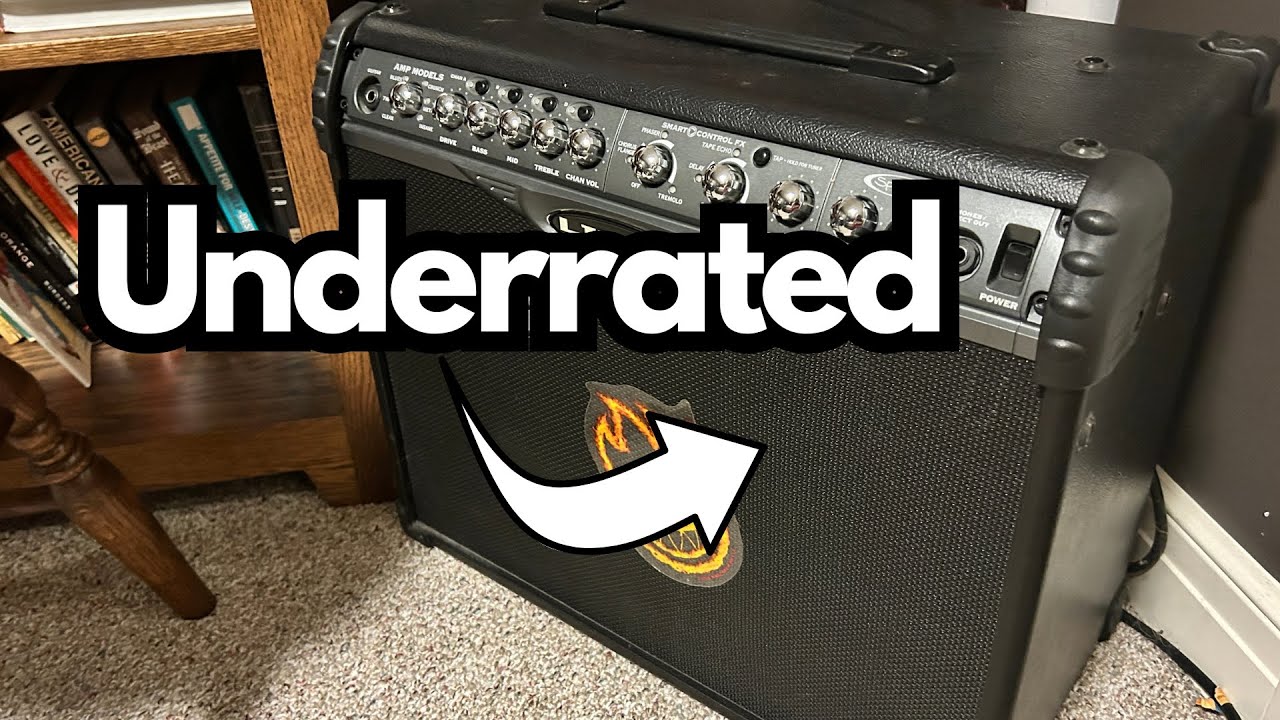
If you started playing electric guitar in the 2000s, there’s a good chance you’ve crossed paths with a Line 6 Spider.
For many players, the Spider II was their first “real” amp: loud enough to jam, packed with effects, and full of high-gain tones that felt massive in a bedroom.
I’ve had my Line 6 Spider II for around 15 years now. It’s been through countless practice sessions, early bands, and moves—and it still works.
With digital gear now firmly mainstream, it’s a good time to look back at what this amp actually does well, who it’s for, and whether it still holds up for guitarists today.
Overview / First Impressions
The Line 6 Spider II is a solid-state, fully digital modeling amp designed primarily as a versatile practice and small-gig solution.
What makes it stand out:
- Multiple amp-style channels
- Built-in modulation and delay effects
- Onboard reverb
- Headphone out for silent practice
- Footswitch compatibility
When it came out, it was trendy to trash digital amps—especially the Spider series. But in reality, for a lot of players this amp was (and still is) a super practical tool: plug in, dial up a big distorted tone, add some delay or chorus, and you’re off.
Build Quality & Design
Despite being an older digital combo, the Spider II has held up impressively well over time.
Durability:
- My unit is roughly 15 years old and still works without issues.
- The controls, jacks, and switches have survived regular use.
- The enclosure and hardware are sturdy enough for rehearsals and small gigs.
Layout:
- Front panel with clearly labeled knobs and buttons.
- Easy access to:
- Amp channels
- Modulation effects
- Delay types
- Reverb
- Master volume
- Headphone jack on the front for quick silent practice.
- Input for a foot controller/pedal to switch channels and control effects hands-free.
The design is very “plug and play”: no menus, no screens—just knobs and switches. For a beginner or casual player, that simplicity is a big plus.
Features & Functions
The Spider II packs a lot of functionality into a single combo amp, especially for practice and learning.
Amp Channels
You get multiple channels and voicings that cover a range of tones, from clean to high gain. While they’re not going to fool a tube snob, they’re more than usable for:
- Rock and metal rhythm tones
- Lead tones with sustain
- Basic clean and crunch sounds
The amp is especially known for its distortion—tight, saturated, and very accessible without much tweaking.
Built-In Effects
One of the biggest selling points of the Spider II is the built-in effects. You get:
Modulation:
- Chorus
- Flanger
- Phaser
- Tremolo
Delay / Echo:
- Standard delay
- Tape echo
- Sweep echo
Ambience:
- Reverb
These are controlled via simple knobs, so you can quickly add movement, space, or atmosphere to your sound without needing a pedalboard. For a beginner, it’s a great way to experiment with effects and figure out what you like.
Controls & Connectivity
- Master Volume: Global level control.
- Pedal Control: For connecting a Line 6 foot controller, letting you switch channels and toggle effects more easily.
- Headphone Out: Perfect for late-night practice or apartment living.
All of this makes the Spider II an excellent self-contained rig. Guitar > Amp > Headphones, and you’re set.
How It Sounds / Use Cases
From a guitarist’s perspective, here’s where the Spider II really shines.
Distortion & High-Gain Tones
If you grew up playing rock or metal, this amp probably felt like a game-changer. The distortion is:
- Saturated and aggressive
- Easy to dial in
- Great for palm-muted riffs and lead lines
It’s not subtle—but that’s exactly what many players want from a practice amp.
Clean and Modulated Sounds
The clean tones are serviceable, especially when paired with chorus, phaser, or a bit of delay. You can get:
- Shimmery, chorus-laced cleans
- Swirly, phased textures
- Ambient delay/reverb pads
Is it going to beat a boutique tube amp with high-end pedals? No. But for practicing, writing, or learning effects, it’s absolutely workable.
Practice and Gigging
Practice:
- Ideal as a bedroom or living-room amp.
- Headphone out makes it easy to play without bothering anyone.
- Built-in effects mean you don’t need pedals to have fun or experiment.
Gigging:
- It’s loud enough and reliable enough for small gigs or rehearsals.
- You can absolutely use it as a gig amp, especially for bar gigs, jams, or as a backup.
Many players underestimate how practical a simple, reliable combo like this can be on a small stage.
Limitations / Things to Know
The Spider II is a product of its time, and there are some trade-offs to be aware of:
- Digital feel: Compared to modern modelers or good tube amps, the response and feel are more rigid and “digital.”
- Tone purists won’t be convinced: If you’re chasing ultra-authentic vintage tones, this isn’t the amp for you.
- Aging platform: Technology has moved on—newer Line 6 products (like Helix or Catalyst) are much more advanced in terms of sound quality and flexibility.
That said, for what it is—a straightforward, affordable, feature-packed practice and small-gig amp—it still holds up surprisingly well.
Final Thoughts
The Line 6 Spider II has taken plenty of criticism over the years, but in real-world use it’s been a solid, reliable workhorse. For:
- Beginners learning electric guitar
- Players who want an all-in-one practice solution
- Guitarists who need basic tones plus effects without building a pedalboard
…it does the job, and does it well.
Even 15 years later, mine still powers up, sounds the way I remember, and remains a perfectly usable practice amp. Line 6 has been making practical, player-focused gear for a long time, and the Spider II is a good example of that.
If you find one used for a good price, it’s still a very viable option as a practice or backup amp.
Resources & Further Study
If you’re using an amp like the Spider II to practice, pairing it with some focused fretboard work can accelerate your progress.
Fretboard Memorization Cheat Sheet – Available at travelingguitarist.com, this resource lays out:
- Major and minor triads in every key
- How to map them across the fretboard (including octave mapping techniques)
- A practical way to understand harmony and start improvising in multiple keys using triads as a foundation
Guitar & Music Forum – You can also join the community at:
A place to talk guitar, music, and related topics with other players.
Using a versatile amp like the Spider II alongside structured fretboard and harmony practice is a powerful combo for growing as a guitarist.