

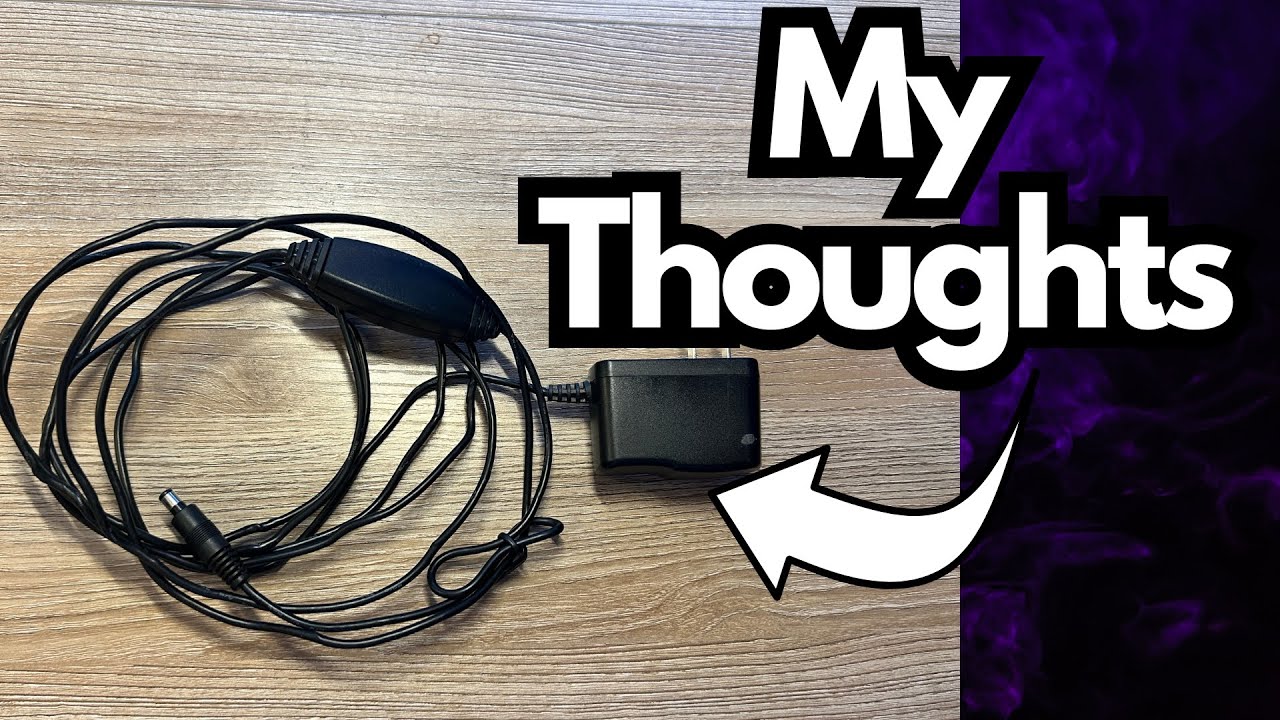
If you’ve spent any time around pedalboards, you’ve seen the Boss PSA adapter. It’s one of those unglamorous but essential pieces of gear: a basic 9V power supply that quietly keeps your pedals alive (on Amazon).
This isn’t a flashy boutique unit, but for a lot of guitarists, reliability and simplicity matter more than hype. If you’re running a few pedals at home, powering a single Boss stompbox, or need a dependable backup for gigs, the PSA is worth a look.
Overview / First Impressions
The Boss PSA adapter is exactly what you’d expect from Boss: it works, it’s consistent, and it doesn’t try to be anything it’s not.
Key takeaways:
- Standard 9V DC power supply
- Designed for Boss pedals but works with most center-negative 9V stompboxes
- Long cable for easy routing on or around your pedalboard
- Compact wall plug that doesn’t hog your power strip
- Simple status LED so you know when it’s live
Nothing fancy, but that’s kind of the point. You plug it in, it powers your pedal, and you get on with playing.
Build Quality & Design
Boss gear has a reputation for being tough, and the PSA follows that tradition.
What stands out:
- Long cable: The cable length is generous, which is genuinely useful. You can run it from a power strip offstage or behind your desk and still comfortably reach your pedals.
- Compact wall wart: Some adapters are huge and block neighboring outlets. The PSA is relatively small, so it doesn’t eat up your entire power bar.
- Straight plug (not right-angle): The barrel connector is a straight jack. A right-angle plug would be a bit more pedalboard-friendly in tight spaces, but the straight jack still works perfectly fine for most setups.
- Mystery clip/strain relief: There’s a small plastic piece on the cable (often used as a strain relief or for clipping/organizing). It’s not essential, but it’s there if you want to tidy your cable a bit.
Overall, it feels like a solid, no-nonsense piece of gear built to be used and forgotten about—in a good way.
Features & Functions
Here’s what the Boss PSA brings to the table from a functional standpoint:
- 9V DC output – The standard for most guitar pedals.
- Center-negative polarity – Compatible with Boss pedals and the majority of modern stompboxes.
- LED indicator – A small green light comes on when the adapter is powered, so you instantly know it’s active.
- Single-output design – This is a one-pedal (or daisy-chain) adapter, not a multi-output isolated power supply.
For a basic home rig or a small pedal setup, this is often all you need.
How It Performs & Practical Use Cases
Power supplies don’t have a “tone” in the same way pedals do, but they definitely affect your rig if they’re noisy or unstable. The nice thing about the Boss PSA is that it just works quietly in the background.
Practical use cases for guitarists:
- Single pedal setups: Perfect if you’re running one overdrive, tuner, or looper straight into an amp.
- Small boards: You can use the PSA with a daisy-chain cable to power several low-draw pedals in a simple setup.
- Practice rigs: Ideal for bedroom or home-studio players who don’t need a full-blown isolated power brick.
- Backup solution: Even if you own a big multi-output power supply, having a PSA in your gig bag as a backup is smart. If something goes wrong mid-gig, you can at least power your tuner or essential drive pedal.
The important thing is that it delivers stable 9V power without taking up mental space. You plug it in and forget it.
Limitations / Things to Know
As solid as the Boss PSA is, there are a few things to keep in mind:
- Not a multi-output power brick: It powers one line. If you want to run many pedals cleanly—especially high-draw digital units—you’ll eventually want a dedicated multi-output isolated supply.
- Straight connector only: Some players prefer right-angle barrel connectors to save space and reduce strain on jacks. The PSA’s straight plug is functional but not as compact. This causes problems for some pedals and other devices, particularly if they have a deeper jack.
- Designed for standard 9V use: Make sure your pedals are 9V, center-negative, and within the current limits of the adapter. Always check the label on your pedal before plugging in any power supply.
If your rig is modest and you’re not trying to power a spaceship of digital pedals, these limitations won’t be a big deal.
Final Thoughts
The Boss PSA adapter is the definition of “set it and forget it” gear. It’s:
- Reliable
- Compact
- Equipped with a long cable
- Clearly indicated with an LED
For guitarists with a simple setup—or anyone who just wants a dependable 9V supply without overthinking it—the PSA does exactly what it’s supposed to do and does it well.
If you’re running a big, complex board, you’ll eventually graduate to a full power system. But even then, the PSA is a handy piece to keep around as a backup or for small grab-and-go rigs.
Resources & Further Study
If you’re looking for something to actually play once your pedals are powered up, there are a couple of useful resources mentioned:
- Fretboard Memorization Cheat Sheet – Available at travelingguitarist.com, this cheat sheet focuses on major and minor triads in every key. It uses “optive mapping” and other techniques to help you:
- Guitar Forum – You can also join the community at forum.travelingguitarist.com to talk guitar, music, and related topics with other players.
Power your pedals, plug in, and put that reliable Boss PSA to work by actually making some music.