

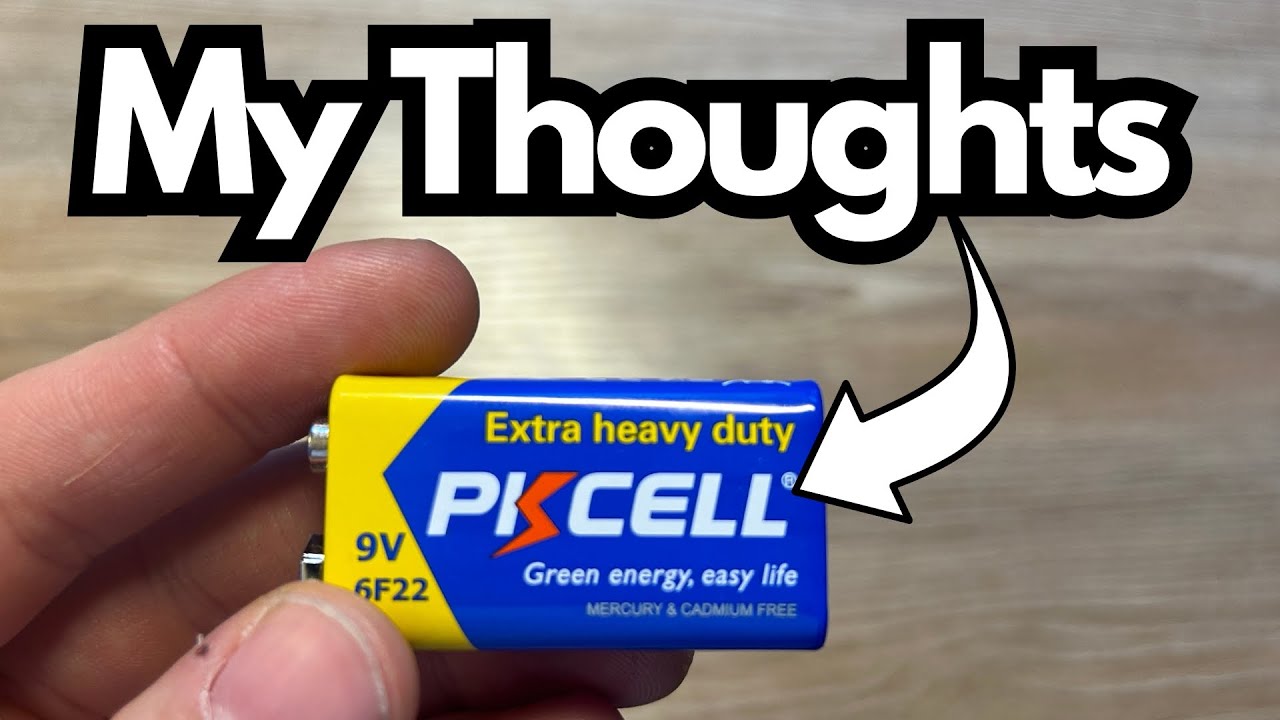
If you play electric guitar and use pedals or active pickups, you’ve probably grabbed whatever 9V battery was closest and called it a day. But not all 9V batteries behave the same way—and for certain guitar gear, that actually matters.
Let’s break down why you might want these in your rig.
Overview / First Impressions
The PKCell (often spelled “PKCELL”) 9V carbon batteries are basic (on Amazon), no-frills carbon-zinc batteries. They’re available in bulk packs (often around 20 per pack), which makes them an easy option if you go through a lot of 9Vs.
From a guitarist’s perspective:
- They behave like traditional carbon 9Vs, not modern alkalines.
- They’re inexpensive and good for experimentation.
- They’re particularly useful if you have pedals that respond differently to carbon vs. alkaline batteries.
No surprises, no weird behavior—just what you’d expect from a carbon battery.
Build Quality & Design
These are standard-sized 9V batteries with:
- Normal 9V snap connectors (no fitment issues in pedals or battery boxes).
- Basic, generic branding and labeling.
- The typical lightweight feel of a carbon-zinc cell (they’re often a bit lighter than some alkalines).
They’re clearly not premium “pro audio” batteries, but for guitar gear, that’s not the point. You’re buying them for how they discharge and interact with your circuits, not for luxury packaging.
Features & Functions
Key characteristics of these carbon 9V batteries:
- Chemistry: Carbon-zinc (sometimes just called “carbon”)
- Voltage: 9V nominal
- Pack size: Often sold in bulk (e.g., 20-pack)
- Use case: Great for pedals and some active electronics where you want the classic, slightly “saggy” behavior of older-style batteries
Important functional notes:
- Shorter lifespan than alkaline: They won’t run as long in high-drain devices.
- Predictable discharge curve: As they drain, the voltage drops more gradually and noticeably than many alkalines. Some vintage-style circuits sound different as this happens.
How It Sounds / Use Cases (For Guitarists)
1. Certain Pedals React Differently
Here’s where things get interesting for guitar players. Some analog pedals—especially vintage-style circuits like:
- Classic fuzzes (Fuzz Face, Tone Bender types)
- Some overdrives and boosts
- Old-school analog delays or modulation pedals
can respond differently to carbon batteries compared to alkalines. Carbon batteries tend to:
- Drop voltage more quickly as they’re used
- Introduce a bit of voltage “sag” under load
That sag can:
- Soften the attack
- Slightly compress the signal
- Change the gain structure and feel of the pedal
If you’ve ever heard people talk about a fuzz “sounding better on a dying battery,” this is related. Using a carbon battery is one way to get closer to that older, less consistent but often more musical behavior.
2. Active Pickups in Guitars
These batteries were also used in a guitar with active pickups. In that role:
- They work fine for powering active electronics.
- You just shouldn’t expect them to last as long as a good alkaline or lithium 9V.
If you’re gigging heavily or don’t want to think about battery life, an alkaline is still the safer choice. But for home use, or if you’re stocked up with a bulk pack, carbon batteries will do the job.
Limitations / Things to Know
1. Shorter Battery Life
They don’t last as long as alkaline 9Vs. In active pickups or always-on pedals, you’ll be changing them more frequently.
2. Not Ideal for All Devices
For high-drain or critical devices (wireless systems, digital pedals with high current draw, tuners you rely on mid-gig), you’ll usually want:
- Alkaline, or
- Rechargeable NiMH, or
- Lithium 9V (where supported)
Carbon batteries are more about tone and behavior in specific analog circuits than about maximum runtime.
3. Tone Benefit Is Pedal-Dependent
Not every pedal will sound or feel different with carbon vs. alkaline. Some circuits are more sensitive to supply voltage and battery chemistry; others will sound basically identical until the battery is nearly dead.
If you’re curious, experiment with:
- Fuzzes
- Vintage-style overdrives
- Old analog stompboxes
and see if you notice how the response changes over time.
Final Thoughts
The Pycell/Piscell 9V carbon batteries do exactly what they’re supposed to do:
- They behave like classic carbon-zinc 9Vs.
- They’re affordable, especially in bulk.
- They’re a solid choice if you have pedals that react musically to carbon batteries or you want to explore battery sag and old-school behavior.
They’re not the best choice if you just want maximum battery life—for that, stick with good alkalines or rechargeables. But if you’re tone-chasing with fuzzes, vintage-style pedals, or you just want a stash of carbon 9Vs for experimentation, these are worth having in your drawer.