

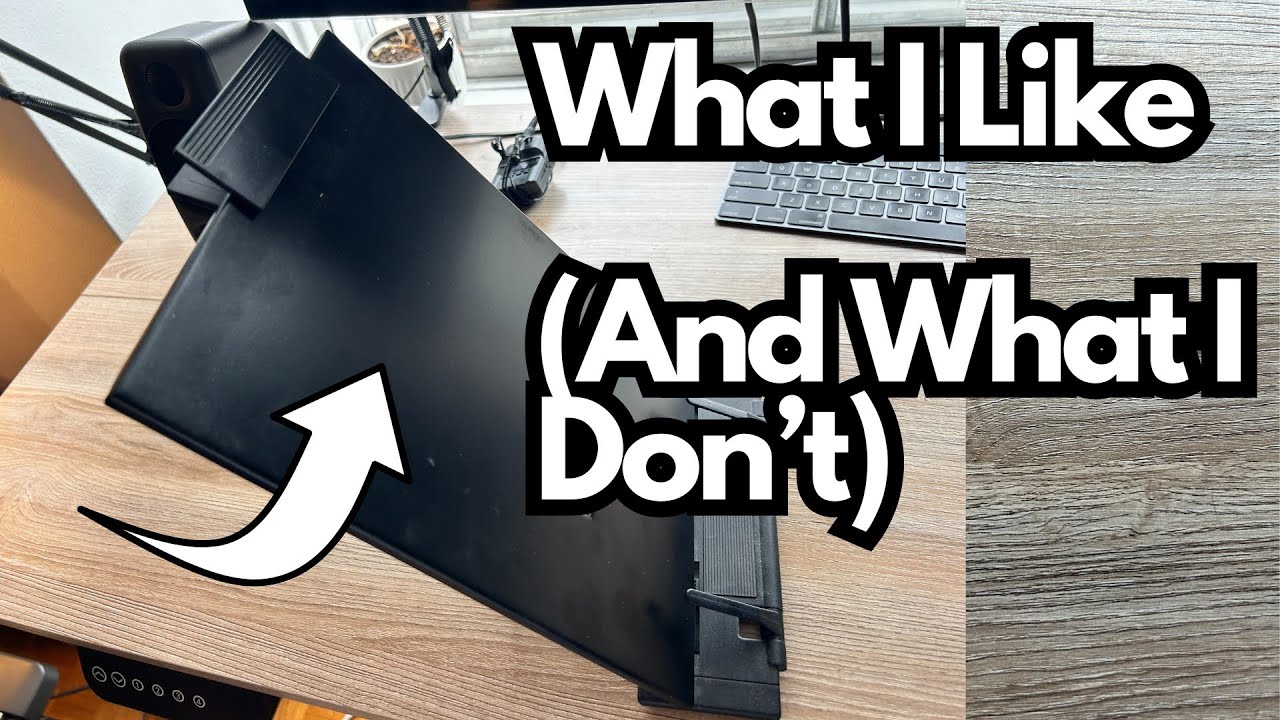
If you practice guitar with books, printouts, or handwritten charts, you know how frustrating it is when pages refuse to stay put or sit at the wrong angle. A good, adjustable stand can quietly make your practice time smoother and more focused.
This stand (on Amazon) is one of those pieces of gear: not flashy, not complicated, but genuinely useful—especially if you’re learning songs, working through method books, or keeping reference material in front of you while you play.
Overview / First Impressions
I’ve been using this stand for roughly two years, mainly for guitar practice and learning new material. It’s a simple, lightweight stand designed to hold books, sheets, or tablets, and it does its job reliably.
The core appeal is its flexibility. You can adjust it into several different positions depending on how and where you’re using it—on a desk, on a table next to your amp, or anywhere you need your music at a readable angle.
For guitarists, it’s especially handy if you:
- Learn songs from books or printed tabs
- Use binders or spiral-bound method books
- Want your hands free to play, not fight with pages
Build Quality & Design
The stand is built around a folding frame with multiple angle adjustments. On the back, you’ll find a set of hinges or notches that let you set the tilt:
- More upright for sitting close at a desk
- More laid-back if it’s further away or lower than your eye level
On the front, there are small arms or tabs that help hold your book or pages in place. These are particularly useful when you’re using heavier books or thicker binders.
Overall, the build feels solid enough for everyday practice and home studio use. It’s not a heavy-duty orchestral stand, but for what it is—a compact, adjustable stand—it holds up well over time.
Features & Functions
Adjustable Viewing Angles
You can position the stand in multiple ways:
- Nearly vertical for close-up reading
- Slightly reclined for a more relaxed viewing angle
- Several in-between positions depending on your seating and lighting
This flexibility makes it easy to dial in a comfortable setup whether you’re at a desk, on a couch, or in a small practice corner.
Page-Holding Clamp
One of the most useful features is the included clamp. If you’re using a book with stubborn binding—think thick method books or awkwardly bound collections—it’s common for pages to flop closed or flip on their own.
The clamp:
- Attaches easily to the stand or the pages
- Holds your current page spread securely in place
- Prevents mid-song page flips and “book creep”
This is especially helpful when you’re working on a piece that spans two pages and you don’t want to stop playing to fix your book.
Extra-Long Clip (The “Ruler”)
The stand also comes with a long, ruler-like clip. In theory, it’s meant to help hold pages or act as an extended clamp.
In practice, it’s the least useful part of the package—for me, at least. I haven’t found a situation where it improves on the standard clamp or front tabs. Some people might find a niche use for it (maybe as a line marker or for very large sheets), but it’s not essential to the stand’s core function.
How It Fits a Guitarist’s Workflow
This stand obviously doesn’t affect tone—it’s not an amp or pedal—but it does affect how you practice and how comfortable you are while playing.
Here’s how it fits into a guitarist’s workflow:
- Learning songs from books or tabs
Place your tab book or printed sheet on the stand, clamp the pages, and you’re free to focus on playing instead of page management. - Working through method books
If you’re studying technique, theory, or sight-reading, having your book at a consistent, readable angle reduces neck strain and helps keep your posture better while you play. - Using with tablets
If you read charts or tabs on a tablet, the adjustable angle works nicely here too. Just set the angle so there’s minimal glare and you can see it clearly while holding your guitar. - Small practice spaces
Because it’s compact and adjustable, it’s great for players who don’t have room for a full-size floor stand. You can park it on a desk or table next to your practice chair.
In short, it supports your practice rather than getting in the way—and that’s exactly what you want from a stand.
Limitations / Things to Know
A few practical points to keep in mind:
- Not a heavy-duty floor stand
This is more of a desktop or portable stand. If you need something to stand on the floor in a rehearsal room or on stage, this isn’t that. - The long clip may be redundant
The included long, ruler-like clip doesn’t add much value for most use cases. The main clamp and front supports do the heavy lifting. - Best for home and studio use
While it’s durable enough for regular practice, it’s not built like a rugged gig stand. Think home practice and teaching rather than tour-ready.
Final Thoughts
For what it’s designed to do—hold your music, books, or tablet at a sensible angle while you play—this stand works very well. The adjustable positions and the included clamp make it especially useful for guitarists who rely on physical books or printed tabs.
It’s not a complex piece of gear, and it doesn’t try to be. It’s a simple, flexible solution that quietly makes practice easier. After a couple of years of regular use, I’m glad I picked it up.
Resources
If you’re building out a practice setup, you might also want to look into:
- A comfortable, height-appropriate chair or stool
- A small side table or desk to pair with this stand
- Good lighting so your charts and tabs are always easy to read
Together, these small upgrades can make your guitar practice time much more productive and enjoyable.