

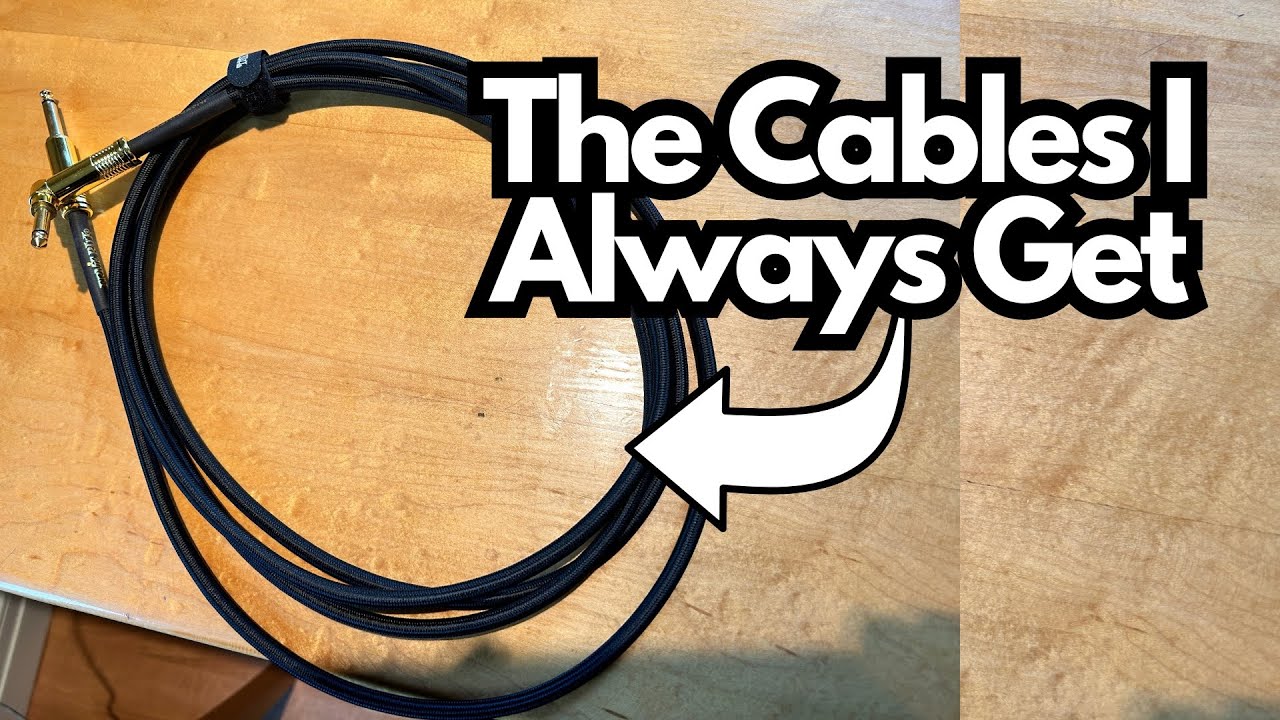
If you play electric guitar long enough, you eventually realize a cable can make or break your rig—literally. No one wants a noisy, flimsy lead cutting out mid‑riff or tangling itself into a knot every time you pack up.
The Ernie Ball Right Angle Jack cable (on Amazon) is one of those “buy it once and forget about it” pieces of gear. It’s aimed at players who want a durable, stage‑worthy cable that looks sharp, feels solid, and just works every time you plug in—whether you’re at home, in the studio, or on stage.
Overview / First Impressions
The Ernie Ball Right Angle Jack cable stands out right away with its black-and-gold aesthetic. It looks premium without being flashy, and it fits right in with a modern pedalboard or a classic amp setup.
Key first impressions:
- Clean, classy look – black braided outer with gold accents.
- Right-angle plug – great for guitars with side jacks, tight pedalboards, or when you want the cable to stay low-profile.
- Feels robust in the hand – nothing about it feels cheap or delicate.
If you’re tired of bargain-bin cables failing on you, this one immediately feels like a step up.
Build Quality & Design
From a guitarist’s perspective, build quality is where this cable really shines.
Braided Outer Jacket
The cable uses a braided outer jacket instead of a smooth rubber coat. That matters because:
- Braided cables tend to be more durable over time.
- They resist kinks and twists better.
- They feel more substantial and less “plasticky.”
In practice, this means you can coil and uncoil it repeatedly, throw it in a gig bag, and it’s far less likely to crack or split compared to cheaper rubber-coated options.
High-Quality Connectors
The ends are high-quality jacks with a solid, reliable feel:
- No loose parts, no wobbly housings.
- Less prone to intermittent crackles or signal dropouts.
- Designed to withstand constant plugging and unplugging.
The right-angle plug is especially useful if:
- Your guitar has a side-mounted jack (Les Paul, Tele, many superstrats).
- You want the cable to hug the body and stay out of the way when you’re standing or sitting.
- You’re running into a pedalboard and need a neat, low-profile connection.
Flexibility
Despite being rugged, the cable is surprisingly flexible:
- Easy to route around pedals, mic stands, or furniture.
- Less stress on the jack, which helps avoid shorts or internal breaks at the ends.
- Coils nicely without fighting you.
This balance of sturdiness and flexibility is a big part of why it holds up so well in daily use.
Features & Functions
Beyond the core build, there are a couple of thoughtful touches that make life easier for guitarists.
Integrated Cable Wraps
The cable includes wraps/straps so you can coil it neatly:
- Keeps your cable from becoming a tangled mess in your gig bag.
- Reduces wear and tear from sloppy storage.
- Makes setup and teardown faster and cleaner.
It’s a small feature, but if you gig or move your gear a lot, it’s one of those things you quickly come to appreciate.
Reliable Performance
While the transcript doesn’t dive into exact specs (capacitance, shielding type, etc.), the emphasis is clearly on:
- Consistency – it works every time without fuss.
- Longevity – it outlasts many cheaper alternatives.
- Quiet operation – no mention of handling noise or crackle, which is a good sign for a stage cable.
In short, it’s designed to be a dependable part of your signal chain, not a weak link.
How It Sounds / Use Cases
For most guitarists, a good cable should be transparent: it shouldn’t color your tone, it should just carry it.
The Ernie Ball Right Angle Jack cable is used here as an everyday, go-to cable for:
- Home practice – plugging straight into an amp or interface.
- Pedalboard setups – the right-angle jack keeps things tidy at the front of the board.
- Live use – durable enough to handle regular gigging and rehearsal.
If you’re switching from a very cheap, no-name cable, you may notice:
- Less noise and crackling.
- A more consistent connection when you move around.
- Fewer “is it the cable or the pedal?” troubleshooting moments.
It’s not a “tone-shaping” piece of gear—it’s a reliability upgrade.
Limitations / Things to Know
No piece of gear is perfect for every situation. A few things to keep in mind:
- Right-angle vs. straight – the right-angle jack is fantastic for many guitars and pedalboards, but if your guitar has a recessed front jack or a very specific jack placement, you might prefer a straight plug on at least one end.
- Not the absolute cheapest – you’re paying for durability, looks, and reliability. If you’re on a very tight budget, it’ll cost more than entry-level cables—but you’re likely to replace those cheaper ones more often.
- Personal preference on feel – some players prefer a smooth rubber cable feel over braided. The braided jacket feels more “textile” in the hand.
That said, from the perspective shared here, this is a go-to cable—chosen repeatedly over other options like Roadhog, which is also mentioned as a solid alternative.
Final Thoughts
The Ernie Ball Right Angle Jack cable is one of those quietly essential pieces of gear: not flashy, not gimmicky, just reliable, durable, and well-designed.
If you want:
- A cable that looks good (black and gold, braided),
- Feels sturdy and flexible,
- Has high-quality ends that don’t feel fragile,
- And comes with built-in wraps to keep your rig organized,
then this is a very easy recommendation. For many players, it can absolutely be that “default” cable you buy every time you need a new one.
Resources & Further Study
If you’re working on your playing as well as your rig, here are a couple of helpful resources mentioned:
Fretboard Memorization Cheat Sheet – Available at travelingguitarist.com, this cheat sheet lays out major and minor triads in every key using the “octave mapping” approach and other methods. It’s useful for:
- Memorizing the notes on the fretboard
- Understanding triads as the foundation of chords and harmony
- Learning to improvise in multiple keys more confidently
Guitar & Music Forum – You can join the community at forum.travelingguitarist.com to:
- Talk gear, guitar, and music
- Ask questions and share tips
- Connect with other players working on similar skills
Pair a solid, dependable cable like the Ernie Ball Right Angle Jack with focused practice tools like these, and you’ll have both your tone and your technique headed in the right direction.