

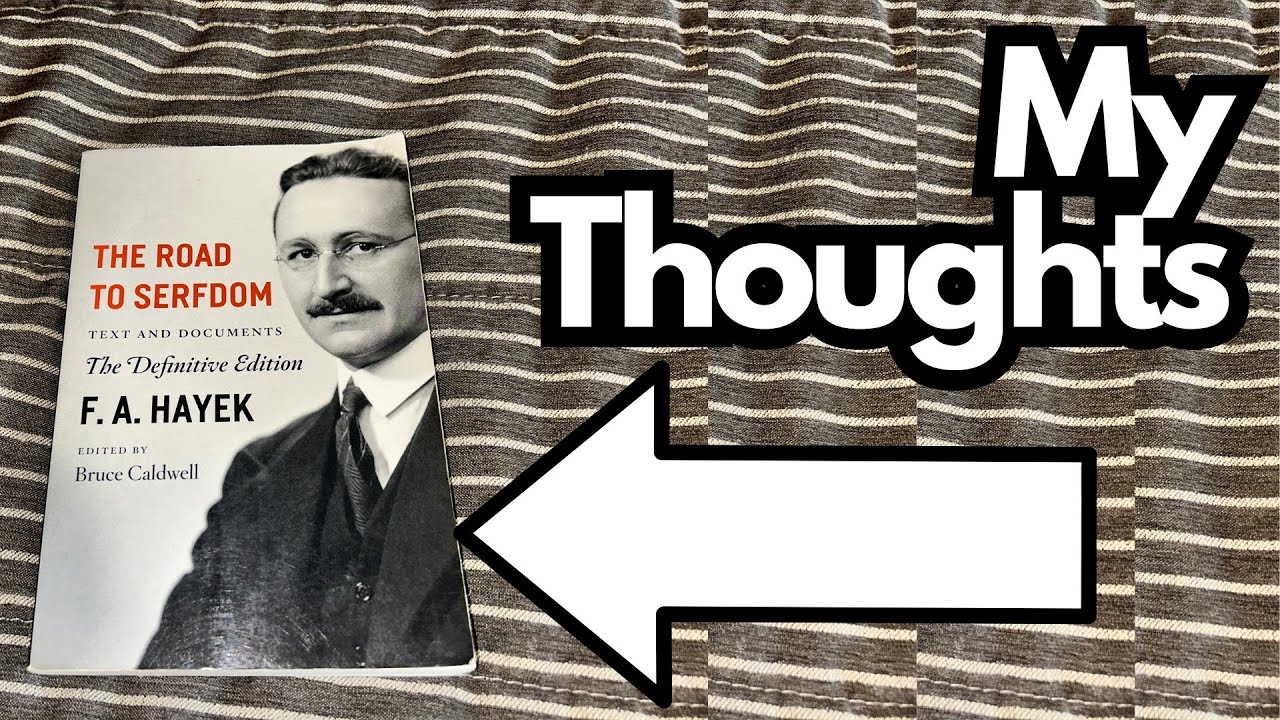
If you’re interested in political philosophy, economics, or just understanding how societies can go off the rails, Friedrich Hayek’s The Road to Serfdom is one of those books that keeps coming up.
It’s often cited in conservative and classical liberal circles, and for good reason: Hayek digs into how certain political and economic choices can gradually erode freedom and prosperity. You can grab it here on Amazon if you’re interested.
This isn’t a light, casual read—but if you’re willing to take it slowly, it’s a rewarding one.
Overview / First Impressions
The Road to Serfdom is a dense, intellectually demanding book. Hayek isn’t writing for speed-readers; he’s laying out a careful argument about how societies can slide into poverty and authoritarianism by abandoning certain core political and economic principles.
You’ll get the most out of it if you:
- Treat it as a long-term read, not a weekend project
- Aim for just a few pages at a time (2–3 pages per sitting is reasonable)
- Take your time with each paragraph instead of skimming
If you’re curious about conservative or right-leaning economic thought—especially critiques of central planning, socialism, and communism—this book is worth your attention.
What The Book Is Like to Read
While the intellectual content is the main draw, the physical book itself is usually well put together, depending on the edition you buy. Most modern editions:
- Use relatively small but readable type
- Have minimal graphics or visual aids
- Are organized into clearly defined chapters that build on each other
Because the writing is dense, a clean, uncluttered layout is actually a plus—it encourages you to slow down and focus.
Core Ideas & Themes
Hayek’s main concern in The Road to Serfdom is how societies can decline—not just economically, but politically and morally—when they abandon key principles of a free society.
Some of the central themes include:
- How societies break down
Hayek describes the process by which a society can deteriorate when it shifts away from individual liberty and market-based coordination toward more centralized control. - The dangers of central planning
He is critical of systems where the state takes on heavy control of the economy, arguing that this kind of planning tends to lead to inefficiency, corruption, and eventually loss of freedom. - Critique of socialism and communism
Hayek takes aim at socialist and communist ideas, not just on moral grounds, but on practical ones—arguing that they often result in widespread poverty and political oppression rather than equality and prosperity. - The link between economics and freedom
One of his key points is that economic freedom and political freedom are deeply connected. Undermining one tends to weaken the other.
How to Read It (And Actually Understand It)
This isn’t the kind of book you blast through in a day. To really absorb what Hayek is saying:
- Read slowly and deliberately
Go “word by word” when necessary. If a sentence feels dense, read it twice. Hayek is precise with his language, and skipping ahead means missing important connections. - Limit your daily intake
Two or three pages at a time is a realistic goal. That might sound small, but each section is packed with ideas. - Pause to reflect
After a short reading session, think about the main point of what you just read. How does it connect to what came before? What is he warning against?
This approach turns the book into a long, thoughtful conversation rather than a race to the last page.
Who This Book Is For
You’ll likely appreciate The Road to Serfdom if you:
- Are curious about conservative or classical liberal thought
- Want to understand critiques of socialism and communism from a serious intellectual standpoint
- Enjoy political philosophy and economic theory
- Don’t mind a challenging, slow-burn reading experience
If you’re looking for a simple, slogan-based political book, this isn’t it. But if you’re willing to wrestle with difficult ideas, it’s a strong recommendation.
Limitations / Things to Know
A few honest caveats:
- It’s challenging
The writing is not “academic jargon,” but it is formal and dense. Expect to work for your understanding. - Requires patience
This is not a quick overview of political ideologies. It’s a detailed argument that unfolds over many chapters. - Context matters
Hayek was writing in the mid-20th century, in the shadow of totalitarian regimes and world war. Some references are historical, but the broader arguments still resonate today.
Final Thoughts
The Road to Serfdom is absolutely worth reading if you’re serious about understanding how political and economic systems can shape the fate of a society. Hayek’s critique of central planning, socialism, and communism is sharp, and his warnings about how freedoms are gradually lost feel uncomfortably relevant.
Just don’t rush it. Treat the book like a long hike rather than a sprint: slow, steady, and intentional. If you approach it that way, you’ll come away with a much deeper grasp of the ideas that still drive major political debates today.