

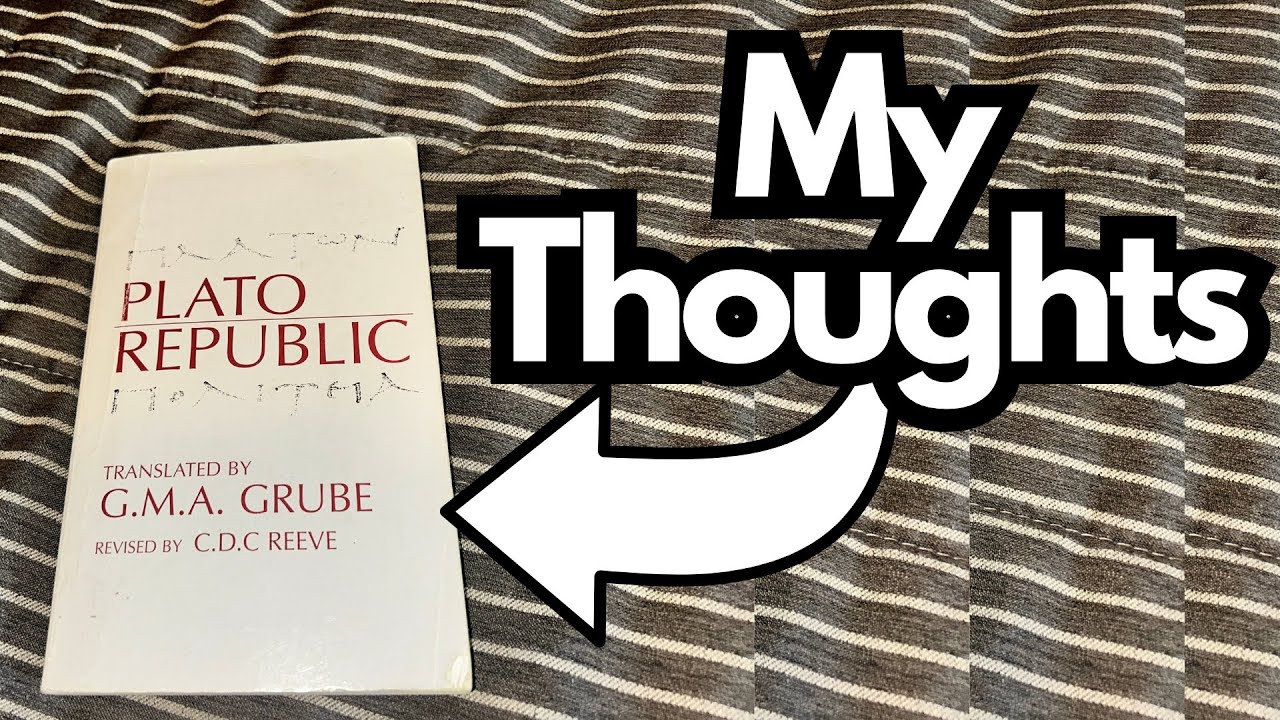
If you’ve ever thought about dipping your toes into philosophy, Plato’s Republic is one of those titles that always seems to come up. It’s a cornerstone of Western thought, referenced in everything from politics to ethics to education. But it’s also not exactly “light reading,” and not everyone finds it enjoyable. You can grab it here on Amazon if you’re interested.
Here’s a straightforward look at what The Republic is, why it matters, and whether it might be worth your time.
Overview / First Impressions
The Republic is widely considered Plato’s most famous and influential work, alongside his account of the trial of Socrates (Apology of Socrates). It’s written as a dialogue—mostly between Socrates and various other characters—rather than as a traditional essay or treatise.
If you’re not already into philosophy, the style can feel dense and slow. It’s not for everyone, and that’s okay. But if you’re curious about big questions—justice, the ideal society, the nature of knowledge—this is one of the foundational texts.
What The Republic Is About
At its core, The Republic explores:
- Justice – What does it mean for a person or a society to be just?
- The Ideal State – Plato’s vision of a perfectly ordered city, ruled by “philosopher-kings.”
- Human Nature & the Soul – How different parts of the soul (reason, spirit, appetite) interact.
- Knowledge & Reality – Most famously illustrated by the Allegory of the Cave, where people mistake shadows for reality.
It’s not a “how-to” book for politics or personal development, but a deep thought experiment about how people and societies ought to be structured.
Who This Book Is For
You’ll probably get the most out of The Republic if:
- You enjoy big-picture questions about right and wrong, truth, and society.
- You’re interested in the roots of Western philosophy and political theory.
- You don’t mind slow, careful reading and unpacking arguments step by step.
If you already know you dislike Plato’s style or find classical philosophy tedious, this might feel more like homework than a rewarding read. In that case, summaries, commentaries, or modern books inspired by Plato’s ideas might be a better fit.
Why It Matters
Even if you never read it cover to cover, The Republic has shaped:
- Political thought – Ideas about democracy, authoritarianism, and the role of leaders.
- Ethics – Questions about what a “good life” and a “good society” look like.
- Education – The notion that leaders should be rigorously educated in virtue and reason.
- Philosophy of reality – The distinction between appearance and reality, belief and knowledge.
A lot of later thinkers—Aristotle, Augustine, Rousseau, Nietzsche, and many more—are either building on or arguing against Plato. Understanding The Republic gives you a reference point for all of that.
Limitations / Things to Know
Before you jump in, it helps to be aware of a few things:
- The language can be tough. Even in modern translations, the arguments are long and methodical.
- Some ideas feel dated or extreme. Plato’s ideal state includes rigid class structures and controversial views on family and governance.
- It’s not a quick read. To really follow the arguments, you may need to slow down, reread, or use a guide.
If you don’t already enjoy Plato, you might find the experience more frustrating than enlightening.
Tips If You Decide to Read It
If you’re still curious and want to give The Republic a shot:
- Start with a modern translation that’s known for readability.
- Use a guide or summary alongside it so you don’t get lost in the details.
- Take it one book (chapter) at a time rather than trying to power through.
You don’t have to agree with Plato—or even like his style—to get something out of engaging with the ideas.
Final Thoughts
Plato’s Republic is one of those books that’s more important than it is enjoyable for many readers. If you’re into philosophy, political theory, or the history of ideas, it’s absolutely worth exploring. If you already know you don’t like Plato, there’s no shame in skipping the full text and just reading about it instead.
It’s a demanding read, but for the right kind of reader, it can be a powerful way to wrestle with questions that still matter today.