

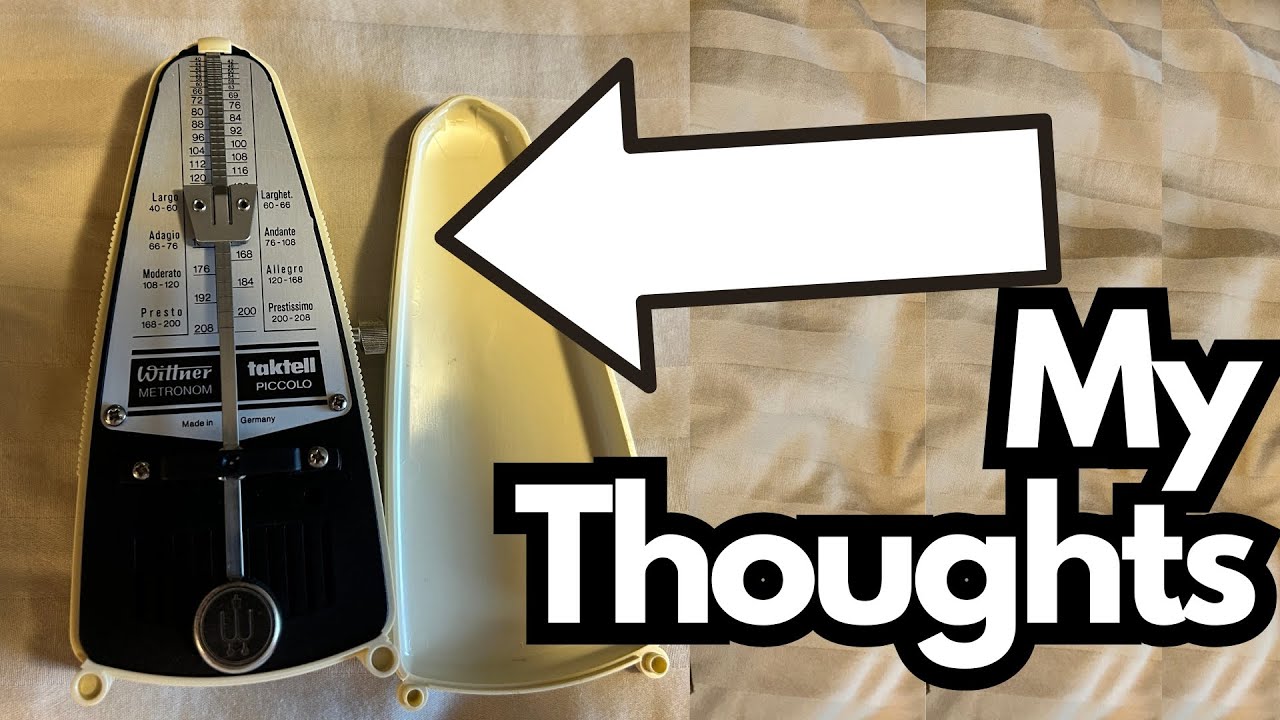
If you’re serious about improving your timing and rhythm, a good metronome is non‑negotiable. Apps are convenient, but there’s a reason old‑school mechanical metronomes are still found in teaching studios and practice rooms everywhere: they’re reliable, tactile, and distraction‑free.
You can grab one here on Amazon if you’re interested.
Wittner Metro metronomes are a great example of this. They’re not flashy, but they just work—and they keep working for years.
Overview / First Impressions
Wittner metronomes are all about function over fashion. They’re not the most stylish pieces of gear you’ll ever put on your desk or music stand, but when it comes to doing the one job that matters—keeping time—they excel.
If you want:
- A metronome that’s reliable
- A device that doesn’t crash, freeze, or need constant updates
- Something that will last for years, not months
…then a Wittner Metro metronome is an easy recommendation.
Build Quality & Design
The standout quality of Wittner metronomes is how solid they feel and how long they last.
- Robust construction – Built to be used daily without falling apart.
- Mechanical movement – No batteries required on the traditional models; just wind it up and go.
- Simple, classic design – No screens, menus, or complicated interfaces.
You’re not buying a design piece—you’re buying a tool. And as a tool, it’s rock solid.
Features & Functions
While specific models vary, the core functionality is straightforward and consistent:
- Wide tempo range – From very slow practice speeds up to extremely fast tempos:
- It can be set all the way down to very slow tempos for detailed, deliberate practice.
- It can also be wound up to Prestissimo (often labeled “Presto” or similar), which is among the fastest tempo markings you’ll encounter.
- Clear visual cue – The swinging pendulum gives you a strong visual reference in addition to the audible click.
- Audible click – A clear, consistent sound that cuts through your playing without being harsh.
This simplicity is actually a huge advantage: you spend zero time figuring it out and 100% of your time practicing.
How It Sounds / Use Cases
The click on a Wittner metronome is:
- Consistent – No lag, no drift, no weird timing glitches.
- Easy to hear – Loud and clear enough for most practice situations.
- Paired with a visual – The pendulum swing helps you internalize the beat physically and visually.
These metronomes shine in situations like:
- Slow, detailed work – Practicing tricky passages at very slow tempos to clean up technique.
- Speed building – Gradually pushing toward higher tempos, including very fast “presto” style tempos.
- Daily practice routines – Scales, arpeggios, chord changes, and rhythm work.
Whether you’re working on tight alternate picking, complex fingerstyle patterns, or just cleaning up your rhythm chops, having a dependable metronome like this is invaluable.
Limitations / Things to Know
A few practical points to keep in mind:
- Not the prettiest – If you want something that doubles as stylish décor, this probably won’t wow you visually.
- Limited to core functions – No built‑in subdivisions, polyrhythms, or programmable patterns like some digital metronomes or apps.
- Physical device – You have to carry it with you; it’s not living on your phone.
But if your priority is stability, longevity, and simplicity, those trade‑offs are usually worth it.
Final Thoughts
Wittner Metro metronomes are the definition of “buy it once, use it forever” gear. They’re not about looks or fancy features—they’re about doing one job extremely well: giving you a rock‑solid, reliable pulse to practice with.
If you’re tired of glitchy apps or cheap plastic metronomes that die after a few months, a Wittner is a smart, long‑term investment in your practice routine.
Resources
If you’re working on your timing and want a structured way to apply metronome practice to the fretboard, you might find this fretboard cheat sheet helpful:
- Fretboard & practice resources: travelingguitarist.com/fretboard-cheatsheet