

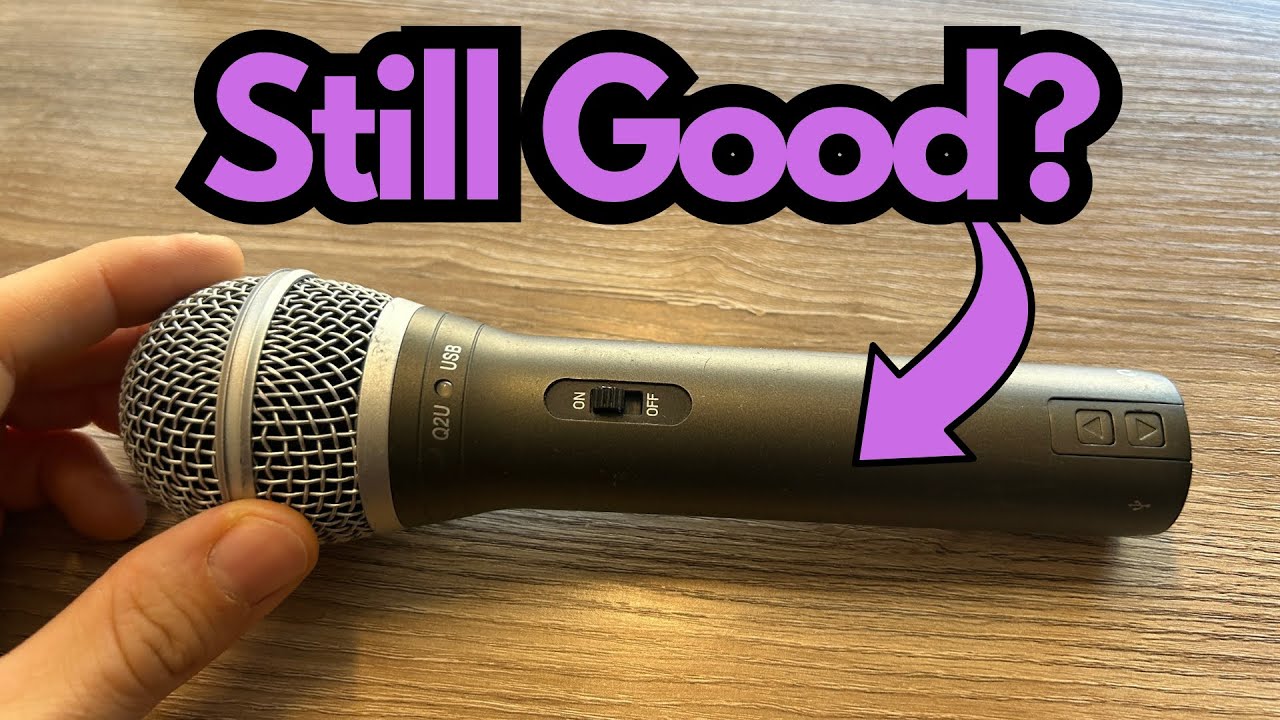
If you’re just getting into recording videos, podcasts, or voiceovers, the Samson Q2U is one of those mics that shows up on a lot of beginner recommendation lists. It’s affordable, easy to use, and for years it was a go-to “first mic” for countless creators.
I used the Samson Q2U as my main microphone for years and recorded a couple hundred YouTube videos with it. It did the job really well back then—but the tech landscape has changed.
You can grab one here on Amazon if you’re interested.
Here’s an honest look at the Q2U today: what it does well, where it’s starting to show its age, and whether it still makes sense for you.
Overview / First Impressions
The Samson Q2U is a dynamic microphone designed to be as simple and accessible as possible:
- It’s plug-and-play over USB.
- It also offers XLR output if you want to connect to an audio interface or mixer.
- It comes as a complete starter package with:
- A desktop mic stand
- A USB cable
- (Often) an XLR cable, depending on the bundle
When I first got it, I didn’t need to buy anything else. I plugged it into my computer, fired up my recording software, and I was making videos within minutes. For a beginner, that’s a huge win.
Build Quality & Design
The Q2U is built like a typical handheld dynamic mic:
- Solid, durable body – It feels robust enough to survive regular use and the occasional drop.
- Stage-style form factor – Looks and feels similar to a Shure SM58 or other live vocal mics.
- On/off switch – Handy for quickly muting yourself without touching your software.
It’s not a flashy studio showpiece, but it’s practical and tough, which is exactly what you want from an entry-level workhorse mic.
Features & Functions
1. USB Connectivity (The Big Selling Point… and the Big Problem)
- Connects directly to your computer via USB-A.
- No audio interface required.
- Truly plug-and-play on most systems.
However, this is also where the Q2U is now starting to fall behind. The standard cable it ships with is USB-A, and many modern laptops and desktops are moving to USB-C only.
You can still use it with an adapter, but it’s one more thing to buy and one more point of failure.
2. XLR Output
In addition to USB, the Q2U has a standard XLR output, which means:
- You can plug it into an audio interface, mixer, or recorder.
- It can grow with you if you upgrade your setup later.
That dual USB/XLR functionality is a big plus for flexibility.
3. Included Accessories
Out of the box, you typically get:
- A desktop stand – Basic but functional. Good enough to get started.
- A USB cable – For direct connection to your computer.
- Sometimes an XLR cable, depending on the bundle.
You can literally go from box to recording in a few minutes, which is ideal for beginners or anyone who doesn’t want to fuss with separate gear.
How It Sounds / Use Cases
From a practical standpoint, the Samson Q2U is more than good enough for:
- YouTube videos
- Voiceovers
- Podcasts
- Zoom/Teams calls
- Basic home recording
The sound quality is clear and usable, especially considering the price and simplicity. I used it for a long time and never had complaints about intelligibility or overall tone for spoken word and tutorial-style content.
For guitarists or musicians, it’s not the first mic I’d reach for to capture a full-on studio guitar tone, but it can absolutely handle:
- Talking through lessons
- Demoing pedals or practice routines
- Recording scratch tracks or ideas
If your main goal is talking to a camera or audience, it does the job.
Limitations / Things to Know
Here’s where the Samson Q2U starts to show its age and limitations:
1. USB-A in a USB-C World
The biggest drawback today:
- The mic uses USB-A, not USB-C.
- Many newer laptops only have USB-C ports, so you’ll need a USB-A to USB-C adapter or hub.
That’s not a dealbreaker if you already have the right adapter, but for a “simple beginner mic,” it adds friction. The whole point of this mic is convenience, and the port situation undercuts that.
If Samson ever releases a Q2U with native USB-C, that would instantly make it much more attractive again.
2. Better Alternatives Now Exist
When I first bought the Q2U (around 2017), it was a fantastic option. Since then:
- A lot of newer USB and USB-C mics have hit the market.
- Many offer improved sound, better build, or more modern connectivity for a similar price.
If you’re buying new and your computer is USB-C only, it often makes more sense to go with a more current mic that doesn’t require adapters.
3. Only Ideal If Your Computer Still Has USB-A
If your laptop or desktop still has a standard USB-A port, the Q2U is still a very easy recommendation:
- Plug it in.
- Select it as your input device.
- Start recording.
In that context, it’s still a very solid, beginner-friendly mic.
Final Thoughts
The Samson Q2U was an excellent first microphone for me, and it served me well through hundreds of videos. It’s:
- Simple
- Affordable
- Flexible (USB + XLR)
- Perfectly capable for YouTube, podcasts, and general content creation
However, for newer computers that only use USB-C, I wouldn’t recommend it anymore unless:
- You already have a reliable USB-C adapter, or
- You specifically want the XLR functionality and don’t mind the extra dongle.
If Samson releases, or you find, a Q2U variant with native USB-C, that’s a different story—I’d happily recommend that version as a great starter mic.
As it stands today:
- Have USB-A on your machine? The Samson Q2U is still a very good, plug-and-play choice.
- USB-C only? You’re probably better off looking at more modern USB-C mics instead of building your setup around adapters.