

If you’re trying to connect modern devices to your TV—especially for gaming or streaming—HDMI cables suddenly matter a lot more than they used to. Between 4K, high frame rates, HDR, and variable refresh rate, it’s easy to assume you must buy the latest, most expensive cable or your setup will fall apart.
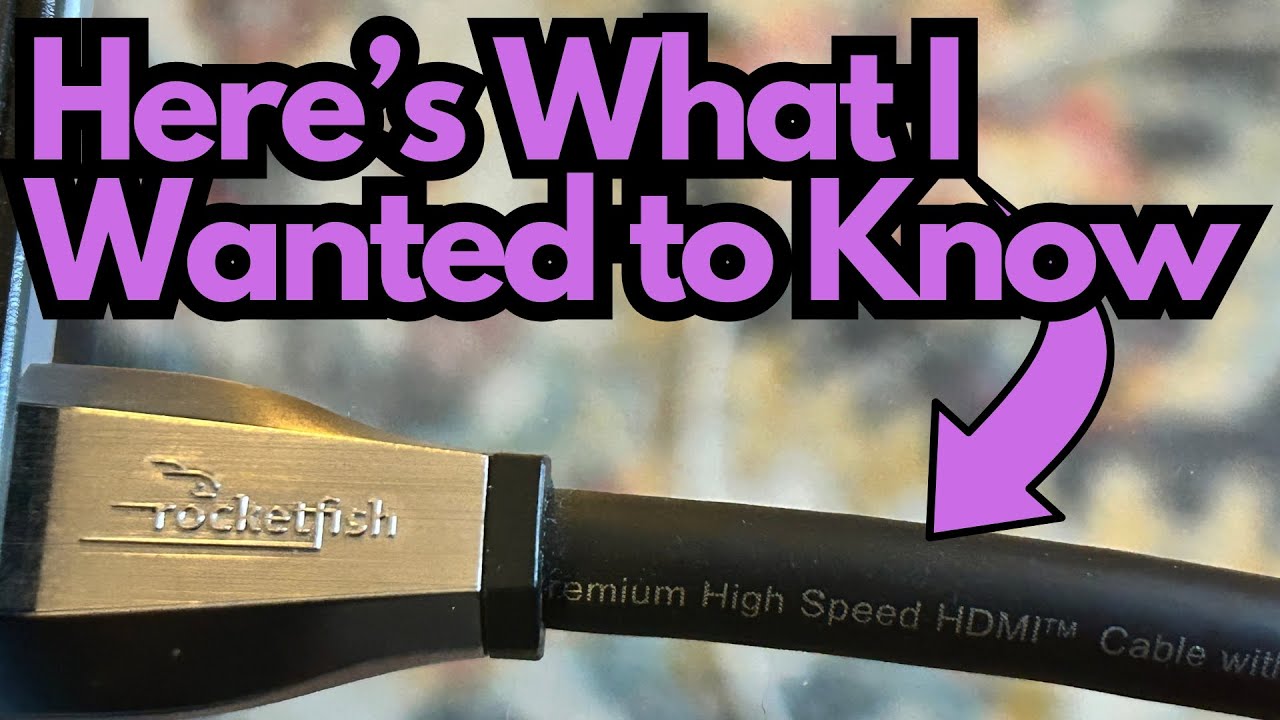
This is where the Rocketfish 18 Gbps Premium High-Speed HDMI Cable comes in. It’s not the newest 48 Gbps “Ultra High Speed” standard, but it might still be more than enough for many people.
Below is a practical look at how it performs in a real-world setup: running a game (Resident Evil 4) from an iPad Pro to a TV over a fairly long cable run.
You can grab it here on Amazon if you’re interested.
Overview / First Impressions
The Rocketfish 18 Gbps Premium High-Speed HDMI Cable is an older spec by today’s standards, but it still handles a lot of common use cases:
- Connecting an iPad Pro to a TV
- Running games like Resident Evil 4 on a big screen
- Handling a relatively long distance between device and display
In day-to-day use, it works surprisingly well. The experience isn’t flawless or “perfect,” especially if you’re pushing the latest and greatest video formats, but it’s absolutely usable and not something that ruins the experience.
If you already have this cable lying around, it’s a solid starting point before investing in a 48 Gbps cable.
Build Quality & Design
While the original setup test doesn’t go deep into the physical construction, a few practical points stand out:
- It’s capable of running over a fairly significant distance from the device to the TV.
- Despite the length, it still delivers a stable enough signal for gaming and media.
In other words, it’s not some flimsy, ultra-budget cable that falls apart or drops signal constantly. For a typical living room setup, it should be physically up to the task.
Features & Functions
Key technical point:
- Bandwidth: 18 Gbps (Gigabits per second)
What that usually means in practice:
- Supports up to 4K at 60 Hz in many setups
- Handles standard HDR in a lot of cases
- Great for 1080p gaming and streaming
- Good enough for many tablet/phone/laptop-to-TV connections
However, current recommendations for the most demanding setups—like 4K at 120 Hz, some advanced HDMI 2.1 gaming features, or future-proofing—often point to 48 Gbps “Ultra High Speed” HDMI cables.
So while this Rocketfish cable is still very capable, it’s not the top-tier spec anymore.
How It Performs in Real Use
In the example setup:
- Source: iPad Pro
- Content: Resident Evil 4 (a modern, graphics-heavy game)
- Output: TV via the Rocketfish 18 Gbps HDMI cable
- Cable length: Long enough to run across the room from the iPad to the TV
Performance observations:
- The game runs fine on the TV using this cable.
- There are occasional glitches—not full signal dropouts, but brief moments where the signal acts a bit “off.”
- Despite that, the experience is totally playable and satisfying, especially for someone just getting used to this kind of setup.
From a practical standpoint, if you’re new to using an iPad or similar device as a console replacement or streaming box, this cable is good enough to get started. It doesn’t hold you back so much that you feel forced to upgrade immediately.
Limitations / Things to Know
A few important caveats:
- Not the latest spec:
- Current “best practice” for cutting-edge setups is a 48 Gbps HDMI cable (often labeled HDMI 2.1 or Ultra High Speed).
- If you’re running a PS5, Xbox Series X, or a high-end PC at 4K 120 Hz with advanced features, this 18 Gbps cable may become a bottleneck.
- Minor visual glitches:
- You may see occasional glitchy behavior—small visual hiccups rather than total blackouts.
- They’re not constant, but something to be aware of if you’re extremely sensitive to signal integrity.
- Not “future-proof”:
- It works now and works well enough, but if you plan to upgrade to a top-tier home theater or gaming rig, you’ll likely want to move to a 48 Gbps cable eventually.
That said, none of these issues are dealbreakers if your current use is modest: tablet-to-TV, casual gaming, streaming, or 1080p/4K60 content.
Final Thoughts
The Rocketfish 18 Gbps Premium High-Speed HDMI Cable is a classic case of “good enough” gear:
- It works reliably for everyday use, even over a decent distance.
- It can handle gaming from an iPad Pro to a TV without ruining the experience.
- While it’s not the ideal, future-proof solution, it’s nowhere near bad enough to justify rushing out and replacing it if it’s already in your drawer.
If you’re just getting into this kind of setup and already own this cable, use it. See how it performs in your specific environment. You can always upgrade to a 48 Gbps HDMI cable later if you run into real limitations—4K 120 Hz gaming, more advanced features, or more noticeable signal issues.
For many people, especially in more casual or mixed-use setups, this Rocketfish cable will quietly do its job without demanding an immediate upgrade.