

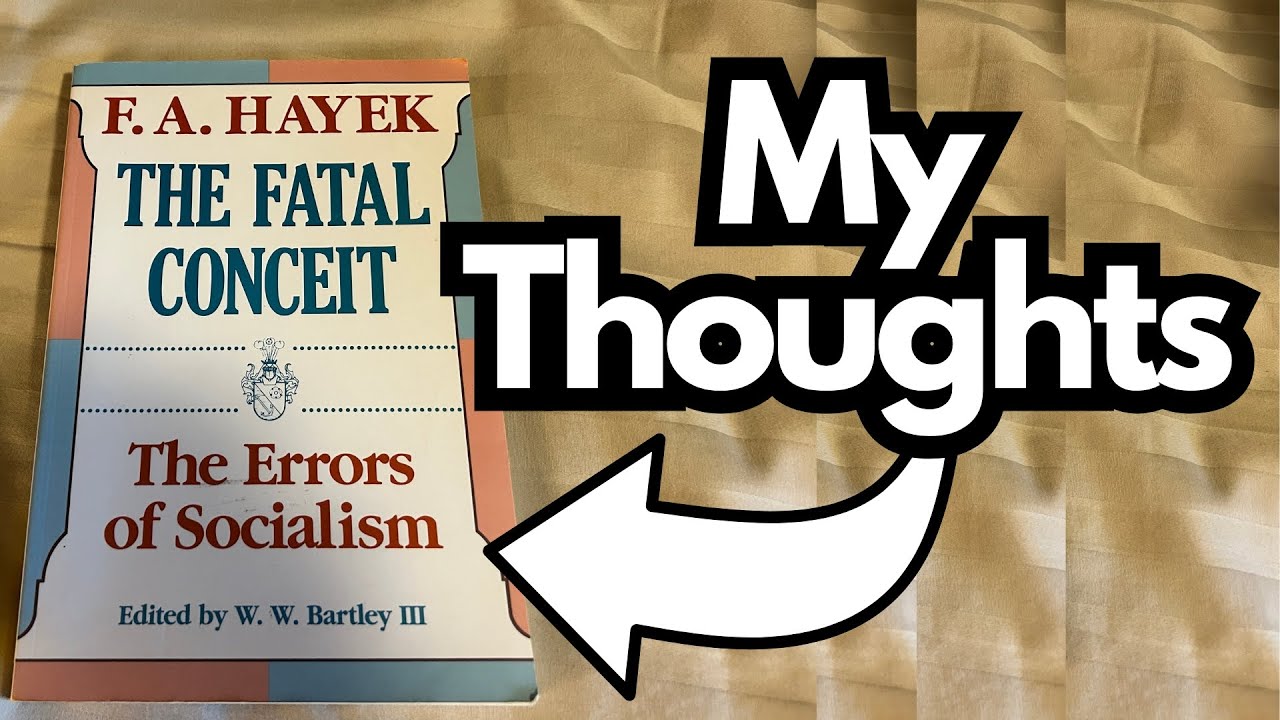
If you’re interested in political philosophy, economics, or just understanding the ideas that shaped a lot of modern “small government” thinking, Friedrich Hayek is a name you’ll run into sooner or later. While The Road to Serfdom is often the go-to recommendation, The Fatal Conceit is an important work that’s worth your time. It’s here on Amazon if you’re interested.
This isn’t a light, casual read, but if you’re curious about conservative or classical liberal approaches to political thought, it can be a valuable book to explore.
Overview / First Impressions
The Fatal Conceit is essentially Hayek’s attempt to lay out a coherent framework for a free society:
- It focuses on individual liberty as the central political value.
- It explores how laws, institutions, and traditions can support or undermine that liberty.
- It’s more systematic and philosophical than The Road to Serfdom, which is why many people find Serfdom more immediately engaging.
If you’ve already read and liked The Road to Serfdom, this book is a logical next step. If you haven’t, you might want to start there and come to The Constitution of Liberty after.
Build Quality & Design (of the Book Itself)
Since we’re talking about a book, “build quality” here is more about structure than physical binding:
- Dense but organized: Hayek lays out arguments in a fairly structured way, moving from principles to applications.
- Concept-heavy: It deals in big ideas—liberty, law, authority, tradition—rather than day-to-day policy details.
- Not a quick skim: This is the kind of book you read slowly, maybe in sections, rather than in one sitting.
Core Themes & Ideas
While it’s not possible here to unpack every chapter, the book broadly covers:
- The meaning of liberty: Hayek distinguishes between freedom from coercion and other ideas of “freedom” that involve getting certain outcomes or resources.
- The rule of law: He emphasizes general, predictable rules over arbitrary decisions by authorities.
- Tradition and evolution: Hayek argues that many social institutions evolve over time and often embody practical wisdom, even if we don’t fully understand their origins.
- Limited government: He supports a state that protects individual rights and the rule of law, but is wary of centralized planning and expansive state control.
The overall perspective is conservative or classical liberal: skeptical of large-scale state intervention and focused on the importance of individual choice within a stable legal framework.
Who This Book Is For
You’ll probably get the most out of The Fatal Conceit if:
- You’re interested in political theory or classical liberal/conservative thought.
- You liked The Road to Serfdom and want to dig deeper into Hayek’s broader worldview.
- You’re willing to tackle a book that’s more conceptual than practical.
If you’re just starting out with political philosophy, this might not be the easiest entry point—but it’s still an important text in that tradition.
Limitations / Things to Know
A few points to keep in mind:
- It’s not light reading: The prose and arguments can be dense, and it assumes some familiarity with political and economic concepts.
- Less punchy than The Road to Serfdom: If you’re looking for something immediately gripping or polemical, this is more measured and theoretical.
- Historical context matters: Hayek was writing in a specific post-war context, reacting to socialism, planning, and the growth of the modern state. Some examples may feel dated, but the core arguments are still part of contemporary debates.
Final Thoughts
While I personally find The Road to Serfdom more compelling as a read, Fatal Conceit is still well worth picking up if you want a deeper sense of Hayek’s political philosophy.
If you’re curious about:
- How a conservative/classical liberal thinker justifies liberty as the central political value,
- Why the rule of law and limited government matter in that framework,
- And how tradition and spontaneous order fit into the picture,
then this book is a solid, if demanding, choice. It’s not for everyone, but if the subject interests you, it’s definitely worth giving it a shot.