

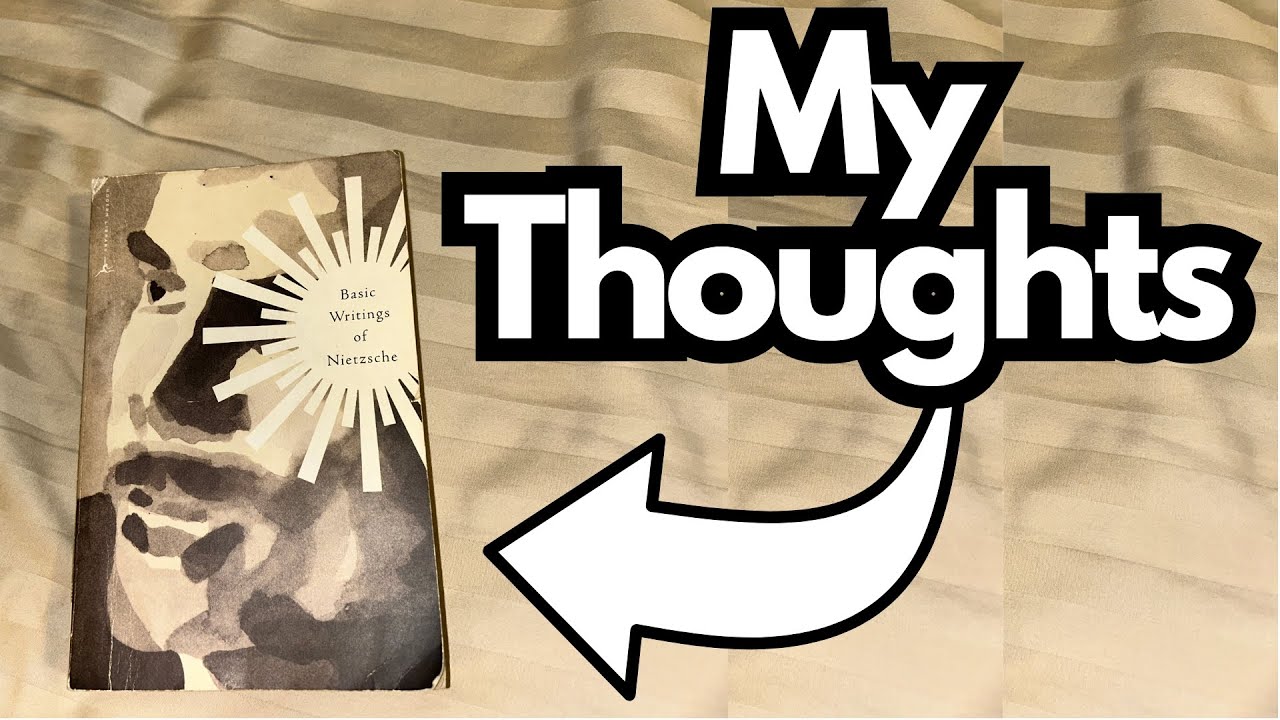
If you’ve been curious about Friedrich Nietzsche but aren’t sure where to start, The Basic Writings of Nietzsche is one of the most practical and rewarding ways in.
Instead of buying several separate volumes or trying to piece together his ideas from quotes online, this single book gathers many of his most important works into one place. You can grab it here on Amazon if you’re interested.
It’s ideal for:
- Readers new to Nietzsche who want a solid, comprehensive introduction
- Students or autodidacts who prefer reading primary texts rather than summaries
- Anyone who wants a single “go-to” Nietzsche volume on their shelf
Here’s what makes this collection so useful.
Overview / First Impressions
The Basic Writings of Nietzsche is essentially a curated reader: a large, single-volume collection that includes several of Nietzsche’s most influential works and shorter pieces. Instead of cherry-picking quotes, you get entire books and essays, letting you follow his arguments and style as he intended.
Included are major works such as:
- The Birth of Tragedy
- Beyond Good and Evil
- On the Genealogy of Morals
- The Case of Wagner
- Ecce Homo
Alongside these are essays and aphorisms, which are crucial for understanding how Nietzsche thinks—short, sharp fragments that often carry more weight than long chapters.
If you want a “one and done” starting point for Nietzsche, this reader covers almost all the essential ground.
Build Quality & Design
While editions can vary slightly depending on the publisher, this type of reader is usually:
- Substantial and dense – It’s a thick book, meant as a serious reference and study tool, not a casual flip-through.
- Organized by major works – Each book is clearly separated, so you can read straight through one text at a time rather than jumping around.
- Readable layout – Typically set in a clear, academic-style font with enough spacing to make longer reading sessions manageable.
It’s the kind of book that holds up well as a long-term companion—something you’ll keep coming back to rather than read once and forget.
Features & Contents
What makes this reader stand out is how much ground it covers. Here’s what you’re getting in practical terms.
Major Works Included
- The Birth of Tragedy – Nietzsche’s early work on Greek tragedy, art, and the tension between the Apollonian (order, form) and Dionysian (chaos, ecstasy). Important if you care about aesthetics, art, or culture.
- Beyond Good and Evil – One of his central philosophical texts, where he critiques traditional morality, questions the foundations of truth, and explores the idea of “philosophers of the future.”
- On the Genealogy of Morals – A deeper dive into where our moral values come from—master vs. slave morality, resentment, guilt, and the psychology behind moral systems.
- The Case of Wagner – A focused critique of the composer Richard Wagner, but also a broader reflection on decadence, culture, and the direction of modern art.
- Ecce Homo – Nietzsche’s late, often provocative “autobiography,” where he reflects on his own work, life, and philosophical mission with characteristic intensity.
Essays & Aphorisms
In addition to the big books, you get:
- Short essays that flesh out specific ideas
- Aphorisms – brief, pointed thoughts that condense his worldview into memorable lines
These shorter pieces are perfect for dipping in and out when you don’t have time for a full chapter but still want something substantial to chew on.
How It Reads / Best Use Cases
This collection works well in several contexts:
- As a first serious Nietzsche book – If you’re just getting into him, this is a strong starting point because it gathers the core texts in one place.
- For structured self-study – You can treat it like a mini-course: start with The Birth of Tragedy, move into Beyond Good and Evil, then On the Genealogy of Morals, and so on.
- For reference and re-reading – Nietzsche’s ideas often hit differently on a second or third pass. Having them all in one volume makes it easy to revisit key sections.
A practical way to approach it:
- Don’t read it straight through like a novel. Start with Beyond Good and Evil or On the Genealogy of Morals if you want to get into the core ethical and psychological ideas quickly.
- Use the aphorisms as entry points. They’re dense but short, and they can guide you to the longer sections that expand on the same themes.
- Take your time. Nietzsche rewards slow, thoughtful reading. This collection is built for that.
Limitations / Things to Know
A few points to keep in mind:
- It’s dense and demanding. This is not light reading. Even though it’s a “reader,” it doesn’t simplify Nietzsche; you’re getting the real thing.
- No hand-holding. Don’t expect lots of commentary, summaries, or explanations inside the text itself. This is for people who want Nietzsche’s own words, not an introduction written by someone else.
- Philosophically intense. Nietzsche can be confrontational, ironic, and deliberately provocative. That’s part of the value—but it also means you’ll want to approach him with patience and a willingness to wrestle with the text.
If you’re totally new to philosophy, you might want to pair this book with some secondary resources or guides to help unpack the arguments.
Final Thoughts
The Basic Writings of Nietzsche is one of the most efficient and powerful ways to dive into Nietzsche’s world. Instead of scattering your attention across multiple thin volumes, you get:
- His major works
- Key essays
- A rich selection of aphorisms
All in one place.
If you’re serious about understanding Nietzsche—or you’re ready to move beyond quote compilations and into the actual texts—this is a book you’ll want on your shelf. It’s demanding, but it’s also incredibly rewarding, and it gives you nearly everything you need to start a deep, long-term engagement with his thought.