

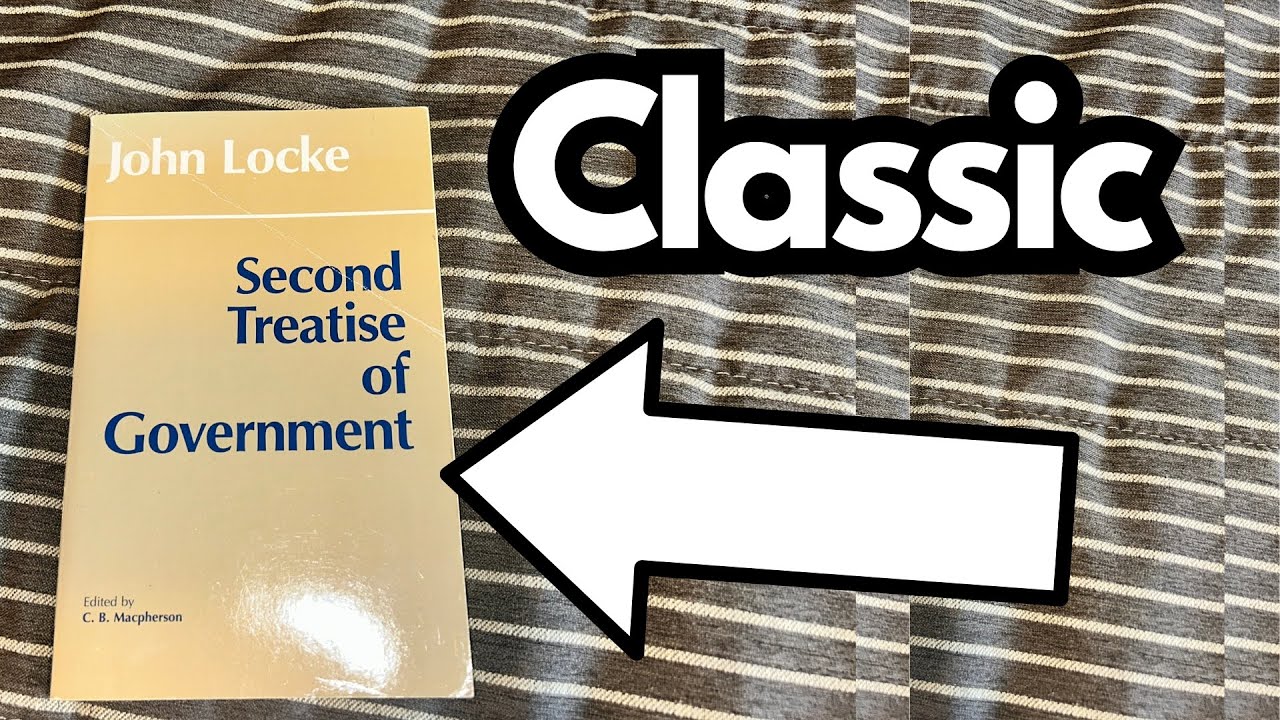
If you’re interested in big-picture ideas—how societies should be organized, what gives governments the right to rule, and where individual rights come from—John Locke’s Second Treatise of Government is one of the foundational texts you’ll eventually run into.
This isn’t a gear review or a guitar-related tool; it’s a classic work of political philosophy. But for anyone who likes understanding the “why” behind systems—laws, rights, authority—this slim book is surprisingly important and more approachable than some of the older heavyweights like Aristotle.
You can get it here on Amazon if you’re interested.
Overview / First Impressions
John Locke is often considered one of the most influential political philosophers in Western history, and the Second Treatise of Government is arguably his most important work. It’s a relatively short book—thin enough that a focused reader could get through it in a couple of days—but it’s dense with ideas that shaped modern democracy, liberalism, and concepts like natural rights and the social contract.
Even if you don’t remember every argument once you’ve put it down, reading it gives you a sense of where many modern political ideas actually came from.
Build Quality & Design (of the Book Itself)
Physically, most editions of Second Treatise are:
- Compact and fairly thin
- Easy to carry around or toss in a bag
- Short enough to not feel overwhelming at first glance
You might find yourself using a bookmark or sticky notes often, because the arguments build on each other and it can be helpful to mark sections you want to revisit.
How Challenging Is It?
This isn’t light reading, but it’s not the most difficult philosophy out there either.
- Less dense than Aristotle: Locke writes more clearly and directly than ancient philosophers like Aristotle, so it’s easier to follow even if you’re not a philosophy major.
- Still a challenge: The language is older, the structure can feel formal, and he builds arguments step by step. You may need to slow down, reread, and think through what he’s saying.
If you’re comfortable reading serious non-fiction, you can handle this with a bit of patience.
Key Themes & Ideas (High-Level)
Even without diving into every chapter, it helps to know what the Second Treatise is broadly about:
- State of Nature: Locke imagines what humans are like without government—how they behave, what rights they have, and what problems arise.
- Natural Rights: He argues that people have certain rights simply by being human, not because a government “gives” them those rights.
- Social Contract: Governments are formed by the consent of the governed to protect those rights.
- Right to Resist: If a government becomes tyrannical and violates people’s rights, Locke argues that citizens have the right to oppose or even overthrow it.
These ideas were hugely influential on later political movements and documents, especially in the development of democratic systems.
Who Is This For?
You’ll probably get the most out of Second Treatise of Government if you:
- Enjoy political theory, history, or philosophy
- Want to understand the roots of modern democracy and liberal thought
- Are curious about why people talk about “natural rights” and “consent of the governed”
It’s a good entry point into classic political philosophy—serious, but not impenetrable.
Limitations / Things to Know
A few things to keep in mind before diving in:
- Older language: The style is formal and dated, which may slow you down.
- Requires focus: It’s short, but not something you’ll casually skim like a blog post.
- Context matters: Some arguments make more sense if you know a bit about the historical period (17th-century England, debates about monarchy, etc.).
If you want to really understand it, you may find it helpful to read a summary alongside the original text, or to look up terms and historical references as you go.
Final Thoughts
John Locke’s Second Treatise of Government is a compact but powerful work that helped shape modern political thought. It’s not as intimidating as Aristotle or some other classical philosophers, but it still demands attention and patience.
If you’re curious about where our modern ideas of rights, government, and political legitimacy came from, this is one of the key books to spend some time with. It’s short enough to read over a few days, and deep enough that you’ll probably keep thinking about it long after you’ve finished.