

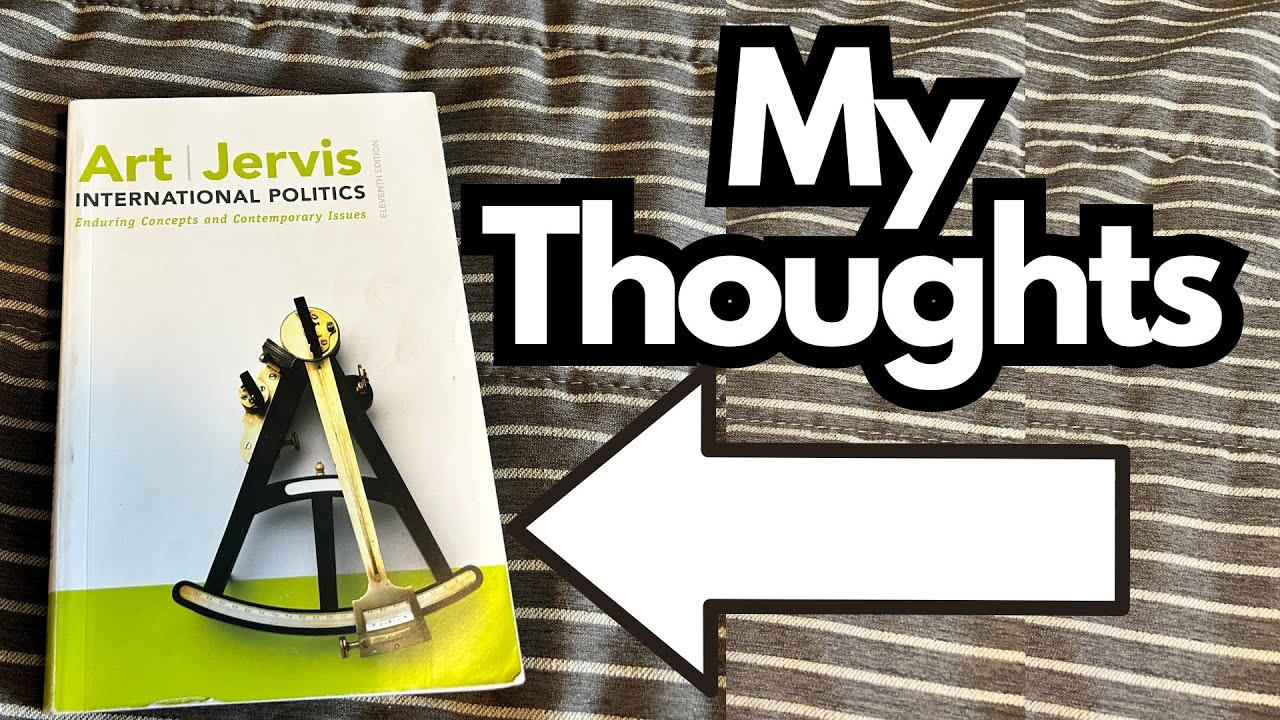
If you’re interested in international relations, global conflict, or how power actually works between states, International Politics is a solid place to start. It reads less like a dense, single-author treatise and more like a curated textbook, making big, complex topics surprisingly approachable.
This is a book for readers who want structure: students, curious beginners, or anyone who wants a clearer framework for thinking about nuclear weapons, civil wars, and globalization without wading through a thousand pages of jargon-heavy theory. You can grab it here on Amazon if you’re interested.
Overview / First Impressions
The book is essentially a collection of essays rather than a narrative-driven work by one author. Multiple well-known scholars contribute, including names like:
- Kenneth Waltz
- Steven Ratner
- Barry Posen
Each chapter tackles a specific issue in world politics, so you’re not forced to read it front to back. You can jump straight to what interests you—whether that’s nuclear power, civil war, or globalization.
The overall impression: it feels like a well-edited textbook designed to introduce and organize key debates, rather than push one person’s grand theory.
Build & Design (As a Textbook)
From a usability standpoint, the book is laid out like a modern academic text:
- Essay-based structure – Each chapter stands on its own, making it easier to digest in shorter reading sessions.
- Multiple perspectives – Different authors mean different angles on similar issues, which helps you see debates rather than just “the answer.”
- Clear segmentation – Topics are broken down logically, so you can find what you need without hunting.
It’s not a flashy or “popular audience” design, but it’s functional and student-friendly.
Features & Functions (What the Book Covers)
The book focuses on the big structural and strategic questions of international politics, especially around force and conflict. Among the topics covered:
- Anarchy in the international system
How the lack of a world government shapes state behavior, security dilemmas, and conflict. - The use of force
Why and how states resort to military power, and under what conditions it’s seen as legitimate or necessary. - Nuclear power and nuclear weapons
Strategic thinking around nuclear deterrence, proliferation, and the risks and logic behind nuclear arsenals. - World politics & globalization
How increasing global interdependence interacts with traditional power politics. - Civil war and internal conflict
Not just wars between states, but the dynamics of conflict within states and how they spill over borders.
Because each topic is handled by a specialist, you get concise, focused treatments instead of one-size-fits-all explanations.
How It Performs in Practice (Use Cases)
This book works best in a few specific roles:
- Intro or companion text for students
Ideal for undergrads or early grad students in political science, international relations, or security studies. It’s structured enough to support a syllabus but readable enough for independent study. - Reference for key debates
If you’re already somewhat familiar with IR theory, it’s useful as a quick refresher or a way to see multiple takes on a single issue (for example, nuclear deterrence or the nature of anarchy). - On-ramp for curious readers
Even if you’re not in academia, if you’ve ever wondered why states act the way they do on the world stage, this is a more accessible entry point than many classic, single-author tomes.
It’s not meant to be a page-turning narrative; it’s more like a well-organized toolkit of ideas and arguments.
Limitations / Things to Know
A few caveats to keep in mind:
- Textbook tone
The writing leans academic. It’s clearer and easier to consume than a lot of theory-heavy work, but it’s still a textbook, not a popular history book or political thriller. - Multiple authors = mixed styles
Because it’s a collection, the tone and clarity can vary from chapter to chapter. Some essays may feel more engaging than others. - Not a “definitive” single theory
If you’re looking for one author’s big, unified theory of everything in world politics, this isn’t that. It’s more about presenting important issues and perspectives than delivering a single, sweeping argument.
Final Thoughts
Anarchy and the Use of Force in World Politics is a well-structured, accessible entry point into some of the toughest questions in international relations. Its textbook-style, essay-based format makes it easier to digest complex topics like nuclear strategy, civil wars, and globalization without getting lost.
If you’re studying IR, thinking about taking a class in global politics, or just want a clearer mental map of how power and force operate in the international system, this book is worth your time. It’s not flashy, but it’s practical, organized, and genuinely useful for building a deeper understanding of world politics.