

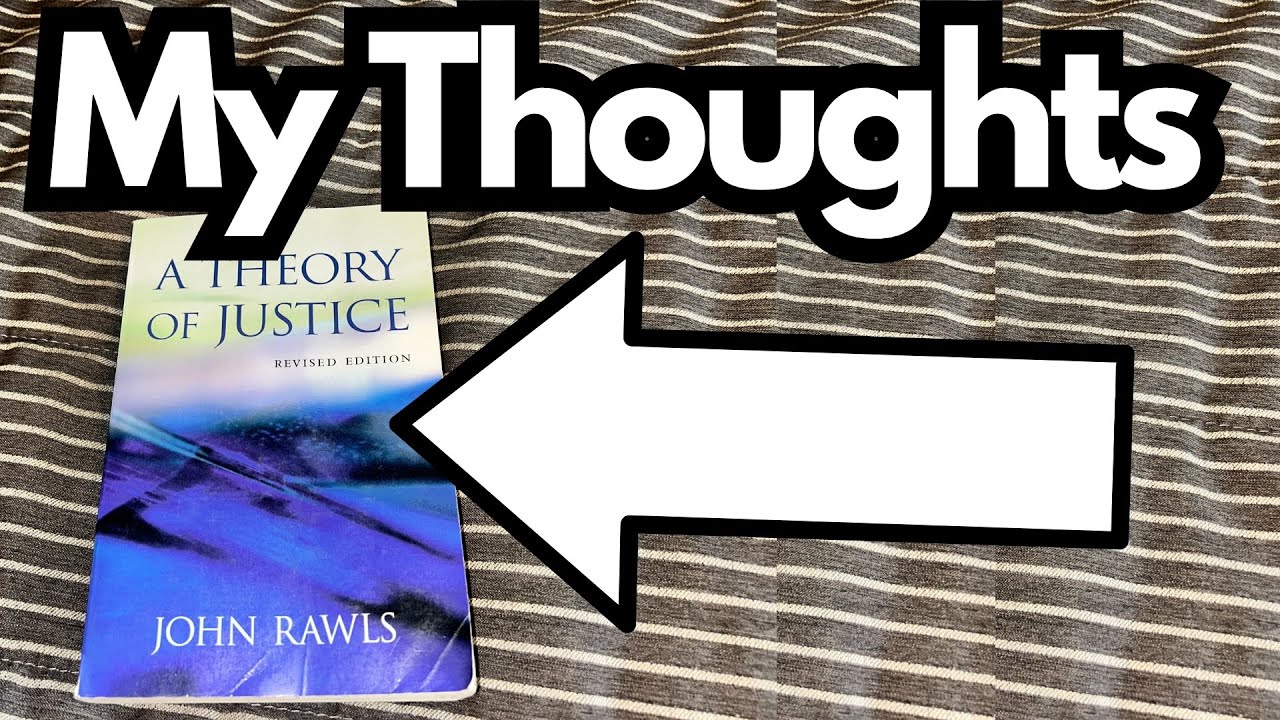
If you’ve ever wandered into political philosophy or ethics, you’ve probably heard of John Rawls and his influential book A Theory of Justice. It’s one of those cornerstone texts that gets referenced constantly in discussions about fairness, equality, and how societies should be structured.
But is it actually readable or enjoyable for the average person who just wants to understand justice a bit better?
Based on this experience: not necessarily. You can grab it here on Amazon if you’re interested.
Overview / First Impressions
This is a huge book—around 500 pages—dense with theory, diagrams, and abstract reasoning. It’s written squarely for people who are deeply interested in academic philosophy, political theory, or advanced ethics.
If you pick it up expecting something accessible, conversational, or story-driven, you may be disappointed. The tone is formal and technical, and the way Rawls lays out his arguments can feel slow and heavy.
For some readers, that’s exactly what they want. For others, it’s an immediate barrier.
Build Quality & Design
Physically, it’s a substantial volume:
- Roughly 500 pages of tightly packed text
- Academic layout: long paragraphs, minimal visual breaks
- Occasional diagrams or conceptual drawings related to justice and its structures
Those diagrams can be helpful if you’re already following the argument, but if you’re not fully engaged, they may just make the book feel even more like a textbook.
In short, it looks and feels like serious academic work, not a casual read.
Features & Functions (Conceptually)
What the book tries to do is incredibly ambitious. Among the key ideas:
- Justice as Fairness – Rawls’ central concept, proposing that a just society is one structured by fair principles everyone could agree to.
- Original Position & Veil of Ignorance – A thought experiment where you design a society without knowing your own place in it (rich or poor, healthy or sick, etc.).
- Principles of Justice – Rules that should govern the basic structure of society, especially the distribution of rights, duties, and opportunities.
These are powerful ideas that have shaped modern political thought. But the way they’re delivered is methodical and abstract, requiring patience and sustained focus.
How It Feels to Read (and Who It’s For)
From a practical standpoint, this book is best suited for:
- Philosophy or political science students
- Academics or researchers
- Readers who enjoy dense, logical argumentation and rigorous theory
If you’re casually curious about justice, fairness, or political philosophy, you may find this book:
- Slow to get into
- Overly technical
- More work than reward, unless you’re very motivated
It’s the kind of text that might be assigned in a graduate seminar, not something you breeze through on a weekend.
Limitations / Things to Know
Some key reasons this book may not be for everyone:
- Density – Long, complex arguments that require careful reading.
- Abstraction – Heavy use of theoretical constructs rather than concrete, real-world examples.
- Dry Presentation – Diagrams and formal structures that can make the material feel even more academic and, frankly, boring for many readers.
If your eyes glaze over when you see conceptual diagrams about justice, this probably isn’t the right starting point.
Final Thoughts
A Theory of Justice is undeniably important in the history of political philosophy, but importance and readability aren’t the same thing. For some, it’s a foundational, life-shaping text. For others, it’s a 500-page slog that never quite connects.
If you’re deeply interested in political theory and ready to wrestle with dense material, it might be worth your time. But if you’re just looking to understand justice in a more accessible way, this particular book is likely not the best fit.
In this case: it wasn’t for me—and it may not be for you either, depending on what you’re looking for.