

If you spend a lot of time at a desk, on the couch, or just generally fighting off neck and shoulder tension, a neck massager can be a game changer.
The Comfier neck massager aims to give you that shiatsu-style kneading massage at home for a relatively low price. You can grab some here on Amazon if you’re interested.
This review breaks down what it does well, where it falls short, and who it’s really for.
Overview / First Impressions
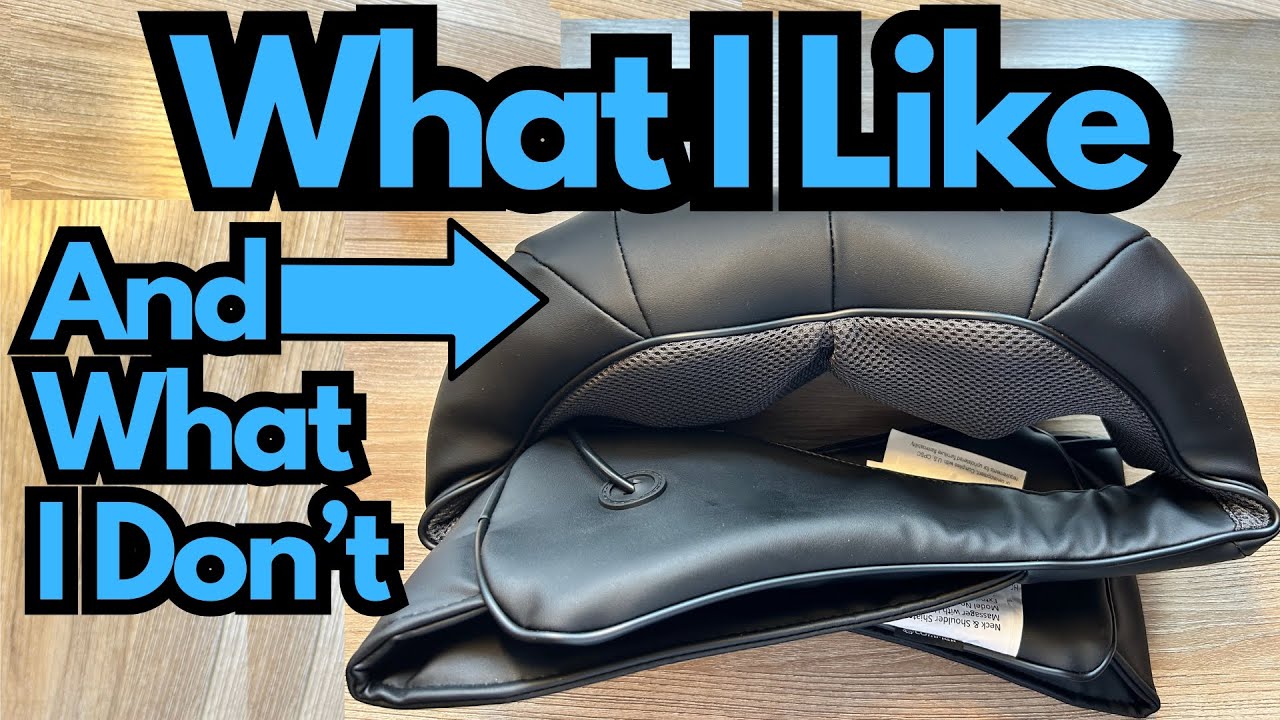
The Comfier neck massager is a U-shaped, wrap-around massage device designed primarily for the neck, but it can also be used on the shoulders, upper back, and even lower back with some repositioning.
It uses rotating massage balls to mimic a kneading action, with optional heat and two speed settings. You slip your arms through the straps to pull the unit tighter or looser against your neck and control the pressure.
For the price, it does what it says: it massages your neck, it’s reasonably comfortable, and it’s easy enough to use. However, there are a few limitations you’ll want to know about before buying.
Build Quality & Design
The overall construction feels decent for the cost:
- Material: The outer material feels like faux leather or a leather-like synthetic. It doesn’t feel overly cheap or flimsy and should hold up to regular use if you’re not rough with it.
- Arm Loops: The built-in arm straps let you control how much pressure the massage balls exert on your neck or back. Pulling down increases intensity; relaxing your arms eases it off.
- On-Device Instructions: One nice touch is that there’s a basic instruction guide printed directly on the side of the unit. You don’t have to dig around for a paper manual every time you forget what a button does.
From a design standpoint, it’s clearly optimized for neck use, and that’s where it performs best.
Features & Functions
The Comfier neck massager keeps things simple. Here’s what you get:
- Power Button: Turns the unit on and off.
- Direction Control: Switches the direction of the rotating massage balls. They either spin one way or the other—there’s no advanced pattern or complex mode.
- Intensity / Speed Control: Two speed settings:
- Low speed for a gentler massage
- High speed for a more intense kneading
- Heat Function: Optional heat that can be toggled on or off. This adds a bit of comfort and can help relax tight muscles.
That’s essentially the full feature set. There aren’t multiple programs or massage styles; it’s a straightforward kneading massager with a couple of basic adjustments.
How It Performs & Use Cases
Best Use: Neck Massage
This device really shines as a neck massager. When you place it properly around your neck and use the arm straps to adjust pressure, the massage balls do a solid job of working into the muscles along the back of your neck.
If you:
- Work at a computer all day
- Spend a lot of time on your phone
- Deal with general neck stiffness
…this can provide noticeable relief, especially when combined with the heat function.
Shoulders & Upper Back
You can use it on your shoulders and upper back, but it takes some finagling:
- It can reach behind the shoulder blades if you position it carefully.
- It’s not as naturally suited to broad shoulder coverage as a dedicated back or chair massager.
- Expect it to be most effective on the upper part of the back and the area just below the neck, rather than the full shoulder span.
Lower Back
You can also move it down to your lower back:
- Sitting in a chair and leaning back into the unit works best.
- It’s more of a bonus use case than its primary purpose, but it can still feel good if you’re tight in that area.
Limitations / Things to Know
There are a few key drawbacks to be aware of:
1. Short Power Cable
The power adapter cable is quite short, which means:
- You need to sit fairly close to a wall outlet.
- You may need an extension cord if your favorite chair or couch isn’t near a plug.
This is a simple issue, but it does affect how comfortably and where you can use it.
2. No Battery Power
The unit is not battery-powered:
- It must be plugged in to work.
- There’s no cordless option, so you can’t move freely around while using it.
If you’re hoping for something portable you can use anywhere without being tethered to a wall, this will be a downside.
3. Limited Massage Patterns
The massage action is functional but basic:
- The balls rotate in one direction, or you can press a button to reverse them.
- There are only two speeds.
- No advanced modes, patterns, or variable routines.
If you like lots of customization or more complex massage styles, this will feel limited.
4. Just “Okay” for Shoulders
While it can reach the shoulders and upper back, it’s not exceptional there:
- It doesn’t fully cover the width of the shoulders.
- Positioning can be awkward if you’re trying to hit specific spots.
It’s clearly designed with the neck as the priority, and that’s where it performs best.
Final Thoughts
The Comfier neck massager is a cost-effective, no-frills option if you mainly want relief for neck tension and don’t need a lot of advanced features.
Worth it if:
- Your primary issue is neck stiffness or tension.
- You’re okay being plugged into a wall outlet while using it.
- You want something affordable that “just works” without a steep learning curve.
Consider spending more if:
- You want a cordless, battery-powered massager.
- You need more sophisticated massage programs or patterns.
- You’re looking for something that excels equally at neck, shoulders, and full back coverage.
For what it costs, the Comfier neck massager delivers a decent, straightforward neck massage. Just be aware of the short cord, the need to stay plugged in, and the relatively basic feature set before you buy.