

If you play guitar regularly, you know cables are one of those unglamorous essentials that can quietly make your life easier—or drive you nuts when they fail mid-session. I’ve been using Ernie Ball cables for a while and really like them, but I wanted to see if I could save a bit of money without sacrificing too much quality.
You can grab one on Amazon if you’re interested.
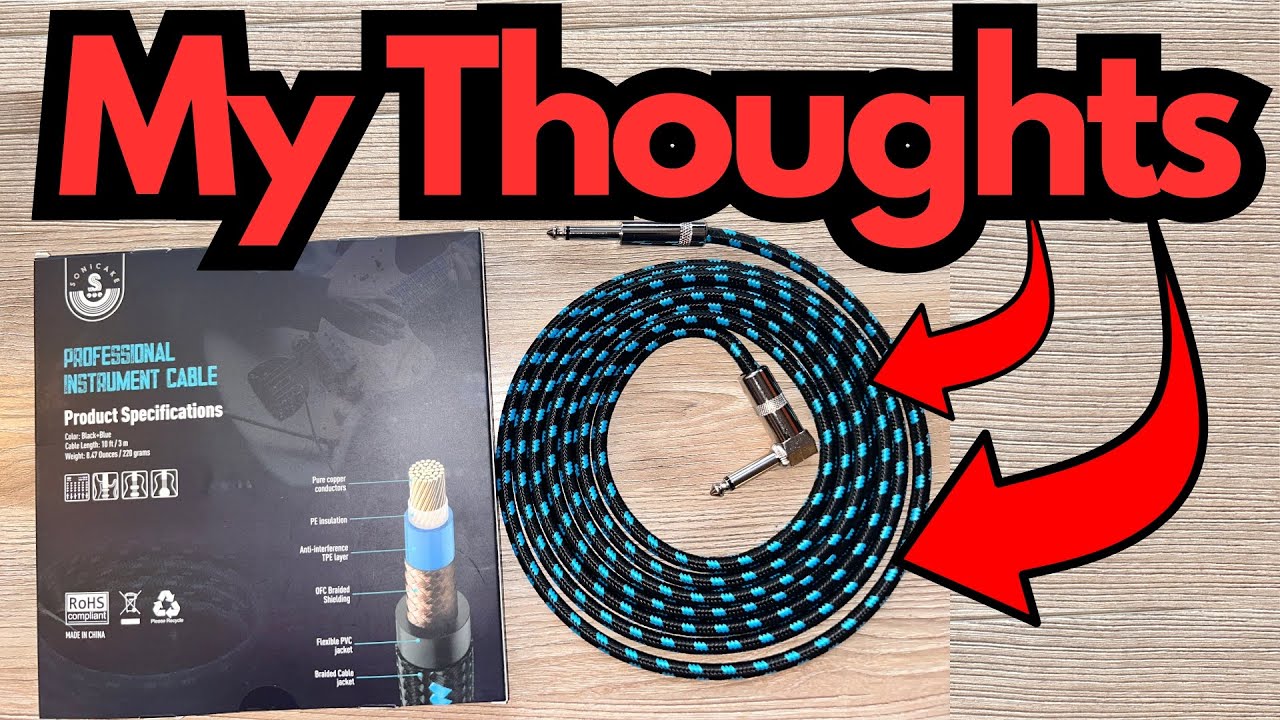
Enter the Sonicake braided instrument cable. I picked one up recently to compare it with my usual Ernie Ball, and this post breaks down how it stacks up in terms of build, feel, and value.
Overview / First Impressions
Out of the box, the Sonicake cable comes in a simple plastic enclosure—nothing fancy, but it does the job. The first thing you notice is the braided exterior, which gives it that familiar premium look you see on higher-end cables like Ernie Ball.
At a glance, it looks like a solid, budget-friendly cable that aims to offer that same “boutique” braided style at a lower price point.
Who it’s for:
- Players who want a braided, tangle-resistant cable without spending Ernie Ball money
- Home practitioners and casual giggers who need a functional, good-looking cable
- Anyone building a rig on a budget but still wanting something that feels nicer than a basic rubber cable
Build Quality & Design
Braided Jacket
The Sonicake uses a braided outer jacket similar to Ernie Ball’s, but there are some differences:
- The Sonicake braid is slightly less finely wound than the Ernie Ball.
- Ernie Ball’s braid feels a bit more refined and tightly woven, which likely reflects the extra cost and attention to detail.
That said, the Sonicake braid still gives you the main benefits of a braided cable:
- Better resistance to tangling
- A more “premium” feel than cheap, smooth rubber cables
- A bit of added durability compared to thin, unbraided cables
Connector Ends & Strain Relief
This is where the quality gap is most obvious.
On an Ernie Ball cable, the cable meets the metal connector with a rubber strain relief around the end. This rubber section helps:
- Prevent sharp bends right at the connector
- Reduce stress where cables typically fail
- Extend the overall life of the cable
On the Sonicake cable, the transition from the braided cable into the metal housing feels less robust. It doesn’t have the same substantial rubber encasing around the ends. It works, but it doesn’t inspire the same confidence in long-term durability.
Included Cable Wrap
One nice touch: the Sonicake comes with a cable wrap/strap.
This simple add-on is surprisingly useful:
- Keeps your cable neatly coiled
- Makes it easier to pack into a gig bag or case
- Reduces tangling and stress on the cable over time
It’s a small thing, but if you’re someone who likes an organized setup, you’ll appreciate it.
Features & Functions
From a guitarist’s perspective, the Sonicake cable offers:
- Braided exterior for a nicer feel and improved handling
- Standard 1/4″ jack connectors compatible with guitars, amps, pedals, and interfaces
- Cable wrap included for easy storage
It doesn’t try to be a “feature-packed” cable with silent plugs, right-angle ends, or fancy locking mechanisms. This is a straightforward, no-frills instrument cable meant to do one job: get your signal from your guitar to your amp or pedalboard.
How It Sounds / Use Cases
In use, the Sonicake cable performs as you’d expect from a basic instrument cable:
- No obvious tone suck
- No noticeable noise or hum beyond what your rig naturally produces
- Works fine for practice, home recording, and rehearsals
From a guitarist’s standpoint, the bigger question isn’t tone—it’s longevity. Most modern instrument cables, even budget ones, transmit your signal just fine for everyday use. The real test is:
- How many times you can coil and uncoil it
- How it handles being stepped on, tugged, or bent
- Whether the ends start to loosen or crack over time
So far, the Sonicake has held up well in normal use. The “ultimate test” will be how long it lasts compared to an Ernie Ball under the same conditions.
Ideal use cases:
- Bedroom practice
- Jam sessions with friends
- Budget-conscious rigs where you want a nicer-looking cable without overpaying
If you’re touring hard or gigging constantly, you might still lean toward something more heavy-duty like Ernie Ball or other premium brands.
Limitations / Things to Know
A few things to keep in mind:
- Build quality is good, but not premium.
The lack of substantial rubber strain relief at the ends suggests it might not be as durable as higher-end cables over the long term. - Braid isn’t as refined as Ernie Ball’s.
It still looks and feels good, but side by side, you can see where the extra money goes. - Longevity is still an open question.
It feels fine now, but only time will tell how it holds up after months or years of regular use.
If you’re hard on your gear—wrapping cables badly, tossing them into bags, gigging often—you may want to treat this as a solid backup or secondary cable, or just be prepared to replace it sooner than a premium one.
Final Thoughts
The Sonicake braided instrument cable is a good value option for guitarists who want the look and handling of a braided cable without paying Ernie Ball prices.
Pros:
- Braided exterior feels and looks better than cheap rubber cables
- Included cable wrap is genuinely useful
- Solid value for the money
Cons:
- Connector ends don’t feel as robust as Ernie Ball’s
- Braid and overall finish are a bit less refined
- Long-term durability is less certain
If you’re on a budget, need an extra cable, or want a decent-looking, functional lead for practice and casual use, the Sonicake is a sensible choice. If maximum durability and long-term reliability are your top priorities—especially for heavy gigging—you may still want to invest in a higher-end cable.
Resources & Further Study
If you’re working on your playing as much as your rig, a great companion to any practice setup is a solid understanding of the fretboard and harmony.
You can grab a Fretboard Memorization Cheat Sheet at:
https://travelingguitarist.com/fretboard-cheatsheet
It covers:
- Major and minor triads in every key
- How to map them across the neck
- Practical ways to use triads for improvisation and understanding harmony
There’s also a community forum where you can talk guitar, music, and related topics:
forum.travelingguitarist.com