

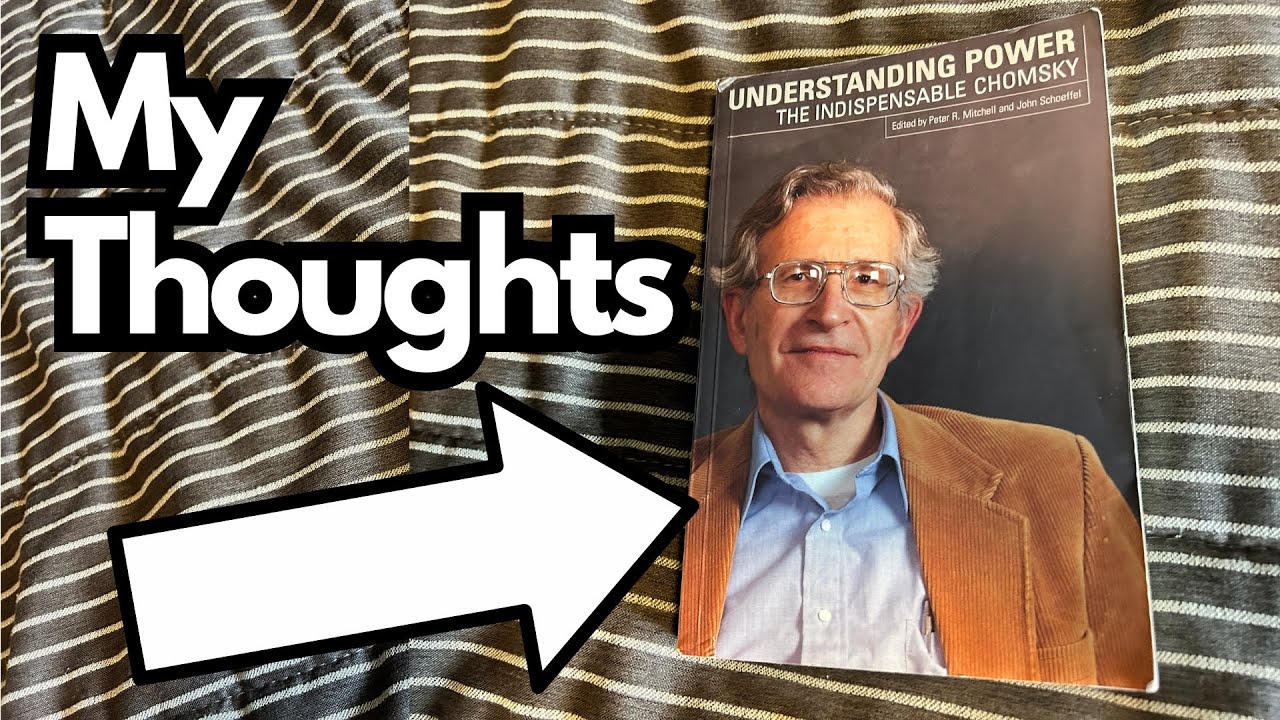
If you’ve ever wanted to get into Noam Chomsky but felt intimidated by his more technical or academic work, this book is a great place to start.
It’s conversational, wide-ranging, and surprisingly easy to read, making it a solid entry point for anyone curious about politics, media, or power structures—but who doesn’t want to slog through dense theory.
You can grab it here on Amazon if you want.
Overview / First Impressions
This book stands out because it isn’t a traditional, tightly argued treatise. Instead, it’s built around Chomsky responding to questions from an audience—most likely at public events or talks. People ask him about a variety of topics, and he answers in real time.
That format makes the book:
- Engaging – It feels like you’re sitting in on a live Q&A.
- Varied – Each section tackles a different topic or angle.
- Approachable – You don’t need a background in linguistics, philosophy, or political science to follow along.
It’s not a dense, academic read. You can pick it up for a few pages at a time and still get something meaningful out of it.
Build & Structure
Rather than long, continuous chapters of argument, the book is structured more like this:
- Q&A sessions – Readers get direct questions and direct answers.
- Possible essays or expanded sections – Some parts feel more like short essays, where a topic gets unpacked in more depth.
The result is a collection of discussions rather than a single, linear argument. That means you can:
- Dip into topics that interest you most.
- Read it non-linearly without getting lost.
- Treat it almost like a reference for Chomsky’s views on different issues.
Features & Functions (Conceptually Speaking)
While it’s not a “product” in the gear sense, the book has a few standout qualities in how it functions for the reader:
- Breadth of Topics
Chomsky covers a wide range of issues—politics, media, power, and more—giving you a broad overview of his thinking. - Clear Opinions
You’re not getting vague generalities. He shares specific, often strong opinions, which makes the content thought-provoking and memorable. - Digestible Segments
Because each section is tied to a specific question or topic, the ideas are broken into manageable chunks. - Informative Without Being Overwhelming
You’ll learn a lot, but you’re not buried in jargon or endless footnotes.
How It Reads / Who It’s For
This book is:
- Easy to consume – The conversational style keeps it moving.
- Entertaining – The back-and-forth nature of questions and answers keeps it from feeling dry.
- Informative – You still get depth and substance, even though it’s not written like a formal academic text.
It’s especially good for:
- People new to Chomsky who want an accessible starting point.
- Readers who prefer dialogue and discussion over dense essays.
- Anyone curious about power, media, and politics, but who doesn’t want to wade through heavy theory.
Limitations / Things to Know
A few things to keep in mind:
- Not a Single, Unified Argument
If you’re looking for a tightly structured, step-by-step theoretical work, this may feel a bit scattered. It’s more a collection of views than a grand thesis. - Occasional Repetition of Themes
Because the content is built around questions, some themes and ideas may recur in different forms. - Opinion-Driven
This is Chomsky sharing his perspective. That’s the appeal, but it also means you’ll get strong, sometimes polarizing viewpoints.
Final Thoughts
This book is a strong recommendation if you want something that’s:
- Easy to read
- Engaging in tone
- Packed with insight and opinion
Its conversational, Q&A-style format makes complex topics feel much more approachable than a dense academic volume. If you’ve been curious about Chomsky’s ideas but hesitant to dive into his more technical work, this is an excellent starting point.