

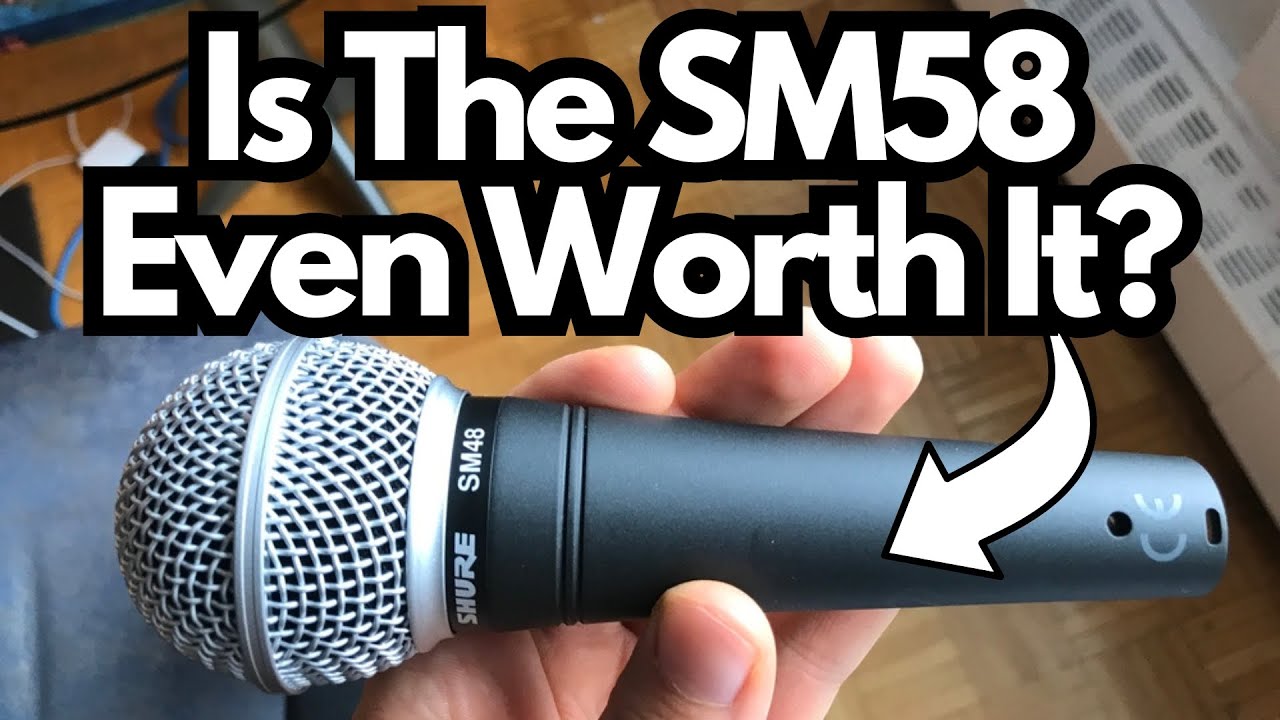
If you’ve spent any time around live sound, open mics, or rehearsal rooms, you’ve seen a Shure SM58. It’s the default dynamic vocal mic in countless venues for a reason. But what about its cheaper sibling, the Shure SM48?
If you’re on a budget, building a home studio, or just want a reliable mic for practice and demo work, the SM48 is a tempting option. The question is: how close does it really get to the SM58, and where does it fall short?
Let’s break it down from a practical, musician-focused perspective. You can grab the SM48 here on Amazon if you’re interested.
Overview / First Impressions
At a glance, the Shure SM48 and SM58 look almost identical. Same classic ball grille, same handheld form factor, same general “Shure stage mic” vibe.
The big picture:
- SM58 – Industry-standard dynamic vocal mic. Known for durability, solid noise rejection, and a balanced vocal sound.
- SM48 – More affordable version aimed at budget-conscious users, rehearsals, backups, and basic live or recording setups.
They’re both dynamic, cardioid microphones designed for vocals, but they don’t sound exactly the same—and there are a few technical differences that explain why.
Build Quality & Design
Physically, both mics are very similar:
- Shape & size: Nearly identical handheld designs with a ball grille.
- Weight & feel: Both feel like “real” stage mics—solid and substantial.
Where they diverge:
- Durability:
The SM58 has a long-standing reputation for being nearly indestructible. It’s the kind of mic you can drop, throw in a gig bag, and use night after night.
The SM48 is still well-built for the price, but it’s generally considered not quite as rugged as the SM58. If you’re gigging hard or touring, that matters. - Noise handling:
The SM58 tends to handle handling noise and stage rumble better. The SM48 is a bit more sensitive to unwanted noise and doesn’t suppress it quite as effectively.
For casual use, rehearsals, or home recording, the SM48’s build is usually more than enough. For heavy live use, the SM58 is the safer long-term bet.
Features & Specs
Both mics share the same basic feature set—no onboard switches, pads, or fancy options. Just plug in and go.
The key technical difference is frequency response:
Shure SM58:
- Frequency response: 50 Hz – 15 kHz
- Slightly more extended high end and a bit more low-end reach.
Shure SM48:
- Frequency response: 55 Hz – 14 kHz
- Rolls off a bit earlier on both the low and high ends.
On paper, those numbers look minor, but they translate into small yet noticeable differences in tone—especially in the clarity and “air” in the upper range, and a bit of fullness in the lows.
Both are cardioid dynamics, which means:
- Good rejection of sound from the rear.
- Decent control of feedback on stage.
- Designed to be used up close to the source (vocals, amps, etc.).
How It Sounds / Use Cases
To really compare them, the same parts were recorded through both mics—same riffs, same performance, just swapping the mic.
SM48 Sound Impressions
On the SM48, you get:
- A usable, musical sound that works fine for vocals and instruments.
- Slightly less top-end sparkle and detail.
- A tone that can feel a bit more “closed-in” or less airy, especially on higher-register parts.
For guitarists or vocalists doing:
- Home demos
- Practice recordings
- Rehearsals
The SM48 absolutely gets the job done. It won’t ruin your recordings, and in a mix, many listeners won’t notice the difference.
SM58 Sound Impressions
The SM58, with its slightly broader frequency range, tends to give you:
- A bit more clarity and presence in the upper mids and highs.
- Slightly fuller low-end response.
- A more polished, “finished” sound—especially noticeable on higher-register lines and detailed vocal work.
On the same riffs played in the higher register, the SM58 brings out more nuance and definition. It just sounds a touch more open and refined.
Limitations / Things to Know
Where the SM48 Falls Short
- Durability:
It’s good, but not at the “throw it at the wall and keep using it” level of the SM58. - Noise suppression:
The SM48 doesn’t handle noise and handling sounds quite as well. In noisier environments or on loud stages, this can matter. - High-end detail:
The slightly narrower frequency range means less shimmer and articulation in the top end, which you might notice on bright vocals or detailed instrument parts.
When the SM48 Is “Good Enough”
If you:
- Are on a tight budget
- Need a mic mainly for practice, rehearsals, or basic home recording
- Don’t plan to gig heavily with it
You can absolutely get away with the SM48. For many beginners and intermediate players, it’s a very reasonable choice.
Final Thoughts
From a practical standpoint:
- If you need a workhorse live mic that can survive years of gigs, rehearsals, and travel, and you care about reliable noise rejection and that extra bit of clarity, the Shure SM58 is still the standard for a reason.
- If you’re on a budget, mostly recording or practicing at home, or just need a solid, no-frills mic that sounds decent and doesn’t break the bank, the Shure SM48 is a perfectly valid option.
In my opinion, you can get away with the SM48, especially for less critical situations. But if you can stretch your budget, the SM58’s durability, noise handling, and slightly better sound make it the smarter long-term investment.
Resources
If you’re a guitarist looking to improve your fretboard knowledge while you’re messing around with mics and recording, grab the Fretboard Memorization Cheat Sheet here: