

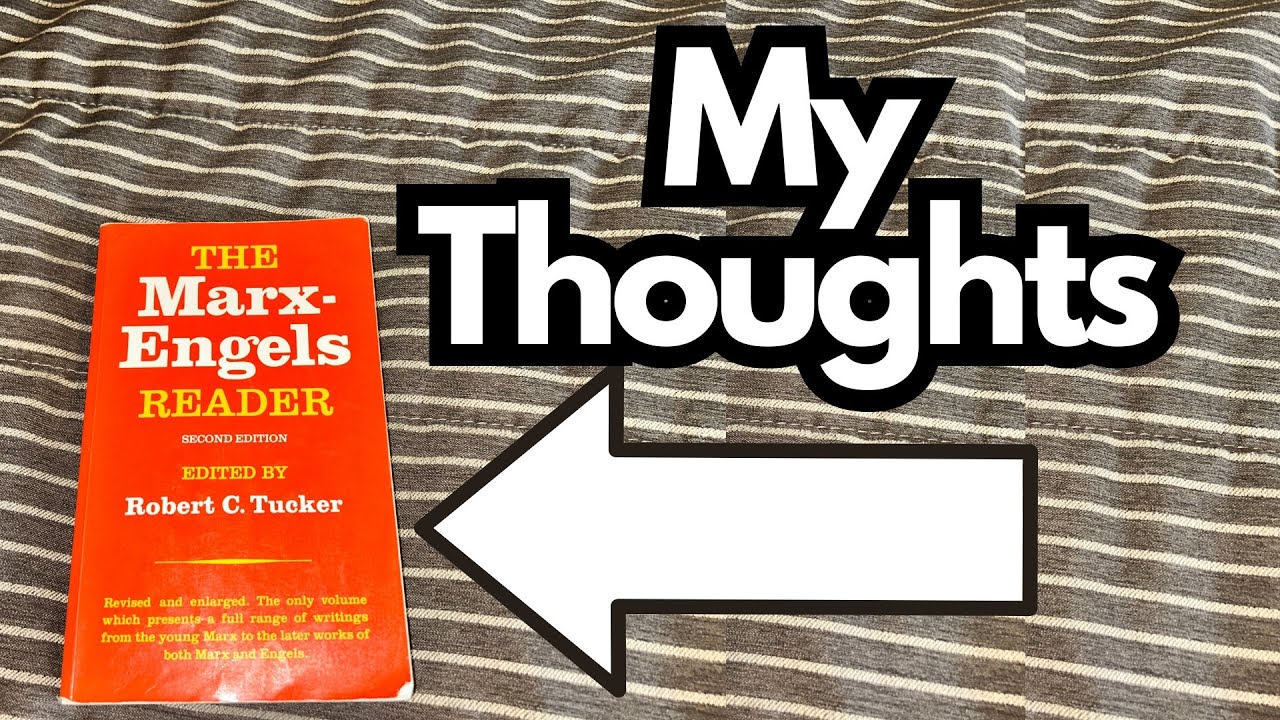
If you’ve ever tried to get into Karl Marx and felt overwhelmed, you’re not alone. Capital is massive, the early philosophical writings are dense, and the political essays are scattered across different books and editions. You can grab it here on Amazon if you’re interested.
That’s where The Marx-Engels Reader (often just called “the Marx reader”) really shines. It pulls many of Marx’s most important writings into a single, accessible volume, making it one of the better starting points if you want to actually read Marx instead of just reading about him.
This post breaks down what’s in it, why it’s useful, and what you should know before diving in.
Overview / First Impressions
The Marx-Engels Reader is essentially a curated collection of Marx’s major works (and some Engels), assembled into one book. Instead of buying multiple separate titles, you get a broad cross-section of his thought in a single volume.
It’s especially good for:
- Students taking philosophy, politics, sociology, or economics
- Anyone curious about Marxism but unsure where to start
- Readers who want a structured overview rather than committing to all three volumes of Capital
You won’t get every word Marx ever wrote, but you do get many of the most important and frequently cited texts, in manageable excerpts.
General Vibe of the Book
This is typically published as a thick paperback with:
- A dense but readable layout
- Clear section divisions by work and theme
- Editorial introductions to help frame each text
It’s not a flashy “coffee table” book; it’s designed as a serious study volume. The font is usually on the smaller side (there’s a lot of content to fit in), but it’s still readable for extended sessions if you’re used to academic-style books.
Features & Contents
What makes this book stand out is how much ground it covers. While editions can vary slightly, it generally includes:
- Early philosophical works
- Economic and Philosophic Manuscripts
- Selections from The German Ideology
- Political and historical writings
- Essays dealing with topics like the so-called “Jewish question”
- Letters and shorter political pieces
- Selections fromCapital
- Not the full text, but key chapters and sections
- Enough to understand core ideas like surplus value, exploitation, and commodity fetishism
- Letters
- Personal correspondence that gives insight into Marx’s thinking, context, and relationships
The strength of this collection is that it doesn’t just give you one “phase” of Marx. You see:
- The young, more philosophical Marx
- The mature, economic Marx
- The political agitator and letter-writer
All side by side, which helps you connect the dots across his career.
How It’s Structured & How to Use It
Because it’s a compilation, you’re not locked into reading it straight through. Some practical ways to approach it:
- For a philosophical focus
Start with the Economic and Philosophic Manuscripts and the selections from The German Ideology. These explore alienation, materialism, and ideology. - For economic theory
Skip to the Capital excerpts. You won’t get every technical detail, but you’ll see the main concepts and arguments. - For political and social context
Read the essays touching on religion, emancipation, and social questions like the “Jewish question,” along with the letters.
This flexibility is part of why the book is so useful: you can tailor your reading to your interests without buying several standalone volumes.
Limitations / Things to Know
As good as it is, there are some important caveats:
- It’s a selection, not the complete works
You don’t get all of Capital—only key excerpts. If your goal is to master Marx’s economic theory in full detail, you’ll eventually need the complete volumes. - Some topics are only briefly represented
Because it’s a “greatest hits” format, certain ideas appear in short form. You get the gist, but not always the full argument. - It still requires focus
This is Marx, not light bedtime reading. Even in excerpt form, the texts can be dense and theoretical. The book makes Marx more accessible, not necessarily easy.
Despite these limitations, for most readers—especially beginners or those reading for a course—this format is more than enough to build a solid understanding.
Final Thoughts
If you’re looking for a single-volume introduction to Karl Marx, The Marx-Engels Reader is one of the best options out there. It:
- Brings together many of Marx’s major works in one place
- Balances philosophical, economic, and political writings
- Lets you sample different phases of his thought without committing to multiple big books
You don’t get all of Capital, and you don’t get every text in full, but you do get a rich, representative overview of Marx’s most important ideas. For students, curious readers, or anyone wanting a serious but manageable entry point into Marx, it’s a solid choice.