

If you play high-gain guitar—modern metal, djent, hardcore, or anything that lives on the edge of controlled chaos—you already know the struggle: insane tone usually comes with insane noise. Hiss, hum, feedback, and squeals between chugs can make even the best rig feel unplayable.
That’s where a dedicated noise gate like the Electro-Harmonix Silencer comes in. Used correctly, it can turn a noisy high-gain setup into a tight, punchy, and surprisingly quiet rig—especially when paired with another gate at the end of your chain. You can grab it here on Amazon if you want.
This post breaks down how the Silencer works, who it’s really for, and how to get the most out of it on a modern guitar board.
Overview / First Impressions
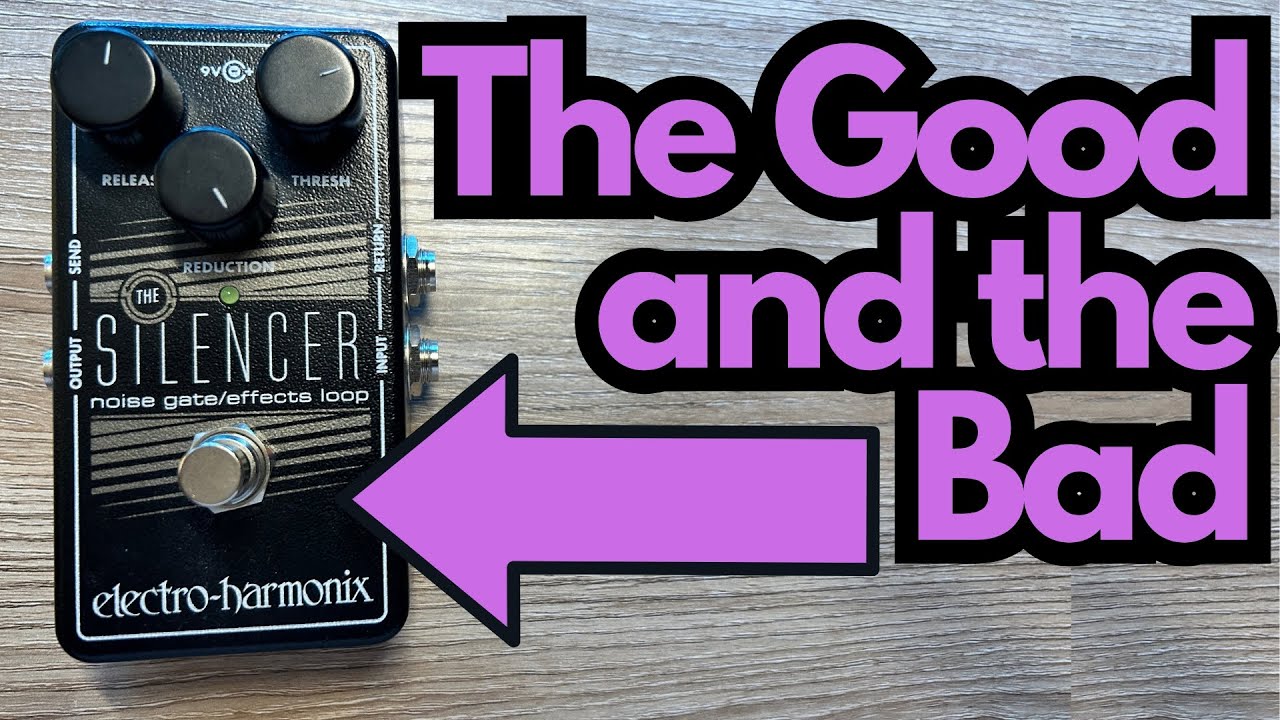
The EHX Silencer is a compact noise gate designed for guitarists running loud, high-gain setups. It’s not just a simple “on/off” gate; the big advantage is its effects loop (send/return), which lets you isolate and clamp down on your noisiest pedals without choking your entire signal path.
Used on its own, it’s a solid gate. Used in combination with a second gate (like an ISP Decimator at the end of your chain), it becomes incredibly powerful—almost like running a two-stage noise reduction system:
- Stage 1 (Silencer loop): Tame the worst offenders (compressors, boosts, high-gain drives, preamps).
- Stage 2 (End-of-chain gate): Clean up any remaining noise from time-based effects (reverbs, delays, modulations).
The result is a very tight, very quiet high-gain tone that still feels playable.
Build Quality & Design
From a guitarist’s perspective, the design is practical and straightforward:
- Compact enclosure that fits easily on a pedalboard.
- Standard in/out jacks, plus send and return for the loop.
- Three main controls:
- Threshold – When the gate kicks in.
- Release – How quickly the gate closes after you stop playing.
- Reduction – How much noise is cut when the gate is active.
The loop is the star here. Instead of slapping a gate at the very front or very end and hoping for the best, the Silencer lets you surgically target the noisiest part of your chain.
Features & Functions
1. Effects Loop (Send/Return)
This is the main reason to choose the Silencer over a simpler gate.
You can:
- Put only your noisiest pedals in the loop, like:
- Compressors
- Tube screamers/boosts
- High-gain distortion or amp modelers
- Keep cleaner or more dynamic pedals (like certain drives, wahs, or EQs) outside the loop so they’re not clamped too aggressively.
You could run your entire chain through the loop, but a smarter approach is to:
- Isolate the loudest pedals in the Silencer loop, and
- Use another gate (e.g., ISP Decimator) at the very end of your chain for final cleanup.
2. Dual-Gate Setup (Practical Example)
In the demo rig:
- In the Silencer loop:
- Compressor
- Tube Screamer-style overdrive
- Line 6 high-gain modeler (for that djent-style tone)
- At the end of the chain:
- ISP Decimator, after reverb and delay
This gives you:
- The Silencer handling the front-end noise (boosts, compression, high-gain preamp).
- The Decimator handling the overall rig noise, including any hiss added by reverb and delay.
Together, they make a very high-gain setup surprisingly quiet—even when you crank the pickups and let the guitar sit.
3. Threshold & Release Control
The release control is important for feel:
- Slower release = notes and chords ring out more naturally, but the gate takes longer to close.
- Faster release = super tight, instant cut-offs—great for percussive chugs, but can feel abrupt if set too extreme.
For modern metal/djent rhythm work, a moderately fast release usually feels best: tight stops without sounding like your sustain is being chopped unnaturally.
How It Sounds / Use Cases
With a high-gain chain like:
- Compressor → Tube Screamer → High-gain amp modeler (Line 6, etc.)
You’ll normally get:
- Constant hiss
- Hum
- Feedback when you turn up the guitar volume
Turn both gates off, and the rig becomes a noisy mess—especially if you’re near your amp or monitors.
Turn the Silencer on (with the noisy pedals in its loop):
- The initial noise floor drops dramatically.
- Feedback and hiss from the gain stages are heavily reduced.
Then add the ISP Decimator at the end:
- Any remaining noise from reverb and delay is cleaned up.
- The overall rig becomes very quiet, even with a lot of gain.
For tight, palm-muted riffs and modern metal tones, this setup lets you:
- Hit hard, stop dead, and not fight a wall of noise between phrases.
- Keep your high-gain tone intact without constantly riding your volume knobs.
Limitations / Things to Know
1. Not Ideal for Highly Dynamic Players
If you’re:
- A blues player
- A jazz guitarist
- Or anyone who relies heavily on touch dynamics (soft-to-loud playing, delicate note tails)
The Silencer may feel too aggressive, especially with higher reduction and faster release settings. Gates by nature compress and clamp your signal when it drops below threshold, which:
- Can cut off quiet phrases
- Can make soft picking feel unnatural
You can turn it off when you’re playing more dynamic styles, which is probably the best move if you switch between metal and cleaner genres.
2. Settings Matter
If the threshold is too high or the release too fast, you’ll get:
- Choked sustain
- Abrupt note cut-offs
- A “choppy” feel when playing legato or slower lines
Spend time dialing it in:
- Start with moderate threshold, medium release.
- Adjust until:
- Noise disappears when you’re not playing.
- Notes and chords still decay naturally enough for your style.
3. Best for High-Gain, Not Always-On Clean
The Silencer really shines in high-gain scenarios. On clean or low-gain tones, you might not need it at all, and leaving it always on can hurt your dynamics more than it helps.
Final Thoughts
For players who live in the high-gain world—modern metal, djent, tight hard rock rhythms—the EHX Silencer is a seriously useful tool.
Its strengths:
- The effects loop lets you target your noisiest pedals.
- It plays extremely well in a dual-gate setup with something like the ISP Decimator at the end of your chain.
- It can turn a chaotic, feedback-prone rig into a tight, controlled, and impressively quiet setup without killing your core tone.
If you’re a more dynamic blues or jazz player, this probably isn’t the right “always-on” pedal for you—but it can still be handy when you do venture into heavier territory, and you can simply turn it off when you need full dynamics.
For a modern high-gain guitarist who wants a professional, noise-free rig, the Silencer is close to essential.
Resources & Further Study
If you want to tighten up not just your tone but also your fretboard knowledge and improvisation, check out:
- Fretboard Memorization Cheat Sheet – Available at travelingguitarist.com.
It covers:- Major and minor triads in every key
- Octave mapping and other visualization techniques
- A practical way to memorize the fretboard and understand harmony through triads
- Traveling Guitarist Forum – At forum.travelingguitarist.com
A place to chat with other players about:- Guitar gear and tone
- Practice strategies
- Music theory and improvisation
These resources pair nicely with dialing in a serious high-gain rig—great tone plus solid fretboard understanding is a powerful combo.