

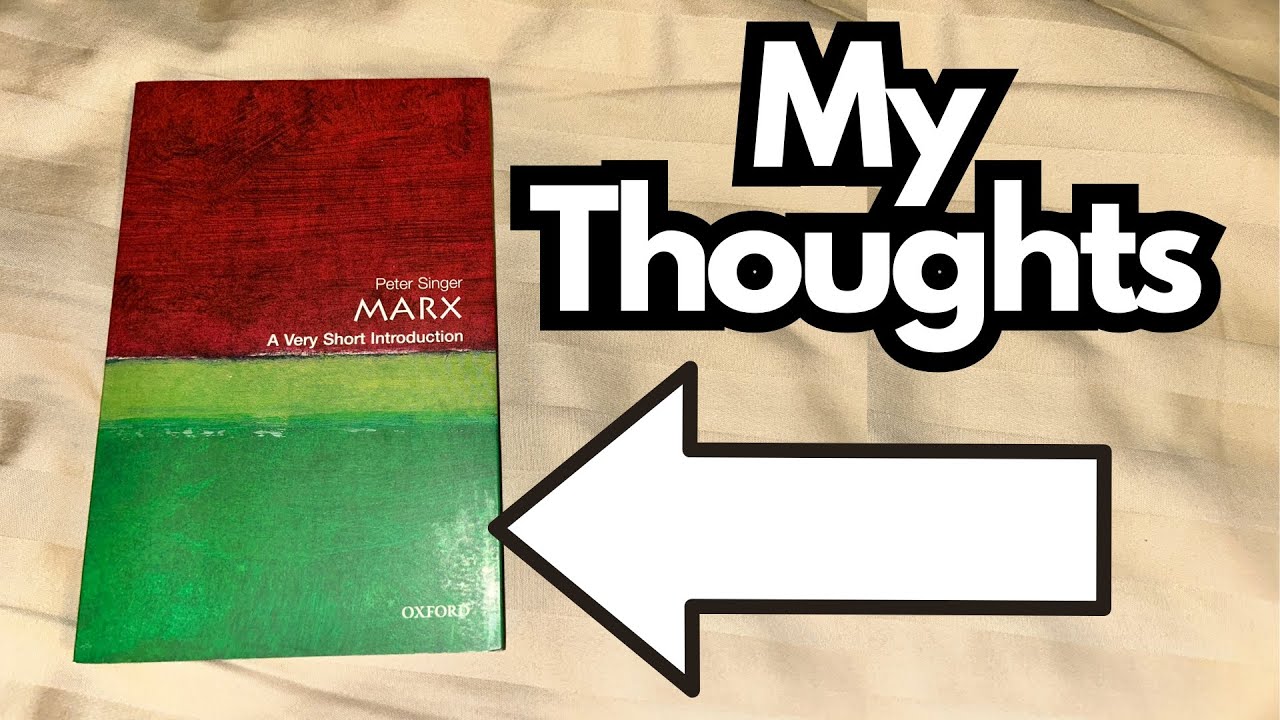
If you’ve ever been curious about Karl Marx but felt intimidated by Capital or dense philosophy texts, you’re not alone. Marx is one of the most influential thinkers in modern history, but actually getting into his work can feel like a huge project. You can grab it here on Amazon if you’re interested.
That’s where this book comes in: it’s a compact, accessible overview of Marx’s core ideas—perfect for anyone who wants to understand what he believed without diving straight into thousands of pages of original writings.
Overview / First Impressions
This book is best thought of as a general overview of Karl Marx’s thought rather than a deep, technical study. It walks you through the main concepts he’s known for and gives you a clear sense of:
- What he believed
- The key themes he wrote about
- How his ideas fit together in a broad way
It’s especially useful if:
- You’re new to Marx and want a first serious look at his ideas
- You’ve heard terms like “Marxism,” “class struggle,” or “capitalism” and want context
- You don’t have the time (or desire) to start with his original, lengthy works
General Vibe of the Book
While the content is the main focus, the physical format matters if you’re actually going to sit down and read it.
- Compact and approachable – It’s not a doorstop. The size and layout make it easy to pick up and read in short sessions.
- Clear structure – The material is presented in a way that feels like a guided tour rather than a lecture, helping you stay oriented as you move through different ideas.
This isn’t a massive academic tome; it’s designed to be inviting, not overwhelming.
What the Book Actually Does
Think of this as a conceptual overview of Marx’s philosophy. It doesn’t try to do everything, but it does a few important things well:
- Introduces key ideas
You get a broad picture of the main themes in Marx’s thought—things like:
- Summarizes, rather than reproduces, Marx
Instead of long quotes and heavy theory, it explains his ideas in more straightforward language. - Serves as a starting point
It’s meant to help you decide what you might want to explore more deeply later—whether that’s his economic theory, political thought, or social critique.
Use Cases for the New Reader/Student
From a reader’s perspective, this book “plays” like a clean, simple signal of Marx’s big ideas:
- For the totally new reader
It gives you enough grounding so that terms and references to Marx in everyday conversation, media, or further reading start to make sense. - For the casually interested
You might not want to become an expert, but you do want to understand what people mean when they talk about Marx. This book gives you that without demanding a huge time investment. - For someone considering deeper study
It’s a low-commitment way to test whether you’re interested in going further into Marx’s original works or more detailed secondary sources.
In short, it’s like a practice amp for your brain: not the full stack, but more than enough to get you playing with the core ideas.
Limitations / Things to Know
This book is useful, but it’s important to be clear about what it doesn’t do:
- Not a full introduction in the academic sense
It’s more of a broad overview than a rigorous, chapter-by-chapter introduction to Marx’s major works. - Not a substitute for reading Marx himself
If you want to debate fine points of his theory, you’ll eventually need to go to the primary texts. This book is a map, not the whole territory. - Simplified by design
Some complexity is inevitably smoothed out so the ideas stay readable and approachable. That’s a strength for beginners, but advanced readers will find it too light.
Final Thoughts
If you’re looking for a straightforward, accessible way to get a handle on Karl Marx’s ideas, this book is a solid choice. It doesn’t pretend to be the last word on Marx, and it’s not a deep technical study—but that’s exactly why it works so well as a starting point.
Use it to:
- Get a clear, big-picture sense of what Marx believed
- Decide whether you want to go deeper into his original writings or more advanced commentary
- Build a foundation so that future reading and discussions about Marx make more sense
For anyone curious about Marx but unsure where to begin, this is a practical, low-friction way to start.